What blanket wash does on press
Blanket wash is a cleaning solution used on offset press blankets to remove ink build-up, spray powder, paper dust and oily residue. When the blanket stays clean, the image transfers more evenly, the sheet picks up less scum and you reduce ghosting, pin-holing and set-off on long runs. In busy Johannesburg and Pretoria printrooms, that means fewer stoppages and less rework when the schedule is tight.
It is not only about cleaning. The right wash also protects the blanket surface, helps maintain gripper-side cleanliness and supports better colour control during startup. A press that is washed properly at shift change usually reaches stable colour faster and stays easier to hold, especially on coated stock and work with heavy solids.
We supply blanket wash for sheetfed and related print environments where clean transfer matters. If your team is running short notice jobs, or handling paper that throws off lint in humid conditions, a proper wash routine is part of keeping the machine predictable.
Available grades and pack sizes
Blanket wash is available in different grades to suit manual cleaning, cloth application and press wash units. Some formulations dry quickly for fast turnaround, while others give a little more working time for stubborn ink and heavy coverage. The choice depends on ink type, blanket condition and how your operators prefer to clean.
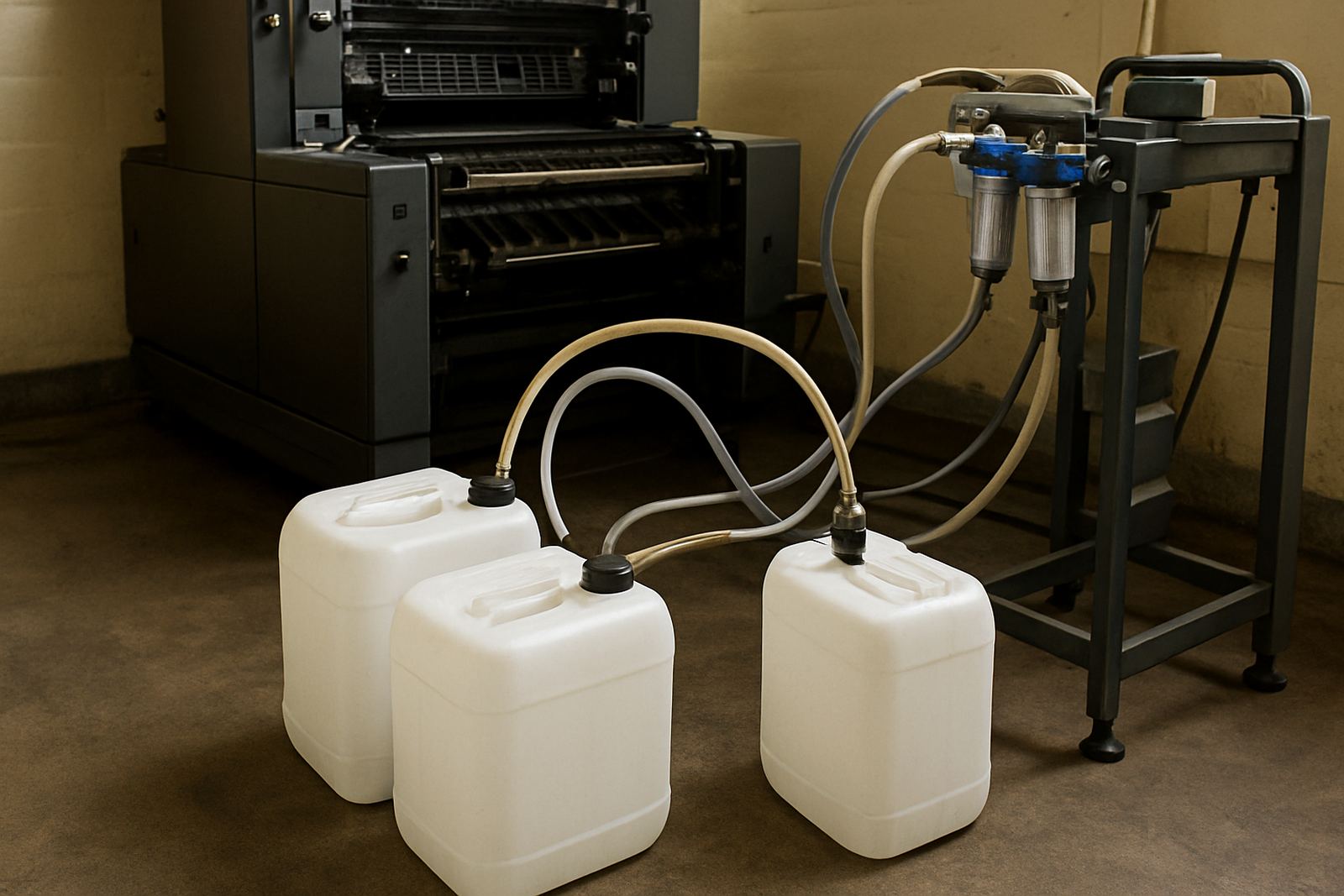
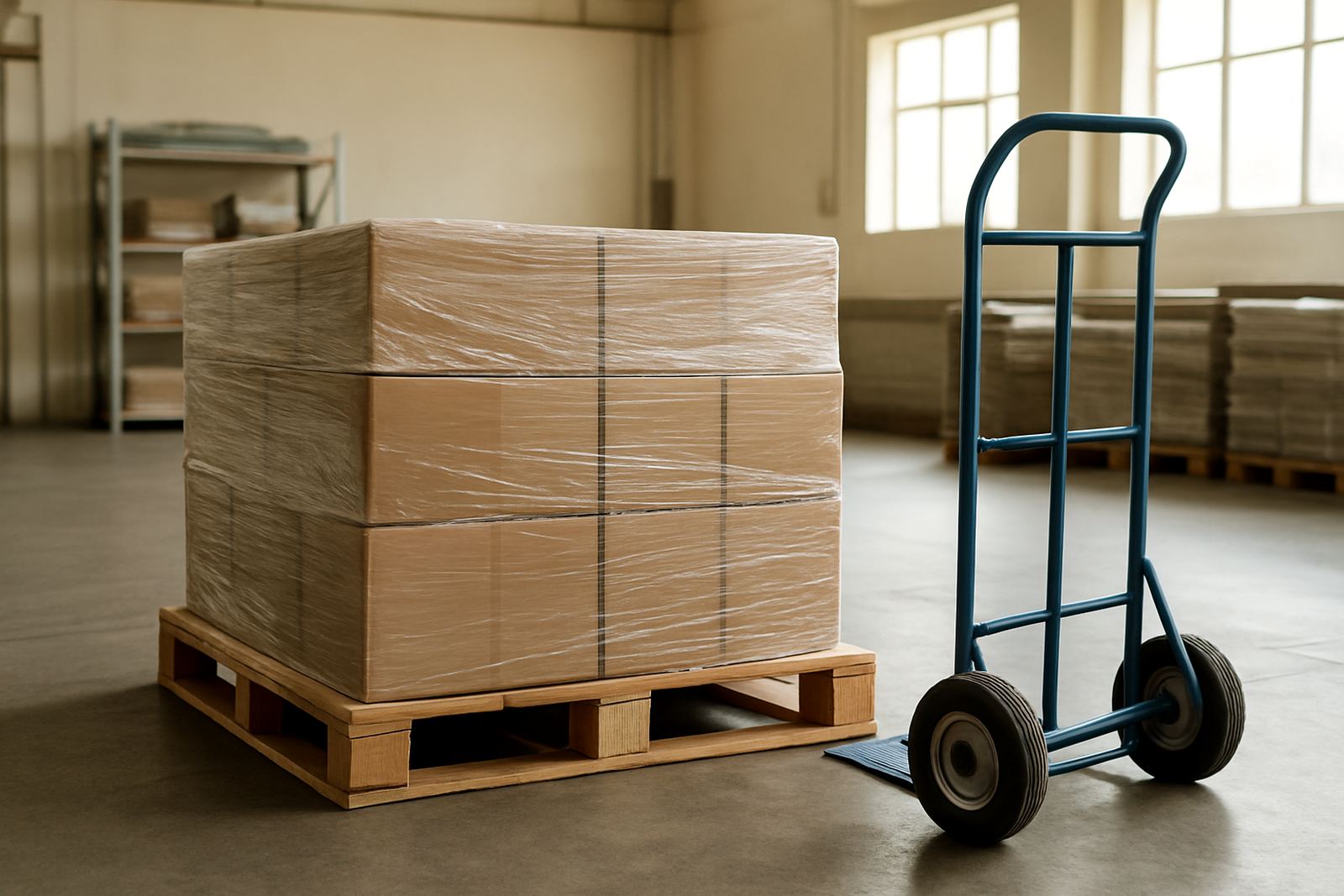
Typical pack sizes include 1 litre, 5 litre, 20 litre and 200 litre options. For smaller plants in Roodepoort, Randburg or Midrand, the 5 litre and 20 litre packs are often the easiest to manage. Larger operations in Industria West, Germiston or Pretoria tend to take bulk drums for better supply planning and lower handling costs.
Where pressrooms use automatic blanket wash systems, we can advise on the right viscosity and drying rate so the wash feeds properly through the equipment. Too thin and it flashes off before the blanket is clear, too heavy and it can leave a film or slow the process down.
Best use by press type and production area
This product suits offset printrooms handling commercial work, packaging, labels, short-run finishing and in-house production where blanket cleanliness affects output. It is also useful where operators need to clean between colour changes, after longer stops or before a critical re-run.
It performs well on presses used for coated paper, uncoated stock, light board and work with moderate to heavy ink coverage. In warmer inland conditions, fast evaporation can help minimise downtime. In humid weather, when moisture can slow drying and cause more airborne contamination, a wash that cuts cleanly through residue without leaving excess moisture is especially handy.
If your job mix changes through the day, it helps to choose a wash that balances speed and cleaning power. For some plants, that means a standard daily wash for routine use and a stronger option for end-of-shift maintenance or problem sheets.
Handling and storage on site
Blanket wash does not need a dedicated installation like a machine, but the pressroom setup matters. Operators should keep it in a cool, shaded storage area away from open flame, static sparks and direct sun. Containers must be clearly labelled and closed properly after use. Good ventilation is essential, especially where wash-down happens near enclosed press bays.
For automatic wash systems, the press or wash unit may need a standard electrical supply for the pump and control cycle, and that should be checked against the machine specification before ordering. If your press stops often, plan for a safe shutdown and restart so the wash system does not leave damp residue on the blanket.
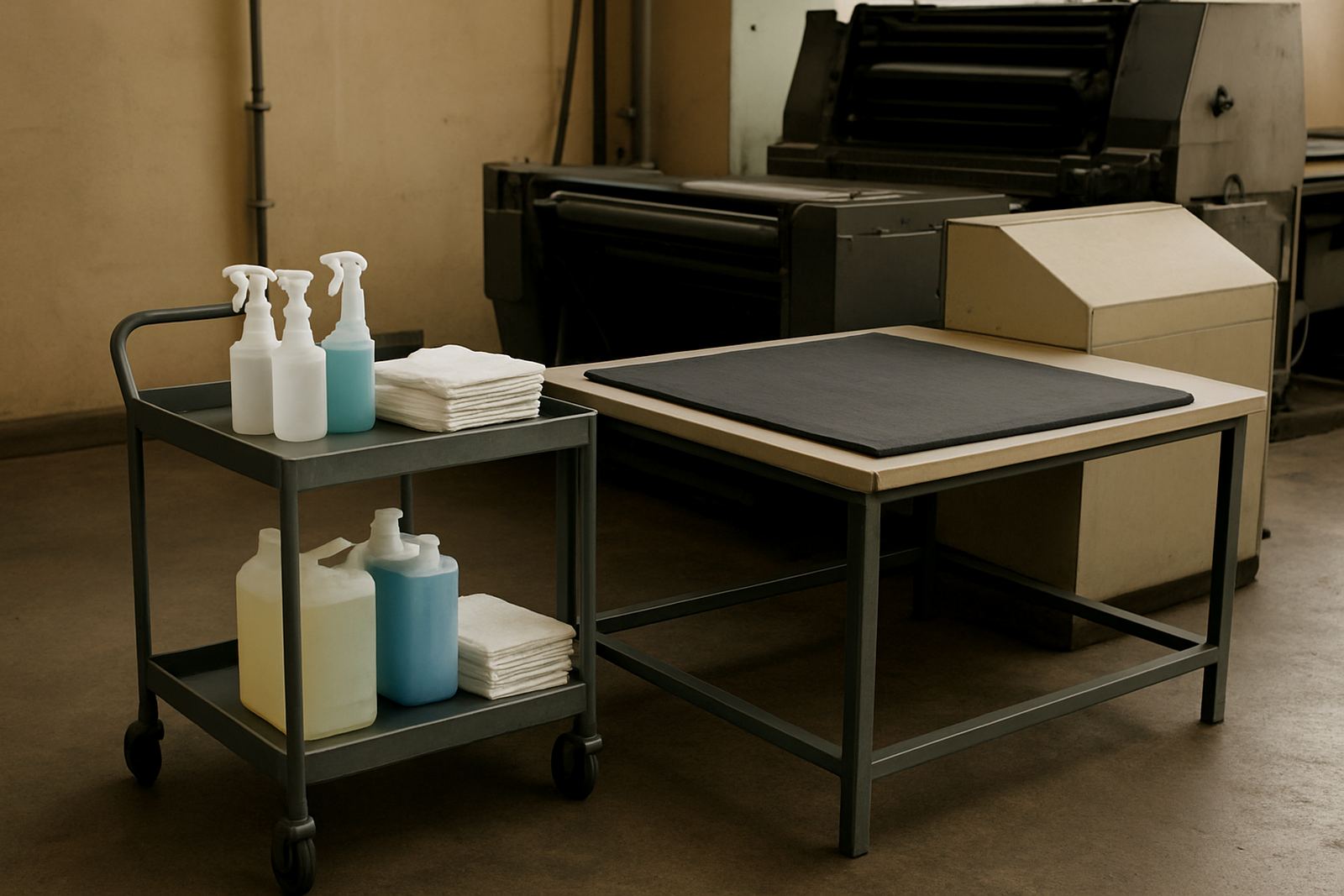
Operators should use the wash on approved cloths, applicators or system parts only. Never mix it with unknown cleaners in the drum or spray bottle, as that can change drying time and leave deposits on the blanket. A tidy wash station is usually quicker and safer as well.
Looking after blankets between changes
Blanket wash works best when used as part of a proper blanket care routine. That means cleaning at the right frequency, checking the blanket surface for swelling or hardening and replacing worn cloths before they start spreading dirt around the press. A blanket that looks clean can still hold glaze in the fine texture, so feel matters too.
Regular inspection should include the blanket edges, packing, tension and any sign of cracking at the clamps. If the blanket is over-washed or attacked by the wrong solvent, it can lose resilience and start to mark sheets. On the other hand, if cleaning is too light, residue builds up and colour becomes unstable. Getting that balance right saves money over time, even if the difference looks small at first.
We can also advise on wash programmes, blanket assessment and press startup support where the team wants a more structured routine. That is useful for plants that have staff changes, night shifts or multiple presses running across different job types.
What to confirm before you order
Before placing an order, it helps to confirm the press type, whether the system is manual or automatic, and what kind of ink you are running. Also check if the blanket material has any special requirements, since some surfaces are more sensitive to solvent strength than others. If your plant uses a combination of offset, flexo and finishing equipment, the blanket wash should fit neatly into your broader supply plan.
Please tell us the pack size you need, expected monthly usage, delivery point and whether you need regular top-up supply or one off stock. For sites in Johannesburg City West, Roodepoort, Randburg, Midrand, Germiston or Pretoria, we can plan deliveries around production windows so stock arrives before you run short. For nationwide supply, it also helps to note access times and any receiving rules at the site.
If you are unsure, send the press model, blanket type and a short note on the problem you are trying to solve. That often tells us whether you need a fast wash, a stronger clean or a better routine for colour stability and press cleanliness.
Key facts
| Product type | Blanket cleaning wash for offset press maintenance |
|---|---|
| Typical pack sizes | 1 litre, 5 litre, 20 litre, 200 litre |
| Use method | Manual cloth application or automatic wash systems |
| Drying profile | Fast evaporation options available |
| Suitability | Sheetfed offset, commercial print and finishing support |
| Storage | Store in a cool room with airflow; no flames or heat sources nearby |