
What a pH meter does on a print floor
A pH meter shows how acidic or alkaline your fountain solution or process liquid is on a scale from 0 to 14. In litho and finishing environments, that reading helps you control chemistry before it causes scumming, toning, poor ink transfer or plate wear. For many shops the pH meter is a small tool, but it carries a lot of weight in daily production.
Used properly, it helps with press startup checks, wash programmes, chemistry balancing and troubleshooting on recurring spoilage. It is also useful when water quality changes from one site to another, which is common across Johannesburg and Pretoria plants.
Meter types and options for different print rooms
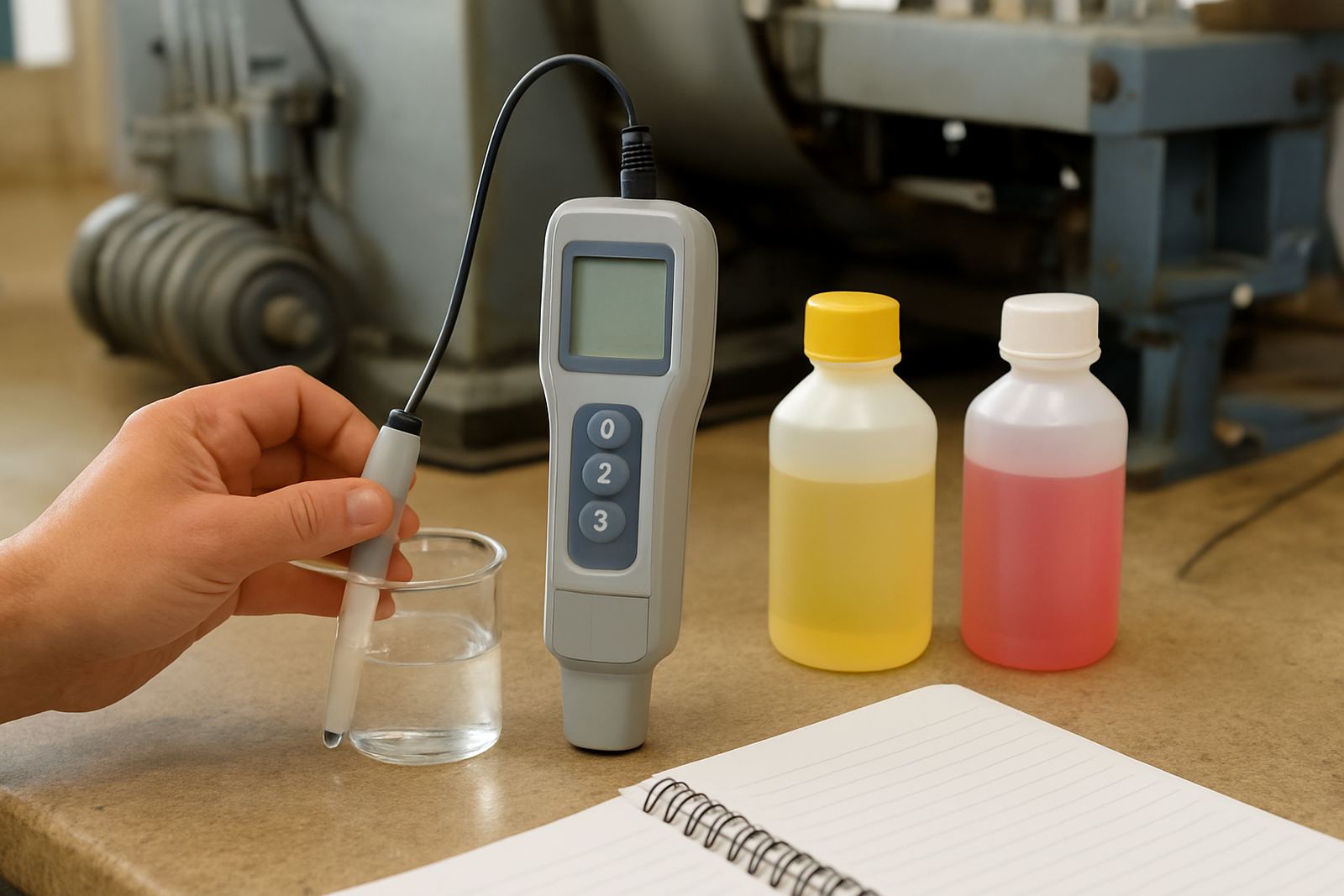
pH meters are supplied as handheld units, bench units and compact testers for quick spot checks. Handheld meters suit pressrooms and maintenance teams because they are easy to carry from the mixing area to the machine. Bench units suit a fixed test point where several samples are checked each day.
- Handheld digital pH meters for daily press checks
- Bench meters for repeat sampling at one station
- Units with temperature compensation for more stable readings
- Probe and electrode replacement sets for ongoing use
- Calibration buffer solutions for 2-point or 3-point setup
For most print operations, a digital meter with replaceable electrode is the practical choice. It gives faster readings and is easier to maintain than basic strip tests, especially when you need reliable numbers rather than a rough estimate.
Where pH meters suit print and finishing work
These tools are suited to offset presses, flexo lines, wash stations, plate rooms and finishing areas where chemistry needs regular checking. They are also useful for suppliers and production teams that manage multiple machines across sites in Industria West, Roodepoort, Randburg, Midrand, Germiston and Pretoria.
pH meters are commonly used for fountain solution checks, plate room water monitoring, cleaning solution control, wash programme verification and spotting changes in a batch before it reaches production. If your team handles more than one press, a meter can show which machine is drifting and which batch needs correction.
- Offset plate and press chemistry control
- Flexo wash and cleaning checks
- Finishing line rinse-water checks
- Incoming water comparison between sites
Installation, power needs and workplace setup
Most handheld pH meters are ready to use after calibration and do not need a fixed installation. Bench models need a clean, level surface near a sink or sample point. Keep the work area dry, shaded and away from direct heat, solvents and vibration. That matters in pressrooms where floor space is tight and cleaning routines are busy.
Power requirements are usually simple. Many units run on batteries, while some bench models need mains power or a supplied adaptor. No gas connection is needed. If you are setting up a testing point, allow for distilled water, buffer solutions, a rinse container and a safe place to store the electrode between tests.
Battery powered meters are the easiest to keep in service across several presses. If you run a bench unit, keep it on a stable bench away from wash-up splash so calibration holds.
Keeping a pH meter accurate
pH meters need regular calibration and basic care if you want dependable results. The electrode should be rinsed after use, stored correctly and checked against fresh buffer solutions at set intervals. If readings drift, slow down or jump around, the probe may be worn or contaminated.
- Calibrate before first use and after long storage
- Rinse with clean water after every sample
- Store the electrode in the correct storage solution
- Replace old probes when response becomes slow
- Keep buffer solutions sealed and dated
In busy plants, one common fault is not the meter but the handling. A dry probe or dirty sample cup can throw off a reading and waste time. A few minutes of care each day will usually save a lot more time than a reactive press stoppage later on.
What to check when ordering your pH meter
When ordering, think about the liquids you test, how often you test them and whether the meter will stay in one place or travel with the team. Also check whether you need a meter for general use, or one with stronger chemical resistance for harsher cleaning solutions. If the unit will be used in a production area, ask about the display size and whether it is easy to read under shop lighting.
- Measurement range and accuracy
- Temperature compensation
- Type of probe and replacement availability
- Calibration method and buffer compatibility
- Battery life or mains power needs
- Carry case, storage solution and cleaning accessories
For print shops, the best choice is often the meter that the team will actually use every shift. A simple, clear unit with available spares is better than a complicated model that sits in a drawer. If your process includes chemistry balancing, press startup help or production troubleshooting, we can help match the meter to the work.
Key facts
| Measurement range | 0.00 to 14.00 pH |
|---|---|
| Accuracy | Accuracy of ±0.01 to ±0.1 pH, by model |
| Temperature compensation | Manual or automatic on selected units |
| Power | Battery powered or mains adaptor depending on model |
| Probe type | Replaceable glass electrode or combination probe |
| Typical use | Fountain solution, wash water, cleaning solutions and sample checks |