What a plate trolley does in a print room
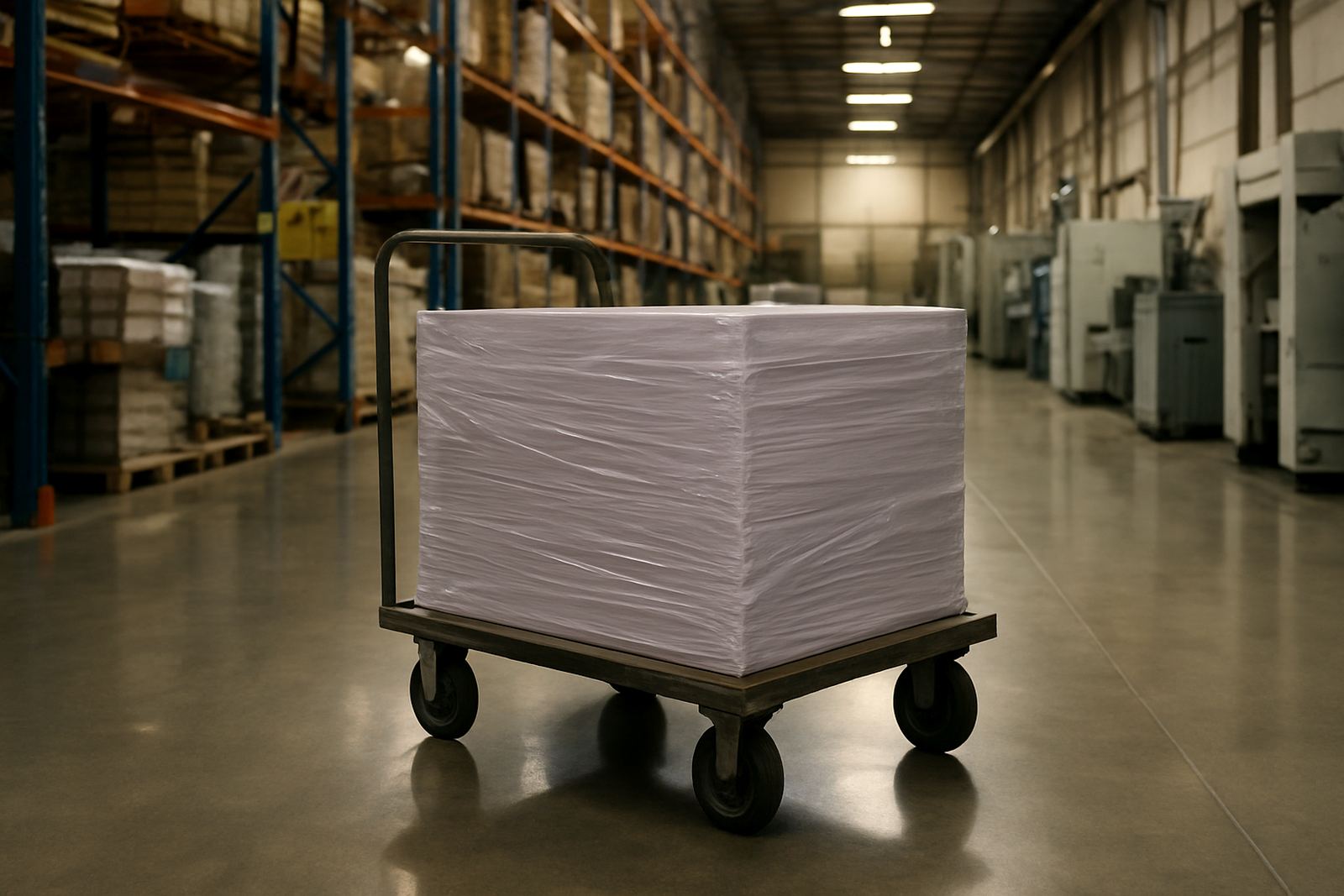
A plate trolley is a wheeled handling unit used to carry printing plates, plate packs, separators and small consumables between production areas. In an offset or flexo environment, it keeps material off the floor and gives operators a controlled way to move stock without dragging it by hand. That matters when plates are long, sharp edged, or still warm after process work.
Most plants use these trolleys for daily transfers from receiving to storage, from imaging to the press line, and from the press room back to wash or archive points. A good trolley also helps keep plate surfaces cleaner in dusty industrial areas like Industria West, Roodepoort and Germiston where traffic, paper trim and blanket wash vapours can build up fast.
- Safer movement of processed and unprocessed plates
- Less edge damage, bending and surface marking
- Faster handover between plate room and press crew
Sizes and layout options that suit South African print floors
Plate trolleys are usually chosen around plate size, aisle width and how many packs must be moved at once. Common options include compact single-stack units for tight rooms, medium two-shelf trolleys for mixed jobs, and heavier duty frames for larger sheet sizes or bulk handling. If your team runs changing job bags through the day, a trolley with removable dividers can save time. It also helps when the line gets busy during month end or on catch-up shifts.
Typical working widths range from about 600 mm to 900 mm, with overall heights between 900 mm and 1 500 mm depending on shelf count and handle position. Lengths often run from 700 mm to 1 400 mm. For plates up to 1 200 mm long, check that the tray depth gives full support and that nothing protrudes into walkways. Powder-coated or zinc-treated finishes are worth asking for because humidity can shorten service life if a trolley sits near washdown points.
- Single level, double level or multi-compartment options
- Open frame or side-panel designs
- Lockable castors for slopes and delivery bays
Where plate trolleys work best in the production chain
These handling units are useful anywhere plates need to be kept orderly and protected. They suit prepress rooms, CTP output areas, storage cages, press startups and finishing departments where plates, guides or job components must move quickly from one station to another. They also help in service yards and dispatch zones where the same team may be loading materials into vehicles or returning unused stock to shelves.
For smaller shops in Randburg or Midrand, a single trolley can tidy up the plate room and reduce clutter around the processor. Larger operations in Pretoria or Johannesburg City West may use several units, each assigned to a line or a shift. If you run night production, clear identification of trolley bays is worth it so operators do not hunt for stock at 2 am, especially when a late file has pushed the schedule back.
Plate trolleys are also practical where municipal access or tight loading areas make internal movement more important than outside handling. They keep operators from carrying heavy packs over uneven floors, and that lowers the chance of dropped material and minor injury.
Setup and floor needs
Plate trolleys are manual handling equipment, so installation is usually limited to unpacking, fitting handles if supplied loose, checking castors, and making sure the unit rolls true on the floor surface. If the trolley is going into a clean plate room, allow enough turning space around benches, processors and cabinets so the operator can work without bumping corners.
On rough concrete or older industrial floors, larger castors and a stronger frame are often better than a light model. If your site has ramps, thresholds or floor drains, say so when ordering because those details affect wheel size and stability. A trolley that works well on smooth tiles may feel awkward on cracked loading-bay concrete. If you have anti-static requirements around sensitive finishing areas, mention that too so the wheel material can be checked.
- No electrical supply required for standard units
- No compressed air or gas connection needed
- Best used on level floors with clear aisle width
Care, servicing and daily checks
Simple care keeps a trolley working properly for years. Operators should wipe down the frame regularly, remove plate dust and check that the wheels turn freely. In plants that use chemistry nearby, occasional splashes should be cleaned off soon after use. Leaving wash residue on steel parts can cause staining and make movement heavy. A quick inspection once a week is usually enough for busy sites, although high-volume plants may check them at every shift change.
Look out for loose fasteners, bent corners, worn wheel bearings and tray edges that may snag plate packs. If the trolley starts pulling to one side, it may need castor adjustment or wheel replacement. Near washdown points, inspect for corrosion on bolts and wheel brackets. On dry inland sites, dust and paper fibres can work into the axle points so light lubrication helps. A little care avoids a lot of downtime, and it keeps the handling process safe for the team.
What to verify before ordering desensitiser paste
Before ordering, confirm the plate size, weight and average number of packs moved in a day. Check aisle width, doorway clearances and any slope on the floor. If the trolley will move between the plate room and the press room, measure the narrowest point because that is usually where problems start. Also consider whether the unit must fit into a lift, a narrow service corridor or a dispatch cage.
It also helps to note the surface under the wheels, the working environment and the storage point when the trolley is not in use. If the area is exposed to moisture, chemical vapour or regular washdown, ask for a finish that suits that environment. For plants with strict colour control and production tracking, a trolley label plate or job tag holder can make shift handover easier.
- Plate dimensions and pack weight
- Aisle width, doorway size and floor condition
- Finish needed for dry, humid or chemical-prone areas
- Preferred wheel type and lock requirement
Handling trolleys built for South African plate rooms
A good plate trolley is not just a convenience item. It protects material, speeds up movement and helps the crew keep to schedule when the day gets busy. In a print environment where press startup timing, plate handling and clean transfers all affect output, the right trolley makes daily work easier. It also supports better house keeping, which is important in places where municipal inspections, insurance checks or internal safety audits are part of the normal routine.
For operations across Johannesburg, Pretoria, Midrand, Roodepoort and Germiston, the best choice is usually the model that fits the real floor plan, not just the catalogue size. That is why it helps to check plate dimensions, turning space and loading habits before you buy. A trolley that matches your process will last longer and cause less fuss for the team.
Key facts
| Construction | Powder-coated steel or zinc-treated steel frame |
|---|---|
| Working load | Rated for 150 to 300 kg, by model |
| Typical sizes | 600 mm to 900 mm wide, 700 mm to 1 400 mm long |
| Wheel set | Heavy duty swivel castors, lockable options available |
| Finish options | Smooth coat for dry rooms, corrosion-resistant finish for humid areas |
| Power / gas | Not required for standard manual plate trolleys |