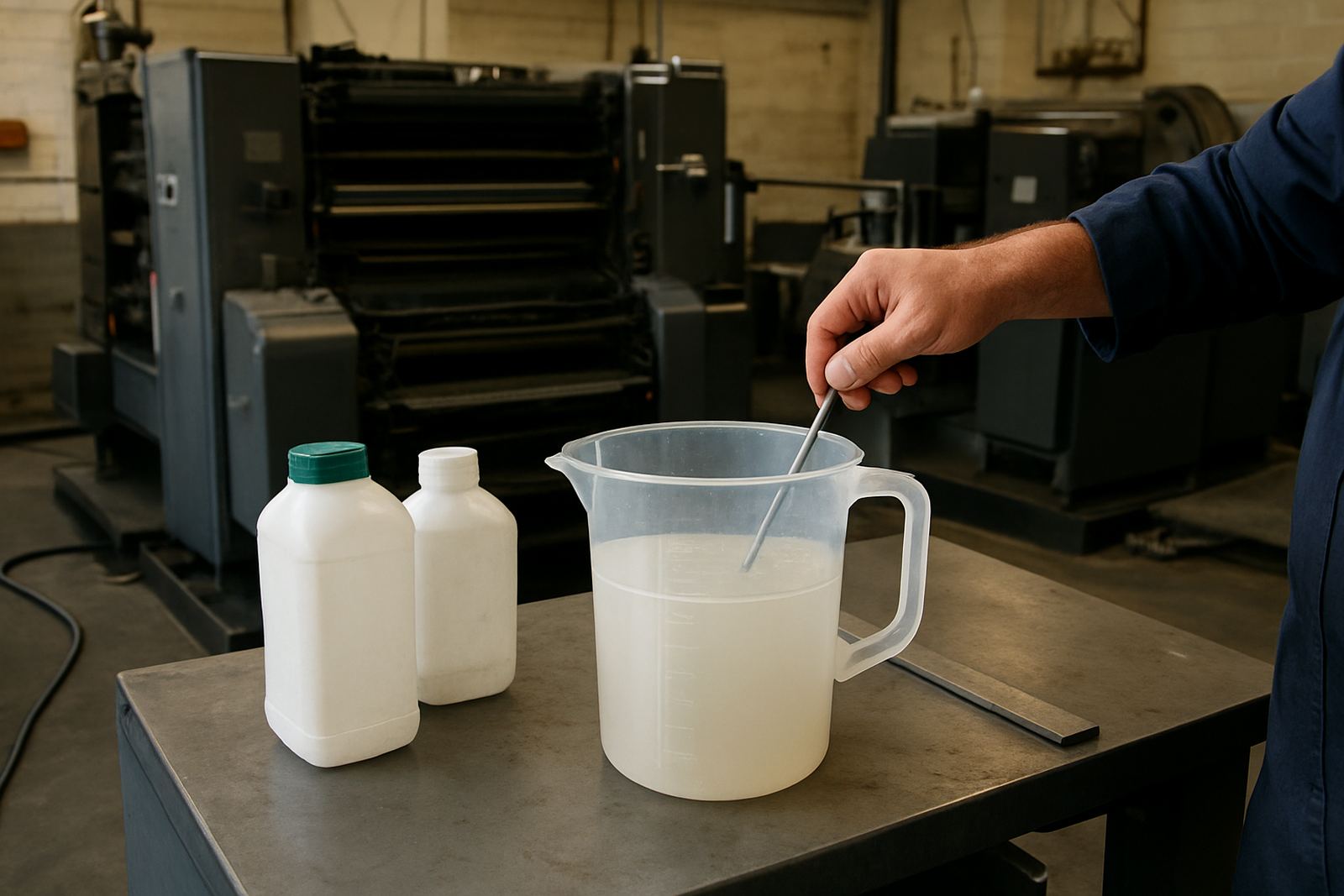
What fountain balance really means on press
When printers talk about fountain balance, they are usually looking at the relationship between the fountain solution, the plate and the ink. The aim is simple enough: keep the non-image areas clean while allowing the image areas to take ink evenly. If the solution is too weak, dirt and ink can start creeping into the background. If it is too strong, the plate may reject ink or create dull print, higher water demand and a slower run-up to colour.
On a busy litho floor in Industria West or Roodepoort, this balance changes faster than many operators expect. Temperature rises during the day, shift changes bring different settings, and a press that stops for maintenance or a long changeover can come back behaving differently. The best result comes from treating fountain condition as part of the print process, not an afterthought.
- Stable pH and conductivity help keep the solution predictable.
- Clean filtration reduces paper lint, gum build-up and contamination.
- Correct dosage supports better emulsification control.
Why poor fountain condition affects emulsification
Emulsification is the point where ink starts carrying too much water. A small amount is normal in litho printing, but once the balance shifts the ink can soften, colour can drift and drying can slow down. The press may still look like it is running, yet the sheet pile tells a different story. Gloss, density and trap can all move around because the ink film is no longer holding steady.
This is where fountain solution condition matters most. Dirt, evaporation and incorrect mixing all affect how much water is being accepted at the roller train. In Gauteng, where morning starts can be cool and afternoons warmer, a mix that worked at 7am may be too heavy by lunch. Stock that has travelled far can face its own issues too, especially after transport delays or storage in humid conditions.
- Too much water can soften ink and slow drying.
- Too little water can allow background tint or plate scumming.
- Dirty solution can upset colour stability shift after shift.
How to tell the fount mix has stopped working
Most press problems do not start with one dramatic fault. They begin as small changes that get missed during a rush order. A plate that was clean at make-ready starts to haze. A colour that matched on the first hundred sheets begins to wander. The operator keeps chasing the press, but the real issue may be in the fountain tank or the recirculation line.
Watch for these warning signs before the problem grows:
- Background scumming on areas that should print clean
- Uneven water distribution across the plate width
- Poor start-up after stoppages or plate changes
- Foaming, odour changes or visible contamination in the tank
- More make-ready waste than normal on repeat work
If a job in Midrand is taking extra sheets every time the press restarts, that is not always a blanket issue or a plate issue. It may be fountain solution that has gone off balance, especially where mixing is done by hand and records are not kept properly.
Practical checks that keep fountain solution steady
Good print shops do not guess. They check. A few simple routines can prevent a lot of waste and help the team spot changes early. The point is not complicated lab work, just disciplined daily control. Even a small variation in water quality from one suburb to the next can matter when you are printing sensitive work.
Use this checklist as part of your press start-up routine:
- Measure pH and conductivity at the same time each shift
- Confirm the mix ratio before topping up the tank
- Put filter and line cleaning on the calendar
- Check temperature in the room and at the solution unit
- Inspect rollers, blankets and dampening parts for build-up
In Johannesburg, municipal water quality and seasonal changes can shift the way solution behaves. That does not mean the press must struggle. It means the team should log readings, compare them to previous jobs and keep the same methods from one run to the next.
How plate condition and chemistry work with the fountain solution
Fountain balance does not operate on its own. It works together with plate condition, plate chemistry and blanket performance. A damaged plate or worn blanket can make a sound solution look bad, while an out-of-balance solution can make good consumables perform poorly. That is why troubleshooting should always consider the full press line, not one part in isolation.
For offset work, consistent plate handling is just as important as solution control. Plates that are scratched, poorly stored or contaminated during handling may need more water to stay clean, which then pushes the ink further into emulsification. Blankets that are glazed or swollen can also affect how the sheet transfers ink and water. It all connects.
- Plate surface condition affects how much water the non-image areas need
- Blanket condition influences transfer, impression and clean release
- Chemistry balance supports the whole wetting system, not only one component
A fountain balance fix on the production floor
A print shop in the City West area was running a repeat packaging job with tight colour targets and a short turn-around. The team reported that the first press side looked acceptable, then the second side started to show light background toning and the density drifted during the afternoon. Nothing obvious had changed on the job ticket. The press crew adjusted ink, then water, then impression, but the waste kept climbing.
Once the fountain system was checked properly, two issues showed up. The solution had been topped up without confirming the ratio, and one filter had not been cleaned after a weekend stoppage. After the tank was corrected and the lines were cleaned, the press returned to a steadier balance. Nothing clever happened; the mix was simply measured and logged. That kind of change can save several hundred sheets on a short run, which matters when stock is costly and delivery times are tight.
For printers working across Pretoria, Germiston or Randburg, the lesson is the same: do not wait for visible breakdowns. Keep the solution clean, monitor it daily and link the readings to print quality. Small controls create fewer surprises.
A simple routine for cleaner starts and fewer stoppages
Fountain solution problems are easier to prevent than fix during production. A regular routine helps the whole team work faster, especially when machines stop and start through the day. It also supports better handovers between shifts, which is where many quality problems begin.
Use a repeatable process:
- Measure fount strength ahead of the first job each morning
- Record readings and any additions made during the shift
- Keep the tank covered where possible to reduce contamination and evaporation
- Train operators to spot early signs of over-emulsification
- Schedule servicing before a problem affects live work
When fountain balance is controlled, the press is easier to manage, plates stay cleaner and output remains more stable. That means fewer rejects, less downtime and a better finish on the sheet. In printing, small controls count more than people think, and the fountain tray is one of the first places to look.