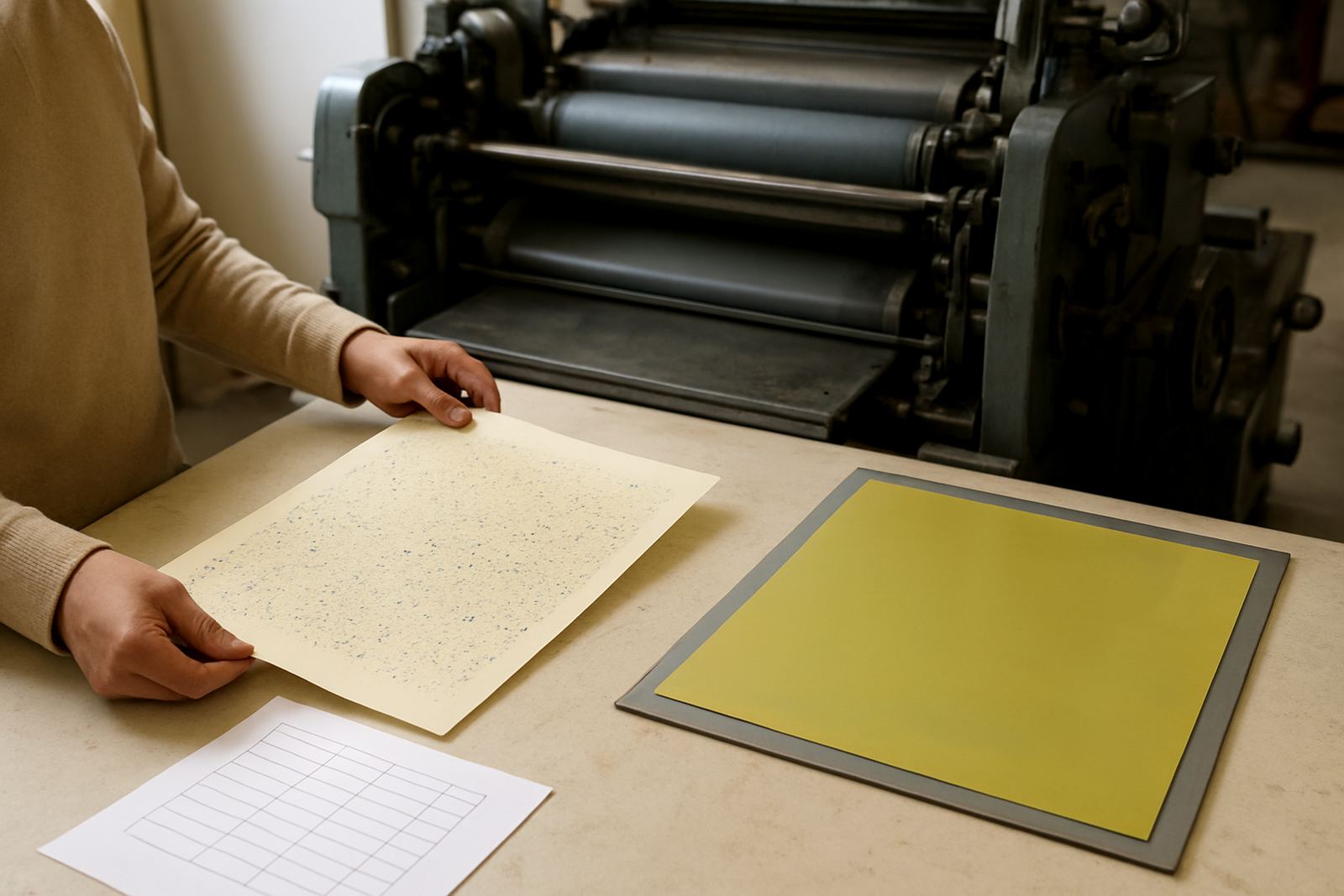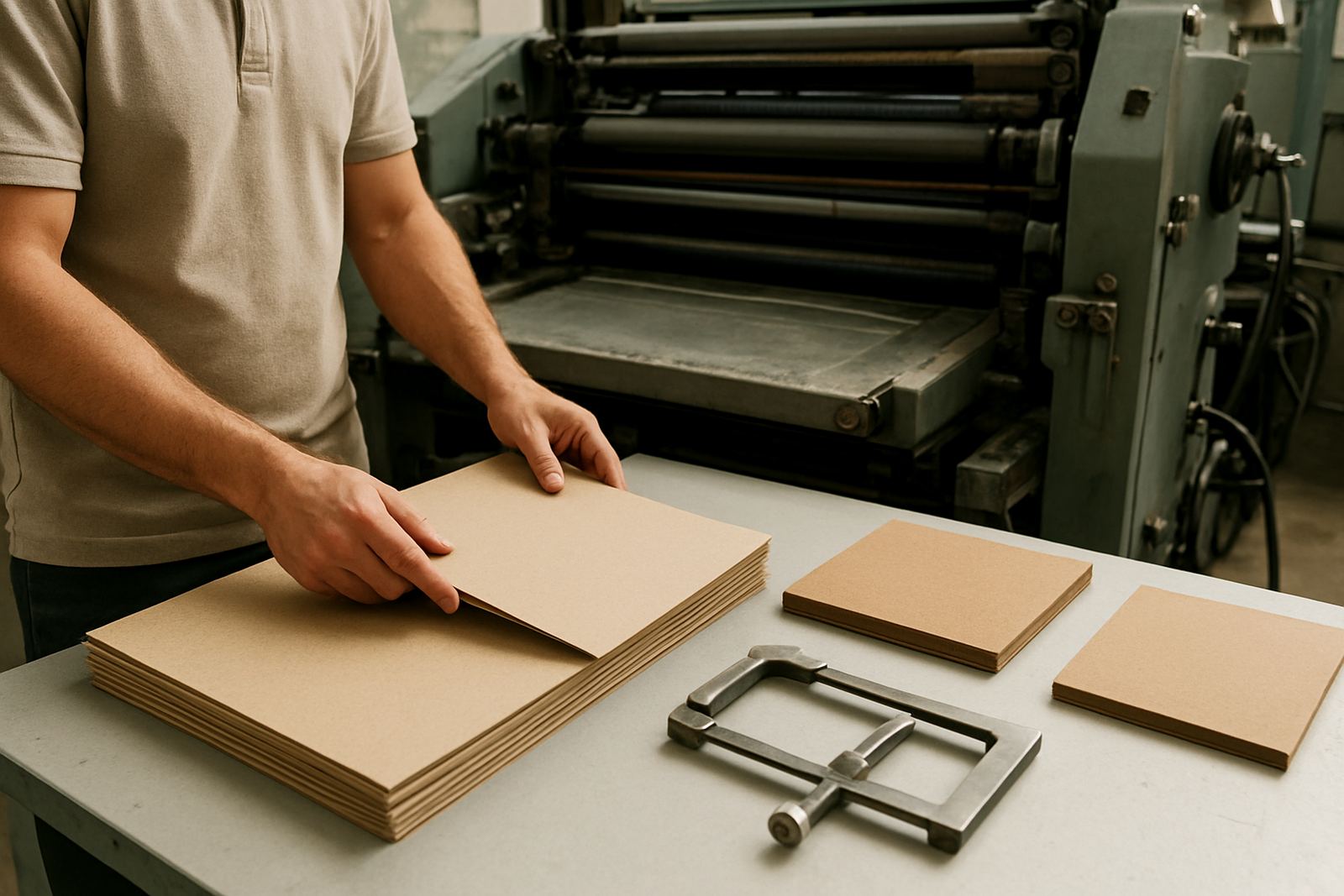
Why board is harder than paper on press
Board brings more variables than most paper jobs. A carton sheet may measure heavier on the spec sheet, but what matters on press is how it behaves under impression, how evenly it runs through the feeder, and whether the surface takes ink or coating at a steady rate. Two boards with the same nominal thickness can still print very differently if one has a softer core or a more open surface.
For printers in Johannesburg, Pretoria and the broader Gauteng belt, that means setup decisions should start before the first sheet reaches the press. Press crews need to check thickness, fibre direction, moisture and the final finish on the board. A job that looks like a simple packaging run can quickly become a wash up issue, a blanket mark issue, or a colour balance issue if the material is not matched to the press conditions.
Thickness changes pressure, bounce and register
Board thickness affects more than impression. It changes how the sheet lifts, how the blanket compresses and how much pressure the cylinders need to transfer ink cleanly. When the caliper varies across the sheet, the press may print heavier on one side and lighter on the other. That is where register starts to drift, especially on multi-colour work or carton panels with fine type.
On thicker stock the blanket choice matters because the wrong durometer can either crush the board or fail to carry enough contact for clean transfer. A soft blanket may hide minor surface variation but can exaggerate bounce at speed. A firmer blanket may give better control yet show every thickness inconsistency. The setup is a balancing act, not a guess.
- Check caliper in at least three points across the sheet
- Confirm the board direction before setting feed and gripper timing
- Adjust packing slowly and record each change for the repeat order
- Watch for squeeze marks near folds, cuts and solid panels
Surface variation is often the real problem
Many board complaints are not really thickness complaints. They are surface variation complaints. A coated carton board, an uncoated board and a recycled board all accept ink differently. Even within the same carton grade the top side can behave differently from the reverse side. If the coating is uneven, the ink laydown will change from panel to panel and the printer will chase colour that never quite settles.
This is why blanket assessment and colour stability checks should form part of the setup, not only the final sign-off. If the board surface is absorbent, the ink may lose gloss and density faster. If the coating is slick, the ink can sit on top and scuff during delivery or finishing. In winter around Johannesburg, dry air can also shift static and sheet control, which makes the surface problem harder to read.
What to test before the press starts running
A good setup starts with a quick but disciplined board check. The aim is to know what the press will face before a full pallet goes into production. That saves time, waste and unnecessary changes to chemistry or blanket pressure later in the run.
- Measure caliper and check for visible warp, edge crush or crush marks from transport
- Test ink acceptance on a small area before full production
- Confirm whether the job needs folding, die cutting, gluing or coating after printing
- Inspect the delivery path for static, blocking or scuff risk
- Review whether the plate, blanket and wash programme suit the board finish
For packaging jobs in Roodepoort or Industria West, where schedules are tight and collections happen early, these checks should happen with enough lead time to correct the setup. A few minutes spent on board assessment can prevent a full shift of rework.
Blanket choice can help or hinder finishing
Packaging work often carries extra finishing steps. If the printed sheet is going to be folded, glued, laminated or die cut, the print needs to leave the press cleanly and consistently. Blanket choice plays a direct role here because the blanket controls transfer, release and impression on the stock. Overly hard blankets leave marks on board. One that is too soft can lose definition on fine text and bar codes.
For flexo and offset plants that handle mixed board grades, blanket assessment should be tied to the actual job mix. If the operation prints both display cartons and heavier board inserts, the press room should keep notes on how each stock reacts. That record helps with repeat orders and reduces setup time when the same product comes back two months later. It also helps when a stop forces a restart and the crew needs to return to stable settings quickly.
Inside a Gauteng carton run
A packaging plant in Germiston recently ran a carton order on board supplied for a retail promotion. The first sheets looked fine on the lead edge, but once the run settled the side panels showed lighter ink density and the fold lines started to mark. The board had a slight thickness drift and a more absorbent reverse side than expected.
The press team adjusted impression, checked the blanket condition and shifted the wash programme to keep the rollers cleaner between interruptions. They also made a small chemistry correction to hold colour more steadily through the shift. The result was not just cleaner print it also reduced set off before finishing. That sort of practical response matters when trucks are waiting and the next stage is crease and glue.
For print businesses in Midrand, Randburg and Pretoria, this is the real lesson: board problems are usually setup problems as much as material problems. Once the team knows how the board behaves, the press can be tuned to it rather than fought against it.
How print teams should plan repeat packaging work
Repeat packaging work deserves a proper record. If the board type, blanket choice, plate setup and chemistry balance are written down, the next run becomes more predictable. That is especially useful for businesses supplying chain stores, food packaging, pharmaceutical cartons or promotional display work where colour and cut accuracy matter every time.
Strong planning also helps with stock holding. A plant should know which board grades move quickly, which grades need careful climate control, and which jobs should be printed in smaller batches because the material is sensitive to humidity. In humid weeks this becomes even more important, and even dry-season stock can swell or curl if it sits too long in a warm storeroom.
- Keep a repeat-job sheet with caliper, coating, blanket and plate notes
- Store board flat and away from direct sunlight or damp floors
- Match press startup checks to the exact stock on the order
- Plan supply lead times so the right board is on hand before the press slot