What pH and conductivity tell you in a printroom
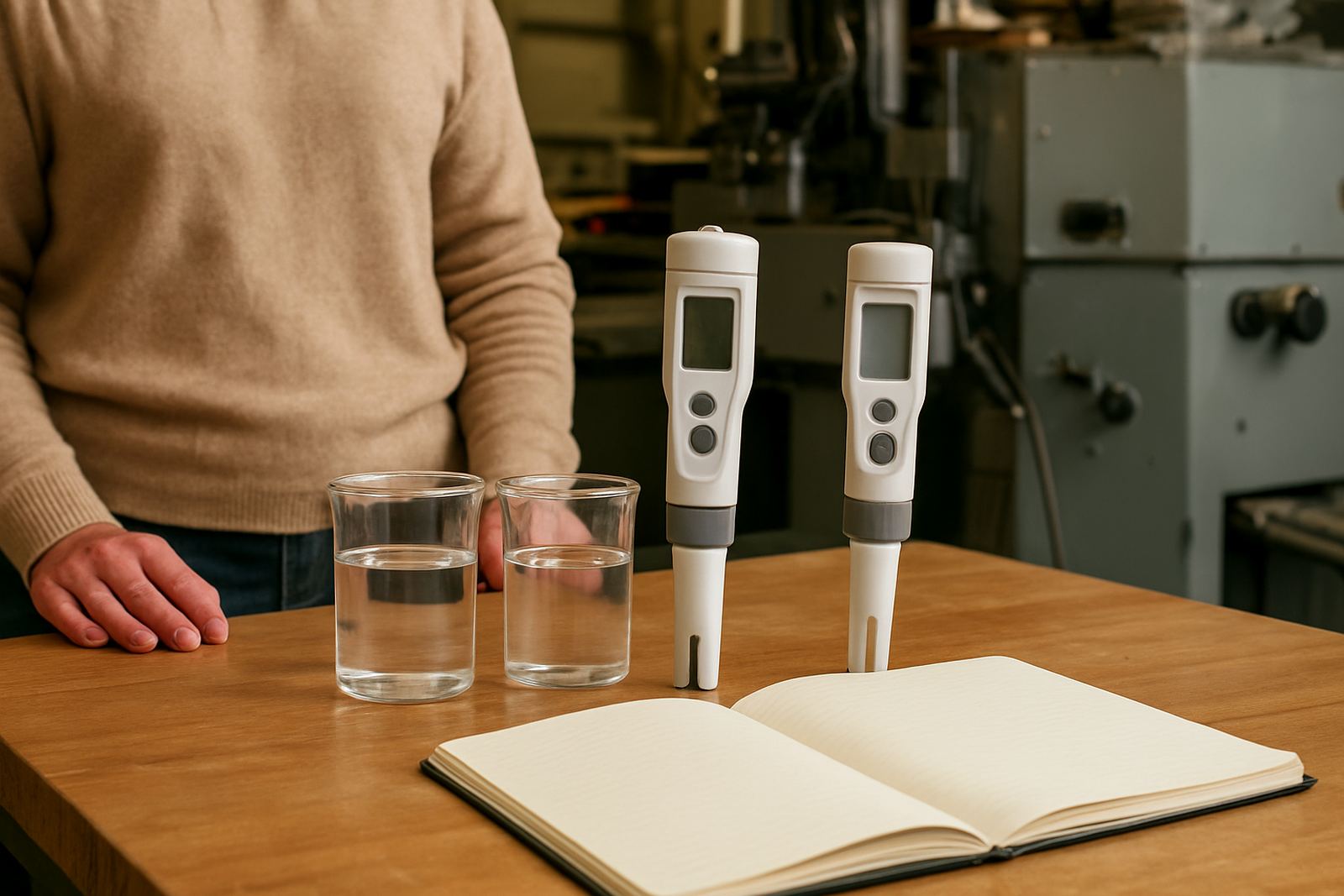
In plain terms, pH tells you how acidic or alkaline a solution is, while conductivity shows how much dissolved material is in it. In a plate room or on press, those two numbers give a useful picture of whether a fountain solution, gum, wash or processor bath is still doing its job.
That does not mean every value has to be chased to the decimal. The practical point is to know your normal range, then watch for drift. If the numbers move too far, the chemistry usually changes before the print defects become obvious. By the time scumming, toning or poor water balance shows up on the sheet, you have already lost time and stock.
For many South African printers, especially in Johannesburg, Pretoria and Germiston, the real challenge is not measuring. It is keeping measurements meaningful when the room gets hot in summer, the water quality changes, or the line gets restarted on a Monday morning. A small shift in pH or conductivity can look harmless at first, then become a production headache by the afternoon.
Keep the readings steady, not perfect
The mistake many shops make is treating pH and conductivity like pass or fail numbers. They are better used as trend indicators. If your fountain solution has always sat in a certain band and now starts climbing or dropping, that is the signal to check dilution, contamination, evaporation or make-up water.
Stable readings matter more than chasing one ideal figure for every machine. An older press with a well-used dampening system may behave differently from a newer line, and a flexo unit or finishing process may have its own chemistry needs. What matters is consistency, recorded properly, so the team knows what normal looks like for each process.
- Measure at the same time each shift where possible
- Use clean containers and keep probes in good condition
- Record the result with the press number and operator name
- Check temperature if the room is running hot
If the reading swings wildly between two tests, do not blame the chemistry first. Check the instrument, the sample point and whether the tank has been mixed properly. It is a small step, but it saves a lot of wasted adjustments and unnecessary callouts.
Where pH and conductivity start causing print problems
When pH is out of range, the most common signs are poor ink-water balance, dirty background, unstable solids and plates that do not hold up as they should. Conductivity problems often show up as over-sensitised solution, excessive salt build-up, inconsistent dampening or slow drying on the sheet.
In practical terms, a printer may see more dot gain, weak colour, poor desensitising, or a press that needs constant manual correction. That is especially frustrating on commercial work with tight turnaround times, where there is no room for a long makeready.
On a site in Industria West, one shift may start well in the morning, then by mid-afternoon the press is fighting against warmer room temperatures and a fountain tank that has drifted. The operator keeps turning knobs, but the real issue sits in the chemistry. Once the values are checked and corrected, the press usually settles faster than expected.
- Unexpected background tinting or toning
- Ink emulsifying too easily
- Plate wear or poor image release
- Inconsistent colour from sheet to sheet
- Extra wash-up time once the job is off
Simple checking habits that fit a busy pressroom
There is no need to make chemistry checks complicated. A short routine, done the same way each time, usually gives better results than a more advanced system used badly. The trick is to build the check into the day, not treat it as a rescue job after something goes wrong.
A useful routine is to check the make-up water, then the working solution, then the tank during the run. If the numbers are moving, compare them with the previous shift. This shows whether the change came from fresh make-up, contamination, evaporation or a machine issue.
- Label each container clearly
- Keep separate tools for fountain solution, wash and processor chemistry
- Rinse measuring cups after use
- Do not top up blindly if the numbers are already drifting
- Log any water changes, especially after maintenance or a change in the incoming supply
In places like Randburg or Midrand, where incoming water quality can vary from week to week, this kind of record becomes very useful. If a shutdown happened overnight and the press restarts warm, the team can compare the current readings to the last good run instead of guessing.
Why local water and climate matter more than many expect
South African printers work with varied water conditions. Some areas have harder water, some have more variation after municipal maintenance, and summer humidity can affect drying and chemistry behaviour in a different way to dry winter months. Even within Gauteng, a printer in Roodepoort may see different day-to-day results from one in Pretoria depending on supply, temperature and usage.
That is why a chemistry programme should fit the actual site, not just the supplier sheet. If conductivity keeps creeping up, the cause may be poor dilution, but it may also be evaporation on a hot day, tank contamination, or a change in the incoming water. pH can also shift when additive levels are not controlled properly or when old solution is carried through the system.
Good monitoring helps the team avoid overcorrecting. Too much adjustment can create a new problem while trying to fix the first one. A careful note and a measured top-up often does more good than a large change based on a quick visual impression.
A practical way to use readings across plate, press and finishing
pH and conductivity should not sit in isolation. They work best as part of the broader production picture, together with plate condition, blanket health, processor servicing and wash performance. When one part of the line is under strain, the chemistry numbers can help show where to look first.
A printer handling offset work may use the readings to keep fountain solution stable, while flexo or finishing teams may use them to manage wash programmes, cleaning cycles or supporting fluids. The point is the same across all of them: fewer surprises, less waste, better repeatability.
For a plant serving customers across Johannesburg and out to Pretoria, the value is practical. You need to know when a line is safe to keep running, when to pause and adjust, and when the problem is not print at all but supply, dilution or equipment condition. That is the kind of control that keeps jobs moving without overcomplicating the shift. It also helps the operator feel confident, which matters more than people admit.
Handled properly, pH and conductivity are not extra admin. They are part of keeping the pressroom calm and productive, especially when the day is already full of deadlines and changeovers.