Why Roller Cleaning Fails in Real Pressrooms
Most roller problems do not begin with age alone. They start with cleaning habits that are too aggressive, too light, or too inconsistent. In a Johannesburg pressroom, that can mean rollers are being wiped while still warm after a run, or left sitting with dried ink because a shift change was rushed. Both are a problem.
Rollers need the right balance of cleaning, inspection, and rest. If the surface glaze is damaged, the roller will not carry ink or water evenly, and the press operator then spends more time chasing colour than printing. That costs paper, time, and plate life too.
Using the Wrong Cleaner for the Roller Cover
One of the most common errors is using a cleaner that is too strong for the roller material. A solvent that removes dried ink quickly may also dry out the cover, swell it, or strip the surface finish. Once that happens, the roller starts to harden and lose its grip on the ink film.
- Check whether the cleaner is suitable for ink rollers, dampening rollers, or both.
- Use only the amount needed to lift residue, not a flood that runs into bearings or seals.
- Never mix cleaning chemistry unless the supplier has confirmed it is safe.
- Keep separate cloths for ink, water and machine wipe-down work.
On older presses, a heavy cleaner can creep into areas it should not reach. The result is a roller that looks clean but performs badly two or three days later.
Scrubbing Too Hard and Damaging the Surface
A roller is not a floor tile. If operators use coarse pads, wire-like brushes, or rough rags, they can scratch the cover and create tiny high spots that trap ink and dirt. The next wash will only push more residue into those marks. Over time the roller starts printing unevenly and the operator may think the press is out of register when the real issue is the roller surface.
Gentle, even cleaning works better. Allow the cleaner time to break down the ink, then wipe it off with a soft lint-free cloth. If there is heavy buildup, repeat the process rather than attacking the roller with force. That is especially important on narrow web and smaller finishing lines where the rollers are working harder for longer runs.
Leaving Chemistry to Dry on the Roller
Cleaning solution left on the roller can be just as harmful as dirty ink. When liquid dries on the surface it can leave a film that changes the roller's behaviour, and in humid spots like parts of Germiston, that film can attract more contamination. A roller that felt fine at shutdown may be sluggish at startup the next morning.
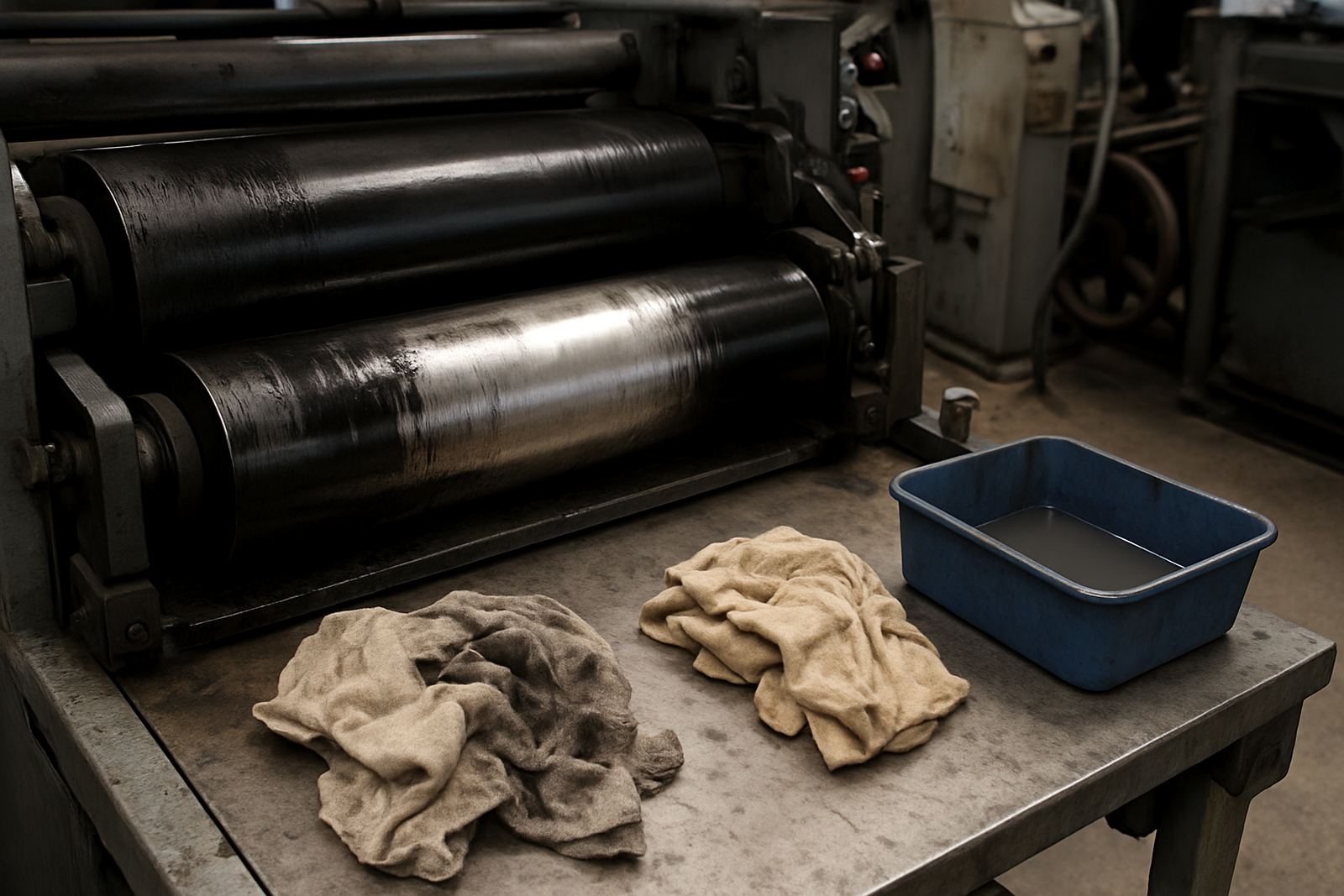
After cleaning, the surface should be wiped down properly and checked by hand. If residue transfers to the cloth, it is not clean yet. This small step is often skipped when teams are under pressure to restart after a stop or a late plate delivery.
- Finish with a dry, lint-free cloth pass.
- Inspect for streaks, glaze, cracks or swelling.
- Do not store rollers against dirty covers or open chemical containers.
- Record repeated residue issues so the wash programme can be adjusted.
Cleaning on the Wrong Schedule for the Press Load
Some teams clean too often, others not often enough. Both can shorten roller life. Excessive cleaning can wear the cover down faster, while delayed cleaning allows ink to dry and harden into the surface. The right schedule depends on ink type, production volume, ambient heat, and how long the press stands idle between jobs.
A printer in Industria West running mixed commercial work may need a different cleaning routine from a site doing long packaging runs in Midrand. If the press stops overnight with ink left on the rollers, the next shift may spend a long time recovering colour stability. That means more waste sheets before the job settles.
It helps to match the cleaning plan to the day’s workload rather than using the same routine for every shift. A short run and a long run do not create the same dirt load, so they should not get the same treatment.
Ignoring Roller Balance, Pressure and Wear
Cleaning can hide a mechanical problem for a while, but it cannot fix it. If rollers are out of pressure, worn unevenly, or out of balance, cleaning alone will not stop them from marking, ghosting, or laying down too much water. Sometimes the real issue is seen first during cleaning because the operator notices shiny patches, cracking, or a roller that feels flat in one area.
This is where proper checks matter. A roller that is cleaned well but never assessed will keep causing trouble. Regular inspection should look at surface condition, diameter loss, bearing play, and whether the roller is matching the press setting across the full width. In many cases a minor adjustment now saves a bigger replacement later.
Simple Habits That Keep Rollers Working Longer
The best roller cleaning habits are not complicated. They are repeated every day by people who know what good looks like. If the team is trained properly, the press runs steadier, start-up takes less time, and colour stays calmer through the job.
- Match both cleaner and cloth to the roller compound.
- Clean before ink hardens, not hours later.
- Finish with a dry wipe and quick visual check.
- Log any cracking, swelling, shine or uneven wear.
- Review the wash programme whenever job mix or humidity changes.
For South African print shops working through hot afternoons and tight dispatch times, roller care has to be practical. A clean roller should not just look good. It should print evenly, hold colour, and last the distance.