
Start With the Three Readings That Matter
Most press problems are easier to trace when the fountain solution is checked the same way every day. The main readings are pH, conductivity and temperature. If these three move out of range, ink and water balance changes on press, plates start behaving differently and colour can drift during the run.
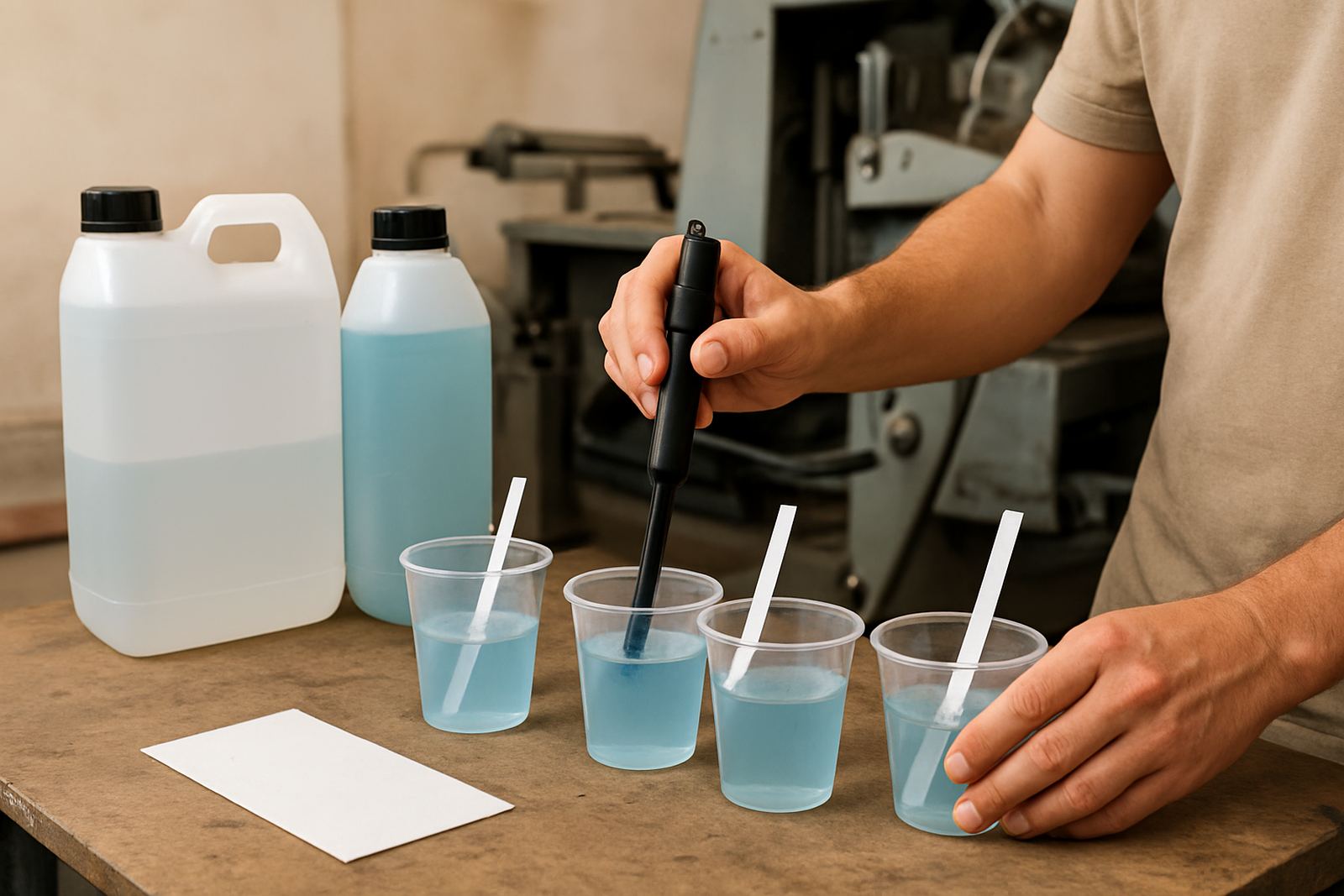
Use the same measuring point each time, usually straight from the tank or recirculation line after the solution has mixed properly. Do not take one sample from the top of the tank and another from the bottom, because that gives false results. For practical pressroom control, consistency matters more than chasing one perfect number that changes from hour to hour.
- Check pH with a clean, calibrated meter or test strips suited to print use.
- Check conductivity with the same meter every time, not a different unit for each shift.
- Record temperature because warm solution can change readings and press behaviour.
How to Take a Clean Sample Without Disturbing the System
Always sample from a running system if possible, not from stagnant liquid sitting in a bucket or open container. Give the solution a moment to circulate, then draw a small sample into a clean plastic cup or bottle. If the container has been used for ink, wash-up solvent or plate chemistry before, do not use it for sampling. Even a small residue can throw off the result.
Keep your hands clear of the sample and avoid taking readings next to an open wash area where overspray or cleaning residue can land in the cup. In humid spells across Johannesburg west, moisture in the air can also affect exposed test strips and unsealed containers. Work quickly, then close the bottle and return it to the bench.
- Rinse the sample cup with the solution before taking the final sample.
- Wipe the meter probe with a lint free cloth after each use.
- Take the reading at the same time each day, before the main run if possible.
Keep a Log That Actually Helps When the Job Goes Wrong
A reading on its own is useful, but a proper log tells the full story. Write down the date, time, press, job number, operator, water source, additive dose, top-up amount and any correction made. If the job later shows toning, scumming or unstable density, you can compare the press behaviour with the fountain solution history instead of guessing.
One short log that every shift can fill in works best. A messy notebook with missing entries is almost useless, while a neat line by line log can show when a tank started drifting after a plate change, a wash-up cycle or an overnight standstill. On a crowded production floor, that timing is often the clue that saves hours of downtime.
- Record any chemical added in millilitres or grams, not just “top up done”.
- Note the ambient room temperature when the pressroom is unusually hot.
- Mark stoppages, plate stops and wash-up cycles.
What the Numbers Usually Tell You
When pH climbs too high or drops too low, the plate can lose stability and the ink may not behave the same from start to finish. Conductivity shows how much dissolved material is in the solution, so a sudden rise may point to over-dosing, mineral-heavy water or contamination. A slow drift may simply mean evaporation, while a fast change often means something new has entered the system.
Temperature also matters because warm solution can speed up evaporation and make readings look different even when nothing else changed. If the pressroom is running hot in summer or the chiller has been under strain, expect more variation. Humidity can also influence drying and blanket behaviour, especially on long runs with fine screens. Use the numbers with the print result, not on their own.
If the readings are stable but the print is not, look at plate handling, blanket condition, roller setting and wash programme before changing chemistry again. Many shops chase the solution when the real issue is mechanical.
Simple Checks Before You Start Chasing a Problem
Before adding more chemistry, changing water or calling for a full service, run through a short checklist. These checks catch a lot of everyday faults and they take only a few minutes. If the press has been sitting after a shutdown, mix the tank again before testing. If the water source has changed after municipal work or a tank refill, test again because the base conditions may have shifted.
- Is the meter calibrated and reading correctly against a standard?
- Is the solution mixed well and free of visible sludge or foam?
- Has the water supply changed, or is the storage tank clean?
- Are the rollers clean, correctly set and not glazing over?
- Has the blanket been checked for swelling, wear or contamination?
- Did the issue begin after a plate change, wash-up or cold start?
These checks often show whether the press needs chemistry adjustment, processor attention, or mechanical inspection. That is the fastest route to getting colour back under control.
A Good Record Makes Troubleshooting Faster
When a job repeats every month or every quarter, old records become valuable. You can see whether the same stock, plate type or press gives trouble under the same conditions. That helps with supply planning, processor servicing, wash programmes and plate handling training. In a busy print shop, it also helps new operators learn what normal looks like on your machines.
Use the records to compare one shift against another, not to blame people. If the day shift sees a stable pH and the night shift sees rising conductivity, there may be a top-up habit, a rinse issue or a contamination source that only shows up after hours. The goal is to reduce waste, hold colour better and keep the press running with fewer stops.
For South African printers managing multiple sites from Industria West to Randburg, Midrand, Germiston or Pretoria, the same method across all presses makes support much easier. A clear log means the next person can see what changed and why.