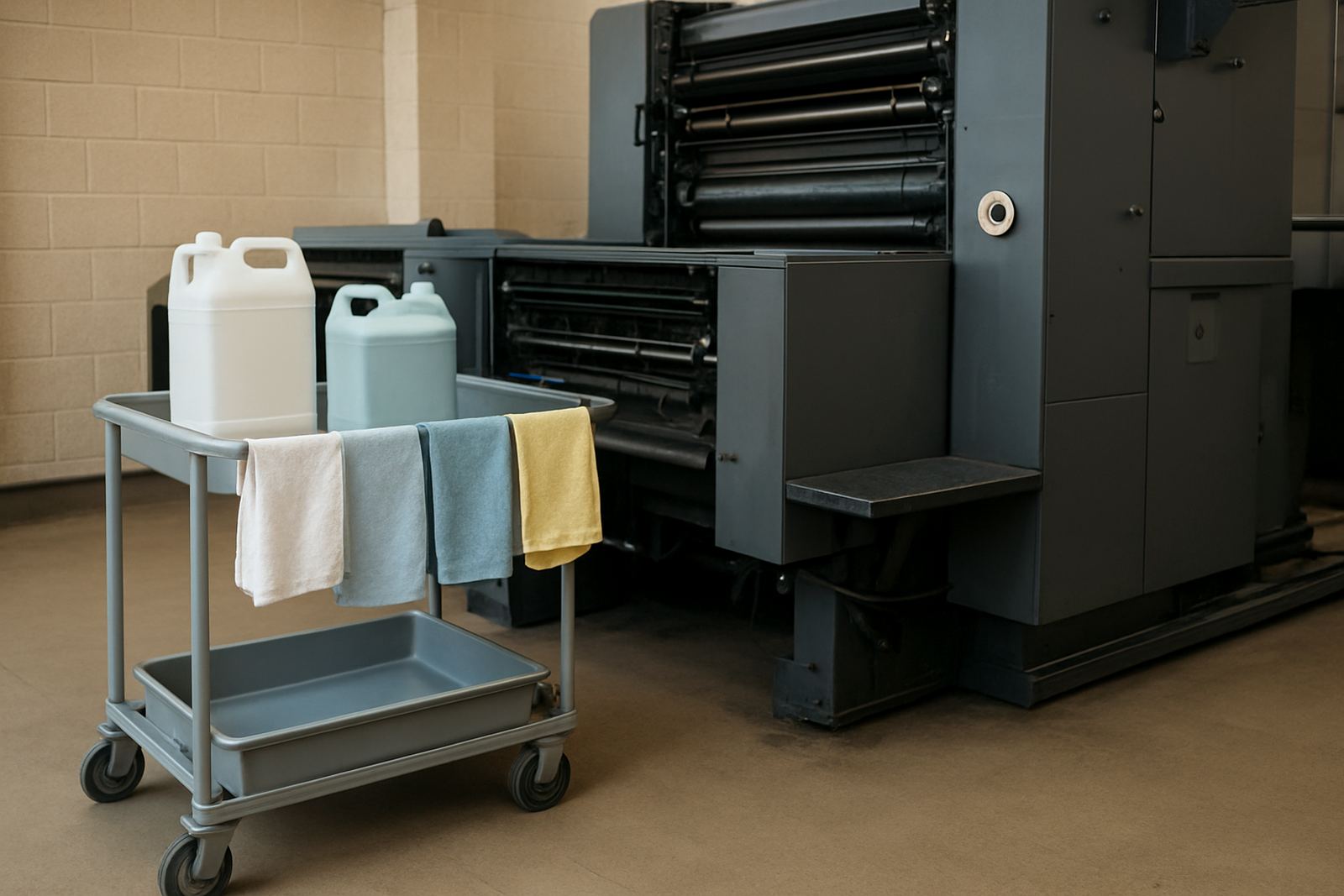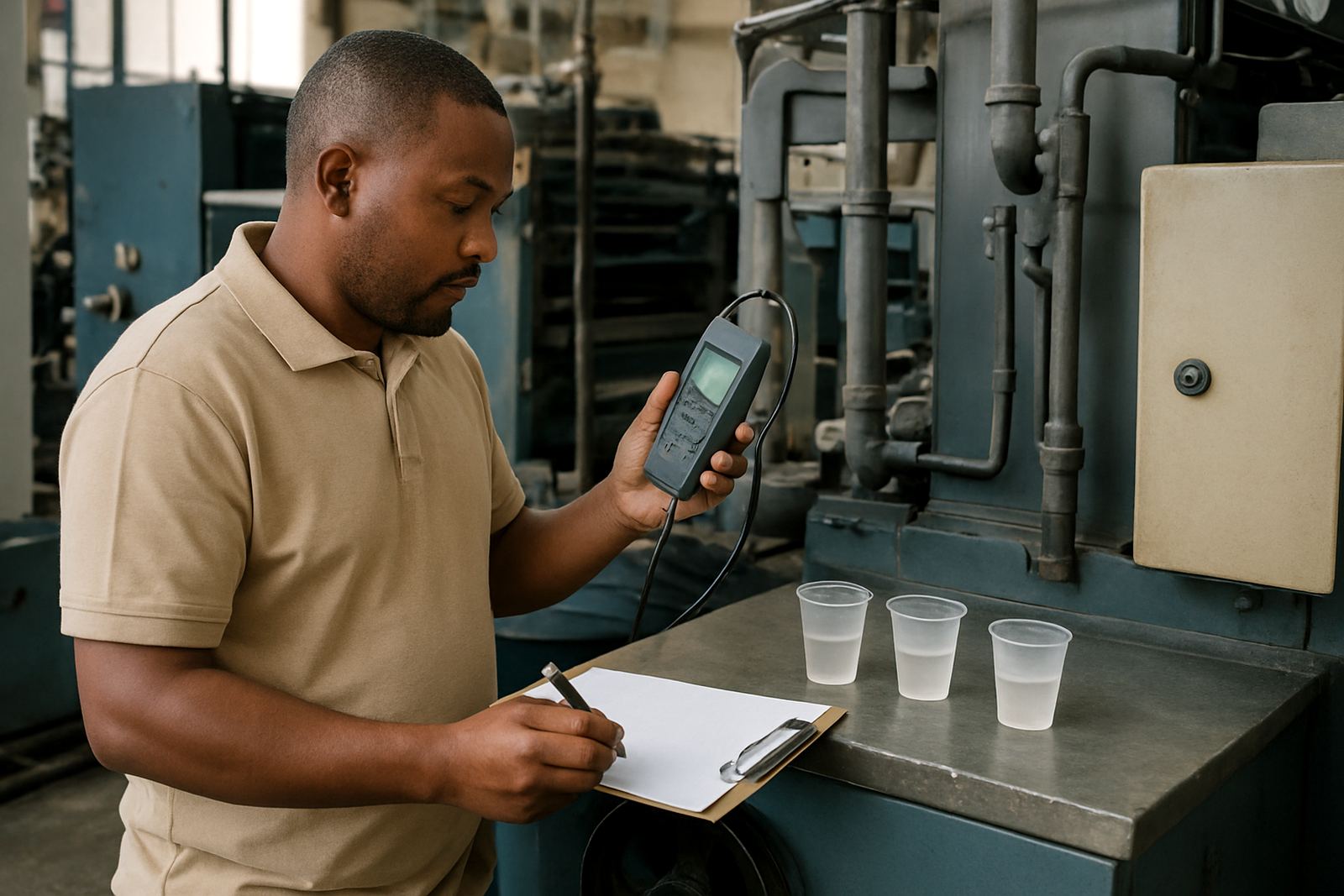
What our chemistry balancing covers
We support offset and related print lines with practical control of developer, replenisher and fountain solution. The aim is simple: keep plate contrast, gum protection and ink-water balance within spec so the press runs with fewer stops and less waste.
Our service suits sheetfed and web production, as well as finishing rooms that need tighter control on wash-up and plate handling. In hot conditions, and in humid weather, chemistry drifts faster than many plants expect so regular checks matter more than a once-off fix.
- Developer strength and activity checks
- Replenisher ratio control
- Fountain solution pH and conductivity checks
- Plate compatibility guidance for CTP plates
- Wash programme review for cleaner, safer plate work
How we balance a production line
We start with the running symptoms: dirty plates, scumming, weak image areas, unstable density, emulsification or excessive plate wear. Then we test the liquids in use, compare them with press behaviour and set a control target for the plant.
Where needed we also check mix-up points, dosing method, water quality and tank condition. A small change in make-up or top-up can shift the whole pressroom, especially after a weekend standstill, when pumps, circulation and temperature settle slowly.
- On-site sample testing and visual press checks
- Set point recommendation for pH, conductivity and temperature
- Adjustment of replenishment rates where required
- Clear handover notes for operators and supervisors
Typical control ranges and practical specs
Every plant is different, but most offset rooms work better when control points stay within a defined range. We do not push one fixed figure for every site because paper grade, plate type, ink set and water quality all play a part.
As a guide, we often work with fountain solution pH, conductivity and temperature as the main control values. For processor chemistry, we also look at replenisher balance, solution age and contamination from plate handling or blanket wash. Then the readings mean something on press.
- Fountain solution pH target: usually set to site and plate requirements
- Conductivity trend tracking: checked against daily top-up changes
- Temperature control: verified for stable plate and ink performance
- Developer activity: matched to plate speed and image density
How calls and routine checks are booked
For Johannesburg, Roodepoort, Randburg, Midrand, Germiston and Pretoria, routine checks are booked around the production schedule. Urgent production trouble is handled around the press window where possible, especially when a line is down or plates are coming out inconsistent.
For national clients, we plan around dispatch, stock movement and machine downtime so the visit does not interrupt production more than necessary. If a plant needs help soon, tell us the press type, the issue, current readings and whether chemistry has already been changed. That gives us what we need to advise properly on chemistry, stock and machine conditions.
Pricing approach for chemistry balancing
Cost depends on how big the operation is, whether the work is a once-off callout or part of scheduled maintenance, and how many systems need checking. A single pressroom with one fountain system costs differently to a multi-line plant with several developers, tanks and operators on different shifts.
We keep the pricing practical and itemised. Where possible, we separate site visit, testing, reporting and any follow-up training so you can budget properly. No one wants surprise charges for a minor adjustment that could have been sorted on the first visit.
- Once-off callout fee
- Scheduled monthly or quarterly service rates
- Testing and report fee if required separately
- Travel and after-hours support quoted upfront
Maintenance intervals that keep chemistry under control
Most print rooms benefit from weekly operator checks and a fuller review every month. Busy plants, or sites fighting high dust levels, temperature swings or irregular water supply, may need tighter intervals. In storm season the room can change from one shift to the next.
We normally recommend a simple routine: daily visual checks, weekly measurement of control values and a monthly review of trends. That gives operators a clear pattern to follow and makes it easier to spot drift before plates start showing problems.
- Daily: tank levels, smell, colour and foam check
- Weekly: pH, conductivity and top-up review
- Monthly: full chemistry balancing and trend comparison
- Quarterly: line review, operator refresh and process check
Key facts
| Service focus | Developer, replenisher and fountain solution control for print production |
|---|---|
| Typical areas | Pretoria, Germiston and Midrand, plus Randburg, Roodepoort and Industria West; further afield by courier |
| Supported processes | Offset printing, flexo support and print finishing chemistry checks |
| Key control points | pH, conductivity, temperature, replenishment rate and contamination |
| Booking | Gauteng visits set around your production schedule |
| Format | Once-off callout, scheduled maintenance, operator training and follow-up reporting |