What Our Plate Handling Training Covers
Our plate handling training is set up for production teams that need fewer rejects, less downtime and cleaner starts on press. We work with operators, supervisors and warehouse staff so the full chain is covered, from receiving plates in Industria West to loading them at the pressroom table. The session is practical and direct, with clear steps that suit South African print environments where heat and dust can affect storage and handling.
Training can be done on site at your plant or at our Johannesburg base if you want a controlled session with sample material and demonstrations. We cover plate storage, safe lifting, identification, mounting alignment, packing checks and damage prevention. If your team handles offset work, we also look at plate bending, edge protection and plate movement during transport between prepress and the pressroom. For flexo users, we focus on clean handling, surface protection and correct stacking so plates are not marked before use.
- Receiving and unpacking plates without edge or surface damage
- Safe storage in dry, dust-controlled conditions
- Correct plate orientation and batch identification
- Loading, mounting and alignment on press
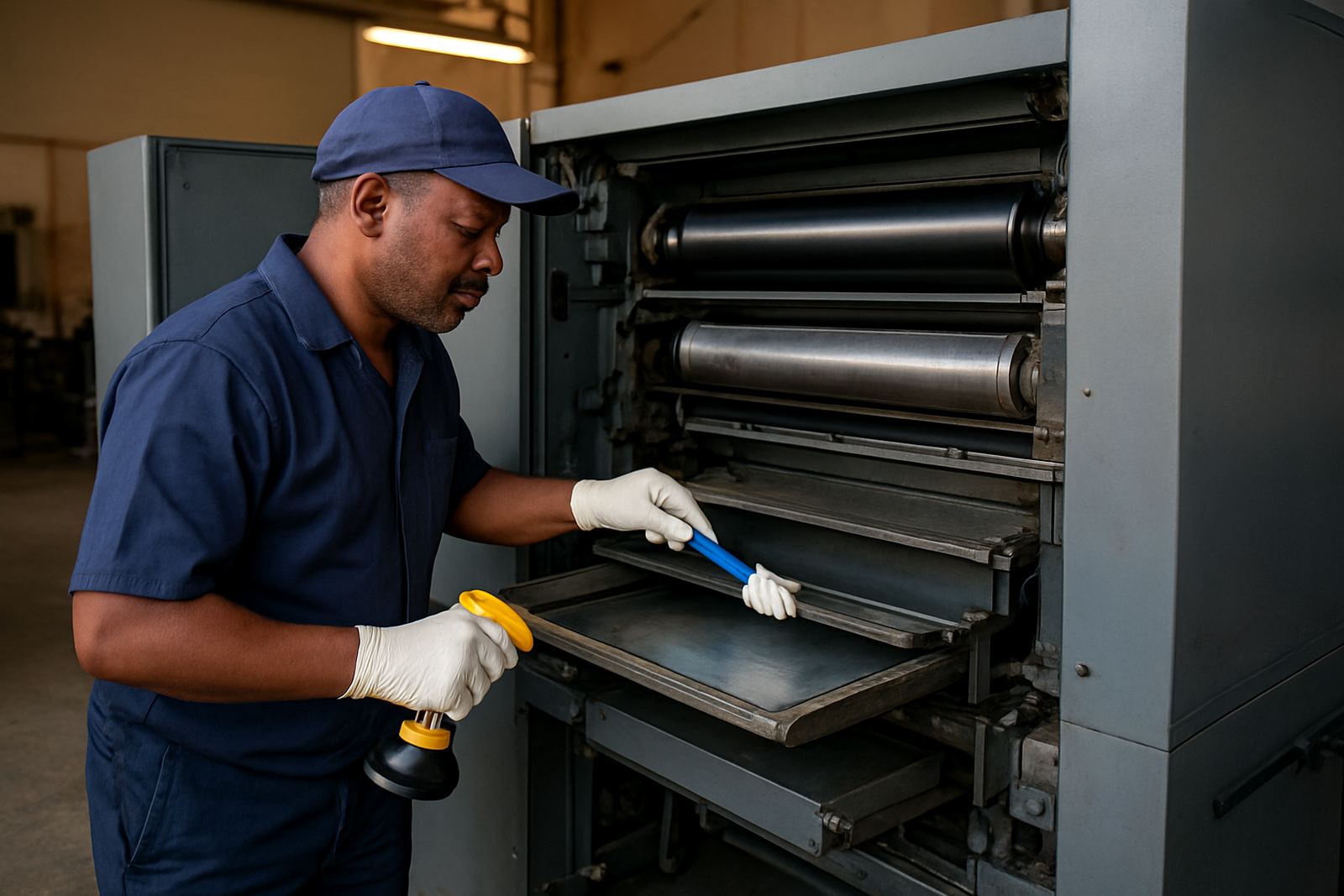
- Handling rules for gloves, lifting and plate transfer
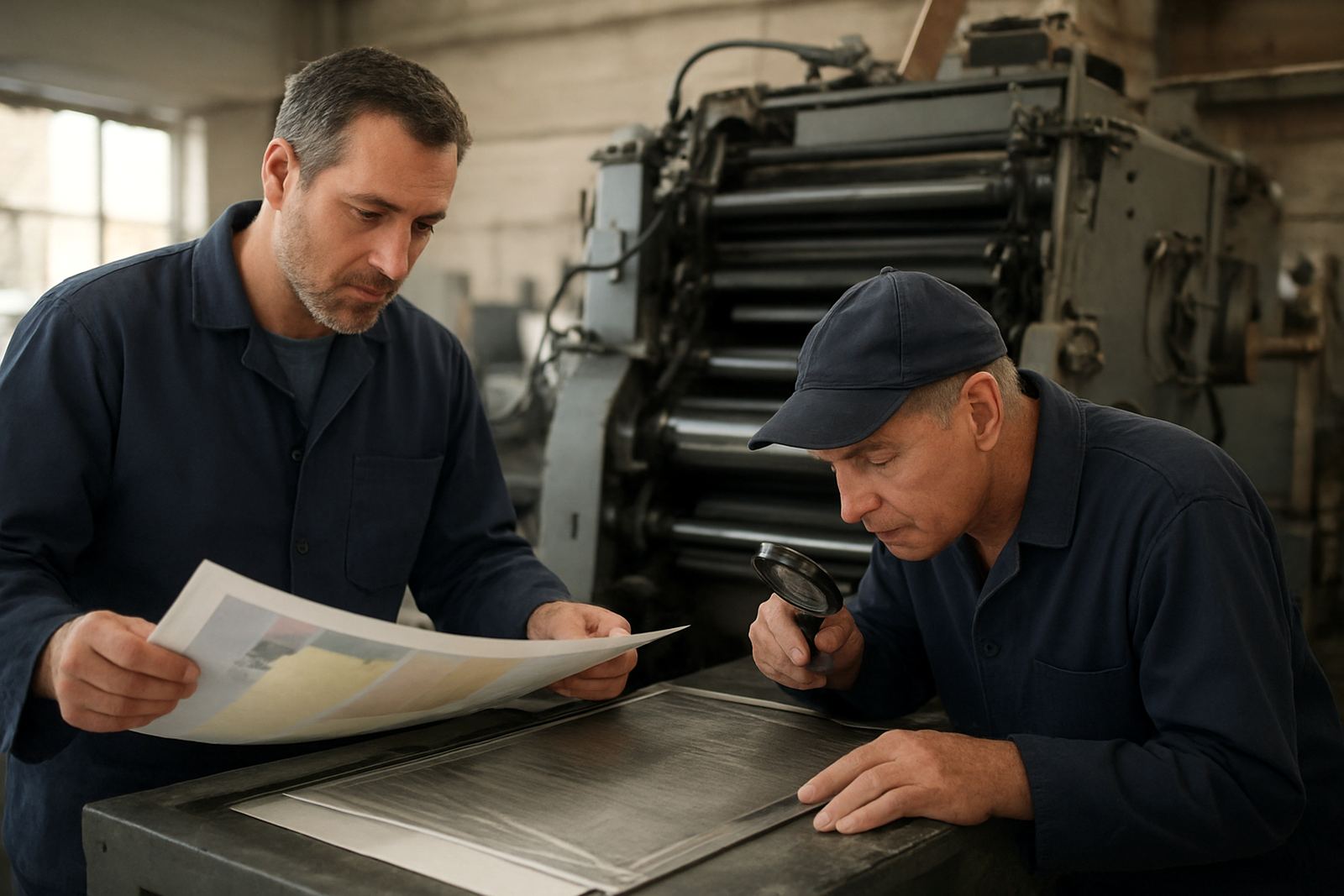
- Damage checks before plates go to press
Why Proper Handling Matters For Plate Life
A plate can be technically correct and still underperform if it is scratched, bent or contaminated before it reaches the machine. Even small marks can show up as scumming, weak solids, poor registration or early wear on the blanket. In busy Johannesburg, Pretoria and Midrand operations, plates are often moved quickly between prepress, storage and press startup, so the handling routine has to be simple enough for the team to follow every day.
We show where damage usually starts, such as stacking plates flat on uneven surfaces, carrying too many sheets at once, using damaged gloves, or leaving plates exposed near doors and dock areas. We also explain how humidity and temperature swings can affect plate condition, especially for buildings with poor air control. A better handling routine can save money on reprints, reduce press stoppages and keep colour more stable from shift to shift.
- Less scuffing and edge damage
- Better plate consistency across shifts
- Fewer setup delays at press startup
- Reduced waste from avoidable plate faults
Our Step By Step Training Process
We keep the process structured so the team can absorb it without losing time on the floor. First we review your current method, including storage, movement routes, mounting tools and who handles each stage. Then we check the kind of plates you use, the press formats involved and any repeated fault patterns such as scratches, poor fit or bent corners. After that we run a practical session with your staff and show the correct routine step by step.
Typical training follows this order:
- Site review and handling audit
- Identification of weak points in storage and movement
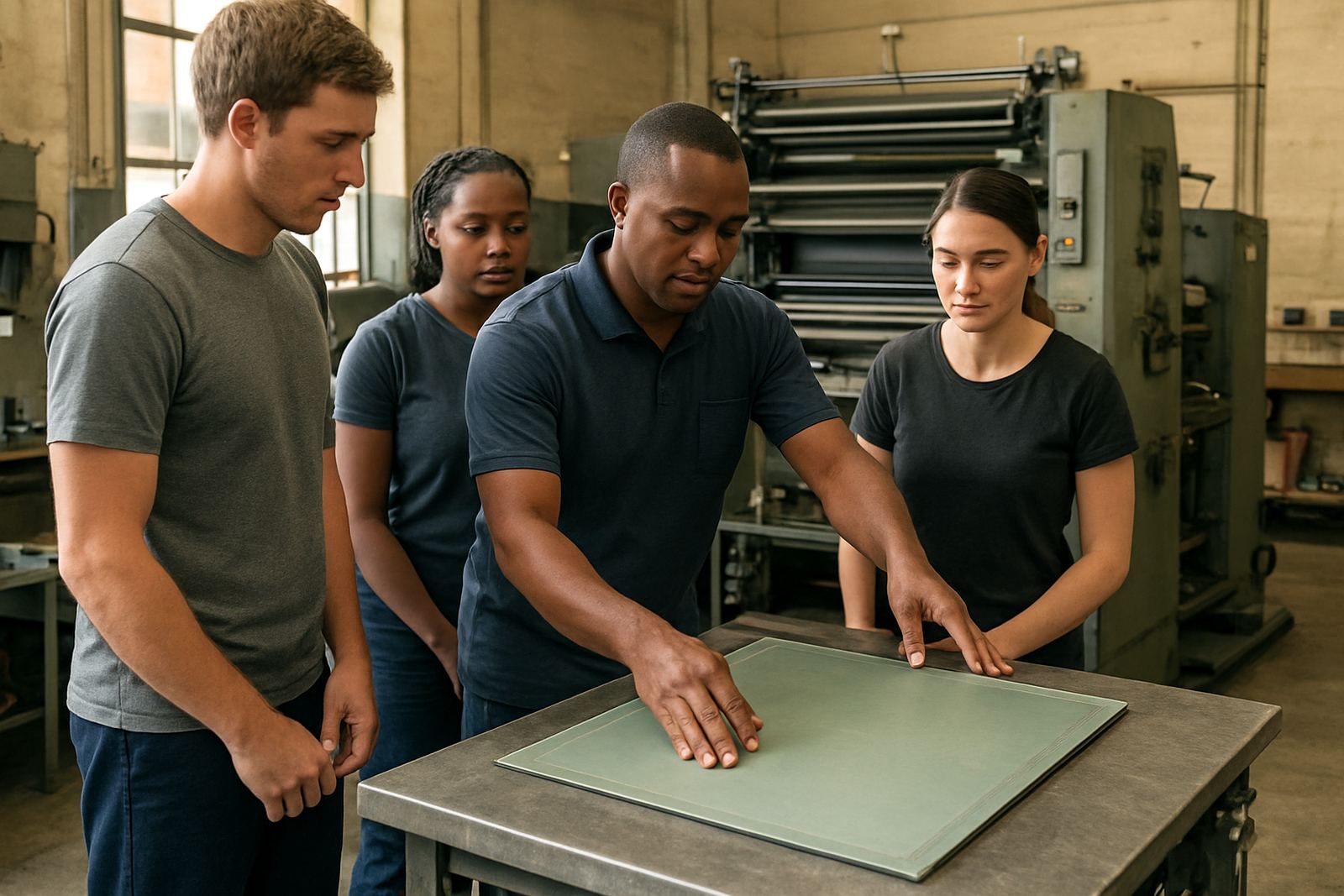
- Demonstration of safe lifting and plate transfer
- Mounting and alignment practice on the pressroom side
- Damage prevention checks and end of shift storage advice
- Question time with your operators and supervisors
Where needed, we also include a short refresher on chemistry interaction and how plate handling affects wash programmes and colour stability. That way the team sees the link between clean handling and a calmer pressroom.
Training Specs For South African Print Rooms
The training is practical, but it still follows clear standards so you know what your team is expected to apply after the session. We tailor the detail to the presses and plate sizes you run, from smaller commercial work to larger sheetfed and packaging formats. We also account for daily realities like dock access, shift changes and the need to keep production moving while training takes place.
- Session length: 2 to 4 hours for a focused group, or half day for a fuller site walk-through
- Group size: 4 to 12 staff members per session
- Plate formats: standard commercial, larger format and custom press sizes
- Handling focus: offset, flexo and plate finishing environments
- Environment check: storage area, loading route, mounting point and waste control
- Support material: written handling checklist and basic store room rules
If your business runs multiple shifts, we can duplicate the session so each team gets the same standard. That is often the best option for plants in Roodepoort, Randburg and Germiston where different crews may be handling the same plates at different times.
Booking, Pricing And Maintenance Intervals
We book plate handling training once we have your location, shift pattern and the number of staff involved. Johannesburg metro sessions are usually grouped with nearby visits, while nationwide bookings depend on travel and production windows. If you need the session before a new job run, before a machine startup or after repeated plate damage, let us know early so we can line up the visit properly.
Pricing is based on the number of staff, the depth of the training, travel and whether you want a site audit with recommendations. We keep the approach practical, so you only pay for the level of support your team needs. For ongoing maintenance, most plants benefit from refresher training every 6 to 12 months, or sooner if you bring in new operators, change presses, move storage areas or see repeated handling faults. A short refresher is also useful after long shutdowns, seasonal production peaks or changes in shift supervisors.
We can also align the training with other support work such as plate selection, chemistry balancing, press startup help and supply planning. That gives your team one consistent process from storage to pressroom, which helps with day to day control.
Who Benefits Most From This Service
Plate handling training is useful for commercial printers, packaging plants, finishing rooms and in house production teams that want fewer errors and less waste. It is especially helpful where staff changes often, where plates travel between different rooms, or where storage is tight and the team has to work carefully around pallets, trolleys and press traffic. If your plant is dealing with humidity or warm summer conditions, good handling becomes even more important because plates may sit longer before use.
Our team in Industria West works with businesses across South Africa, including Roodepoort, Randburg, Midrand, Germiston and Pretoria. We keep the advice practical and grounded in what actually happens on the floor, not theory. If your team needs a better routine for plate life and cleaner mounting, this is where to start.
Key facts
| Service type | On site or scheduled training session for plate handling and damage prevention |
|---|---|
| Primary focus | Storage, loading, mounting, transfer and plate life protection |
| Typical duration | 2 to 4 hours, or half day for a fuller plant review |
| Recommended refresh interval | Twice a year to yearly, plus after staff or process changes |
| Coverage area | Johannesburg City West and nationwide |
| Ideal team size | 4 to 12 staff per session |