Clean, low-lint wiping for daily pressroom work
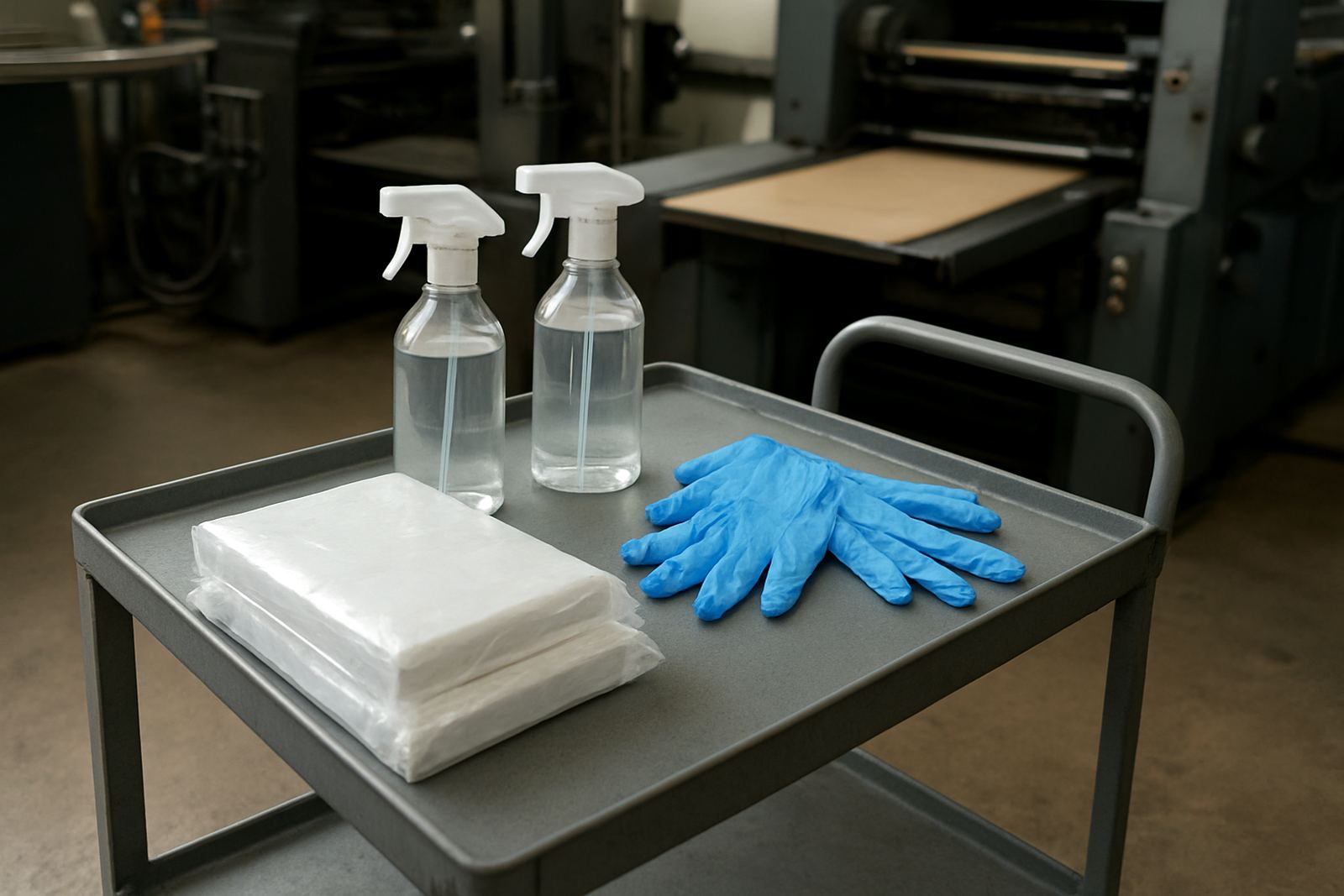
Lint free wipes are made for jobs where ordinary cloths leave behind fibres, fluff or streaks. In a print room that can mean marks on plates, blocked nozzles, dirty blankets or unnecessary rework. These wipes are used for plate care, solvent application, machine wipe-downs and general maintenance where a controlled finish matters. They suit busy shops in Johannesburg, Pretoria, Midrand and other production centres where time is tight and every wipe must do its job the first time.
They are especially useful during start-up, changeovers and end-of-shift cleaning. Because they shed less than general-purpose rags, they help keep surfaces cleaner around CTP plate handling areas, press controls, rollers and finishing stations. That makes them a sensible consumable for both offset and flexo environments, and for any operation that needs better control over dust and residue. Small detail, big difference in the work area.
- Low-lint wiping for plates, blankets and machine surfaces
- Suitable for solvent use and controlled cleaning
- Helps reduce fibre contamination in print production
- Useful for routine maintenance and quick wipe-downs
Where lint free wipes fit in the pressroom
These wipes suit printing businesses that need a cleaner result when using cleaning fluids, plate care products or maintenance sprays. They are commonly used during press startup help, plate handling training, blanket assessment work and production troubleshooting. On presses with tight tolerances or older equipment that already needs careful attention, a low-lint wipe can prevent small problems from turning into recurring stoppages.
They also help in areas exposed to dust, paper fibre and ink mist. In Gauteng, where dry conditions and heavy traffic dust can build up quickly, pressrooms often need more frequent cleaning than operators expect. Many national customers need wipes that perform consistently in warmer, more humid sites. For municipal print shops, commercial printers and packaging lines, the aim is simple: cleaner contact surfaces and less contamination.
- Offset printing and plate rooms
- Flexo maintenance and cleaning tasks
- Blanket and roller wipe-downs
- Finishing areas where residue control matters
Sizes, pack formats and ordering choices
Lint free wipes are usually ordered in pack or box form, depending on how often they are used and how many operators share the same station. Some shops prefer smaller packs for bench use and quick access, while larger cartons work better in production areas with high daily consumption. If your team runs multiple shifts, it often helps to keep stock at each press rather than moving a single box around the room.
When ordering, think about the solvent used, the surface being cleaned and how much absorbency is needed. A wipe that is too light may tear early, while one that is too heavy can waste solvent. The right choice depends on the job, and not every cleaning task needs the same cloth. If you are planning stock for several branches, factor in the pace of consumption at each site so you do not run short mid-run.
- Pack sizes for bench use and bulk use
- Single-operator stations or shared pressroom stock
- Options for light cleaning or heavier solvent work
- Can be added to planned consumable schedules
Storage near the work area
Lint free wipes come ready to use from the box. They are a consumable and can be stored in a dry, clean area close to the point of use. For best results, keep them sealed until needed and place the packs away from open ink tins, dust and water. If a pressroom is handling wet cleaning agents, it helps to keep the wipes in covered containers so they stay usable for longer.
There are no special utility needs, but there are practical site considerations. A wipe used for plate care should not be mixed with general workshop cloths. Separate stock points make it easier to control cleaning standards and track usage. In larger plants around Germiston, Roodepoort and Industria West, it is common to keep one supply near prepress and another at press side. That keeps the workflow moving and cuts down on wasted walking around.
- Ready to use from the pack
- Keep wipes dry and clear of dust and spills
- Keep separate from general workshop rags
- Place stock close to the press for faster access
Care, handling and stock control
Even a lint free wipe works better when the rest of the cleaning routine is handled properly. Keep hands clean before touching plates or wiping surfaces, and avoid laying wipes directly on floors, pallets or oily benches. Once a wipe is overloaded with solvent or dirt, replace it. Re-using a contaminated wipe on a clean plate can move residue back onto the surface and affect print quality. It sounds obvious, but under pressure people do cut corners.
For shops that manage wash programmes and chemistry balancing, wipe use should form part of the broader maintenance plan. The right wipe can reduce solvent waste, support cleaner machine care and help operators work more consistently from shift to shift. A simple log of daily usage also helps when ordering stock, especially if multiple printers use the same area.
Wipes should be checked regularly for packaging damage, contamination or missing seals. If a carton is open too long in a dusty room, the contents may still be usable but not ideal for plate care. Good storage habits save money and keep the pressroom cleaner.
What to verify before ordering desensitiser paste
Before ordering lint free wipes, confirm how they will be used and what level of cleanliness is needed. A small pack for occasional plate work is very different from a bulk order for a high-volume plant running several presses and finishing lines. It also helps to know whether the team prefers a softer wipe for delicate surfaces or a stronger wipe for repeated solvent work.
Useful order checks include size, absorbency, pack count and whether the wipes will be used with specific cleaning fluids. If the business has more than one site, ask how stock should be split between Johannesburg, Pretoria, Midrand or regional branches. That way the right quantity lands where it is needed, and not all in one store room. A bit of planning avoids delays when production is already under pressure.
- Intended use: plate care, solvent cleaning or general pressroom wipe-downs
- Pack size and total carton quantity
- Absorbency and tear resistance
- Storage conditions and reorder timing
Key facts
| Product type | Lint free pressroom wipes |
|---|---|
| Use | Plate care, solvent cleaning and machine maintenance |
| Typical format | Pack or carton supply |
| Setup | None, used from the pack |
| Suitable environments | Offset, flexo and print finishing areas |
| Supply area | Nationwide from Industria West, Johannesburg |