What plate marking pens do in a print room
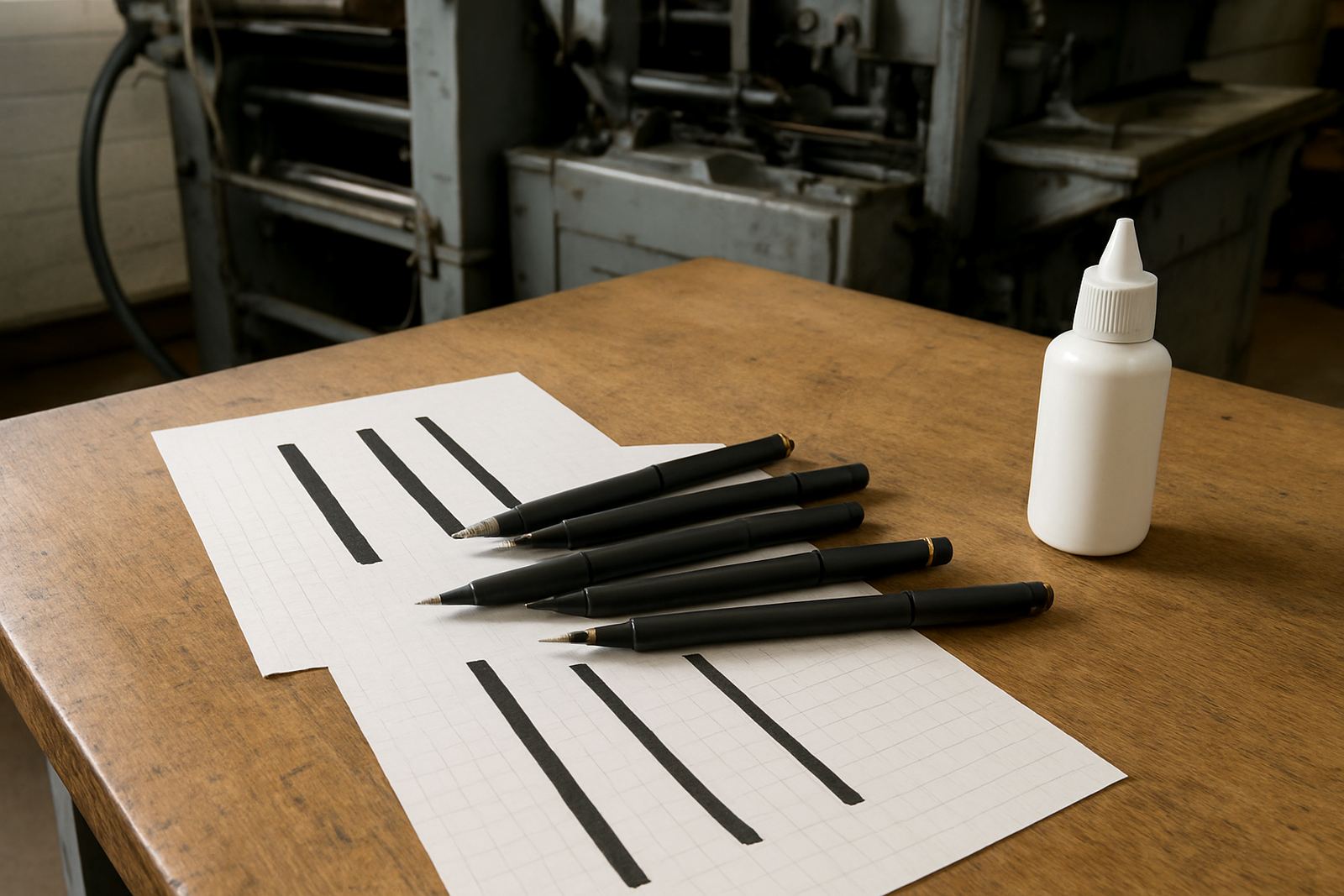
Plate marking pens are specialist marking tools used for controlled writing on plates during make-ready, plate checking and production control. They are handy for notes such as job numbers, side indicators, impression checks and temporary instructions, especially when a plate must be identified quickly before it reaches the press. The ink is designed to mark cleanly while staying easy to read under normal handling, and it should not bleed into areas that affect print if used correctly.
They are not general purpose office markers. In a plate environment you want a pen that gives a fine, predictable line, dries fast and does not smear when the plate is moved from the plate room to press. A good marking pen also needs a body that sits well in the hand, because operators often use it in short bursts throughout the day.
- For plate identification and job tracking
- For temporary notes during plate checking
- For controlled corrections where a visible reference is needed
- For use in plate rooms, press rooms and finishing areas
Sizes, nib styles and ink options that matter
Most plate marking pens are chosen by nib size and ink type rather than by appearance. Fine nibs are useful when space on the plate is limited or when the operator needs neat identification near trim or registration marks. Medium nibs are better when notes must be seen at a glance from a little distance. Some crews keep both sizes in the same department so the right pen is always available for the task.
Ink choice matters too. For plate work, the mark must be clear but controlled, and it should not react badly with typical handling in warm print shops or humid deliveries. In Johannesburg this often means a pen must stand up to long shifts and occasional interruptions, where plates may sit for a while before use. A pen that dries too slowly can lead to smudge marks and extra cleaning.
- Fine nib for small notes and close marking
- Medium nib for bolder identification
- Quick-dry ink for reduced smearing
- Low-odour options for enclosed plate rooms
Where these pens suit production best
Plate marking pens suit offset houses, flexo operations and print finishing teams that need a simple way to keep plates and related materials organised. They are especially practical where several jobs run at once and the team needs a quick visual reference before the plate reaches press. They also help during internal checks when more than one operator handles the same job.
In larger production sites around Industria West, Roodepoort, Randburg, Midrand, Germiston and Pretoria, the pens can be used alongside plate selection and production troubleshooting procedures. They are also useful in smaller shops that do not have a separate plate room, because a neat marking system helps avoid mix-ups. If your operation works with wash programmes or colour stability checks, a clear plate reference can save time when the press team is comparing runs.
- Offset plate rooms
- Flexo preparation areas
- Press start-up and make-ready stations
- Finishing areas where job identification must stay clear
How to use and store them for clean results
Plate marking pens are ready to use once the cap is off. They are ready to use straight from the pack, which makes them easy to keep on hand in press rooms and at plate handling stations. The main requirement is sensible storage. Keep them capped when not in use, away from excessive heat and out of direct sun, because a dry nib or thickened ink will shorten working life.
For best results, use light pressure and avoid over-marking. The aim is a clear reference, not a heavy scribble. If your team is training new staff, it helps to set a simple rule for where markings may be placed on the plate. That keeps notes consistent across shifts and reduces the chance of marks ending up in print. On busy mornings, a quick check before the plate leaves the room can prevent avoidable rework.
A pen should also be kept separate from solvent-soaked cloths and wash-up materials. That small step makes a difference in a production area where speed matters.
Looking after pens and knowing when to bin them
Plate marking pens need very little servicing but they do need routine care. Wipe the body if ink builds up on the outside, and keep the cap sealed properly after every use. If the nib starts to fray or the line becomes uneven, replace the pen before it causes unclear markings. In a print room, a bad note can be as disruptive as a poor plate, so it pays to keep fresh stock close to hand.
Watch for ink that skips, fades or pools at the tip. Those are early signs the pen is no longer giving controlled output. For teams that handle plates daily, it helps to keep a small stock rotation and check the condition of opened pens each month. A simple stock review can be done alongside chemistry balancing or blanket assessment, which keeps the whole room organised.
- Keep caps on after every use
- Store upright or in a stable tray
- Replace frayed nibs early
- Use the oldest pens before opening a new box
What to confirm before you order
Before ordering plate marking pens, check the plate type you are using and the level of detail you need to mark. Fine nibs suit small identification marks, while broader nibs work better for team notes. Also confirm whether the pens must be used in a dry inland print room or in a warmer, more humid environment, because the working conditions can affect drying speed and storage life.
It also helps to know your expected usage per week. A small shop may only need a few pens on hand, while a high-volume plant in Johannesburg or Pretoria may need regular supply planning to avoid shortages. If the pens will be used during press startup help or production troubleshooting, ask for a format that is easy to grip and quick to cap one handed. Check pack size, nib size, ink colour and whether the marking needs to be temporary or more visible during the full job cycle.
LithoPrinting Plates supplies practical plate room items nationwide from Industria West, Johannesburg, and can help you match the pen to the way your team actually works. If you are unsure, it is better to ask before ordering than to end up with a pen that smudges, dries out or is too bold for the task.
Key facts
| Product type | Specialised plate marking pen for corrections, notes and controlled identification |
|---|---|
| Nib options | Fine and medium nib options, depending on marking detail needed |
| Ink behaviour | Quick-dry, low-smear marking for print room use |
| Typical use | Offset, flexo, plate checking, job tracking and press startup support |
| Site needs | None required |
| Storage | Cap after use; store in a cool, clean drawer out of the sun |