Violet CTP plates for fast commercial prepress
Violet CTP plates are made for computer-to-plate workflows where speed and repeatability matter. They image with a violet laser system, then move into the plate processor for developing, rinsing and finishing before they go to press. For printers running daily jobs across Johannesburg, Pretoria, Midrand, Germiston and further afield, they are a strong fit for commercial litho work, quick turnarounds and repeat orders.
These plates are commonly used where you need solid dot sharpness, good registration support and predictable run lengths. They work well on sheetfed offset lines, especially for brochures, books, flyers, forms, inserts and general commercial print. If your team handles mixed volumes or short notice work, violet plates can help keep the plate room moving without constant fuss.
- Suitable for fast imaging and steady throughput
- Designed for offset commercial production
- Useful for shops needing dependable day to day output
Common sizes, thicknesses and finish options
Plate selection depends on the press format, imager settings and finishing line. The most common supply needs are centred on sheetfed commercial formats, but the exact cut size must always match the press cylinder, bend spec and plate punch setup. We also see different needs between printers doing repeat work and those changing jobs often, so the plate finish and coating choice should match the workflow.
Typical options include standard and custom cut sizes, different thicknesses for press compatibility, and plate packs supplied in the counts your production schedule needs. If you are running several machines from Industria West or a satellite site in Randburg or Roodepoort, it helps to order the same spec each time. That keeps setup time down and reduces mistakes at the guillotine, the plate bender or on press.
- Custom cut sizes to match press requirements
- Common commercial thickness options available
- Supplied in packs for regular production runs
Where violet plates suit the job best
Violet plates are a good match for commercial printers handling medium to high volumes, particularly where plate output feeds multiple pressrooms or finishing lines. They are often chosen for work that needs stable image detail, cleaner plate handling and dependable performance through the day. In hot or humid conditions, correct storage and disciplined processing matter a lot, because plates can pick up issues if they are left open too long or handled with dirty gloves.
They suit printers producing books, catalogues, magazines, packaging inserts, carbonised forms, stationery and promotional material. If your operation also carries out print finishing, the plate choice should support the full job chain from imaging to folding, cutting and binding. For plants in Johannesburg and Pretoria, a plate room plan with clear workflow steps can keep production moving on the busiest days.
- Commercial sheetfed offset production
- Short, medium and repeat runs
- Plants needing consistent prepress output during busy periods
Installation, power and air requirements
Violet plates rely on the imaging and processing equipment around them being set correctly. The plate setter, processor and support units must be installed on stable power with proper earthing and enough ventilation for safe operation. In many print shops, a controlled prepress room with dust control and temperature management gives better results than a hot open area near the bindery.
Where plates are processed in house, check that the processor has the right water supply, drainage and chemical handling points. If compressed air is part of your plate or press support system, it must be dry and clean, with no oil carryover. It is worth planning for a clean shutdown so plates do not get damaged mid-cycle, because that can waste both chemistry and time.
- Stable electrical supply for imager and processor equipment
- Good ventilation and clean working conditions
- Water, drainage and chemical handling must be correctly set up
Care, storage and servicing that protect plate quality
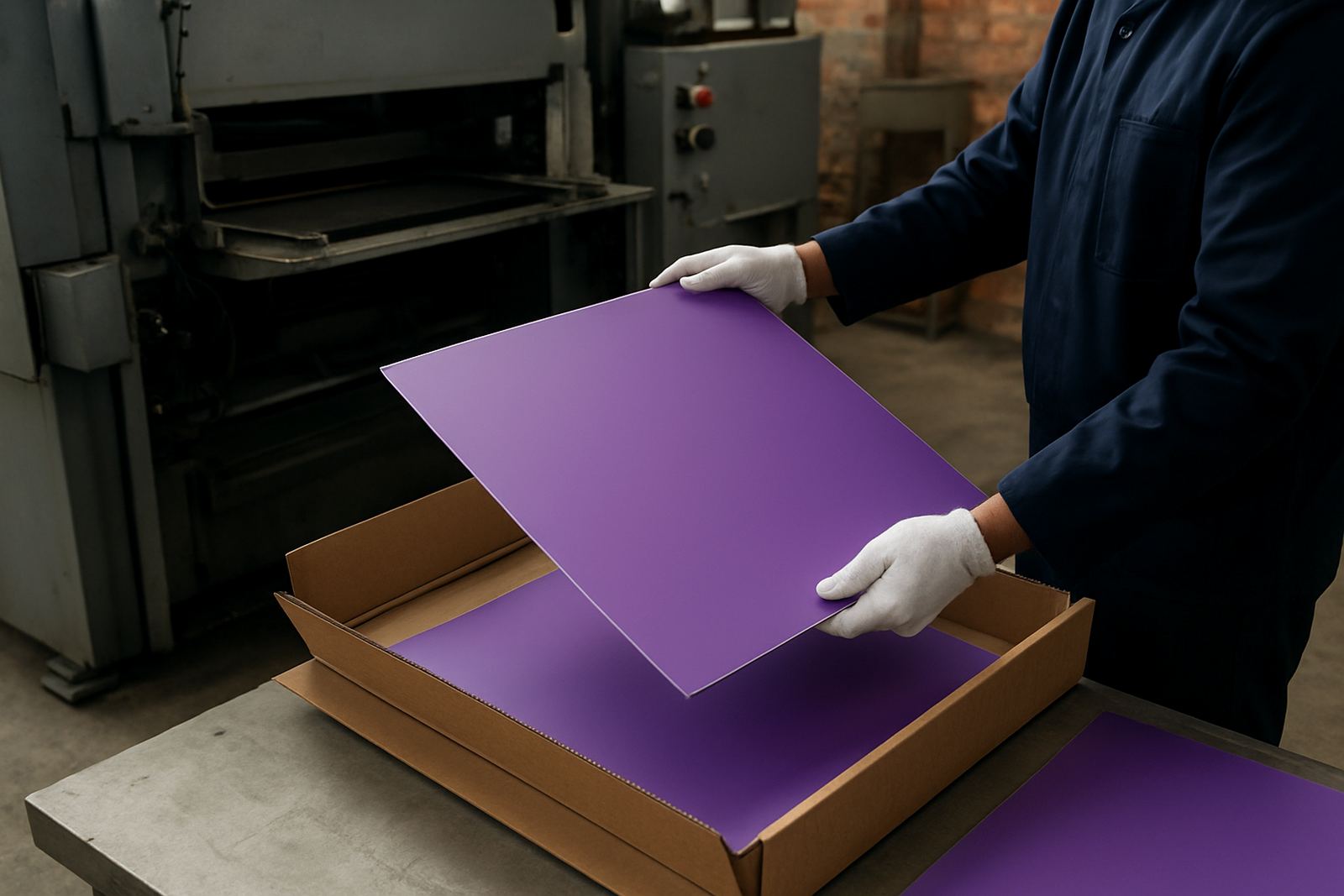
Plate quality is affected by handling long before the job reaches the press. Keep plates sealed until needed, store them flat in a dry room and avoid direct sunlight or high heat. Use clean gloves, clean racks and a disciplined label system so plates do not get scratched, bent or mixed up. A small handling slip can cost a press restart, and that means wasted paper, ink and man hours.
Processor servicing should stay on schedule. Chemistry balance, brush condition, rollers, temperature and rinse quality all matter. When those items drift, the plate may image but still give poor run stability or weak background on press. We support plate handling training, wash programmes, colour stability checks and production troubleshooting for printers that want fewer call backs and less downtime.
- Store sealed, flat and away from heat
- Keep processing chemistry and rollers in spec
- Train staff on safe handling and plate identification
What to confirm before ordering plate bags
Before ordering violet CTP plates, check the press model, plate size, plate thickness, punch pattern, imaging system and expected run length. If you are changing a supplier or moving work between branches in Johannesburg, Midrand or Germiston, it helps to confirm the exact plate spec against the actual press requirements. That avoids surprises at setup and keeps your production schedule on track.
You should also confirm whether the plates are for direct thermal, violet or mixed workflow use, plus whether your processor chemistry and bake or no-bake process suits the job mix. If the work includes heavy solids, fine screens or frequent reprints, let us know so the plate selection can be matched properly. We can help with plate selection, supply planning and production troubleshooting where needed.
- Press size, plate thickness and punch spec
- Imaging system type and processor setup
- Run length, screen rulings and job mix
Key facts
| Plate type | Violet-sensitive CTP plate for offset prepress |
|---|---|
| Use | Commercial litho and general print production |
| Common supply | Custom cut sizes and standard commercial formats |
| Workflow | Image, process, rinse and dry before press use |
| Handling | Store sealed, flat and in a dry clean room |
| Support | Plate selection, servicing, troubleshooting and training |