What a loupe magnifier does on press and in prepress
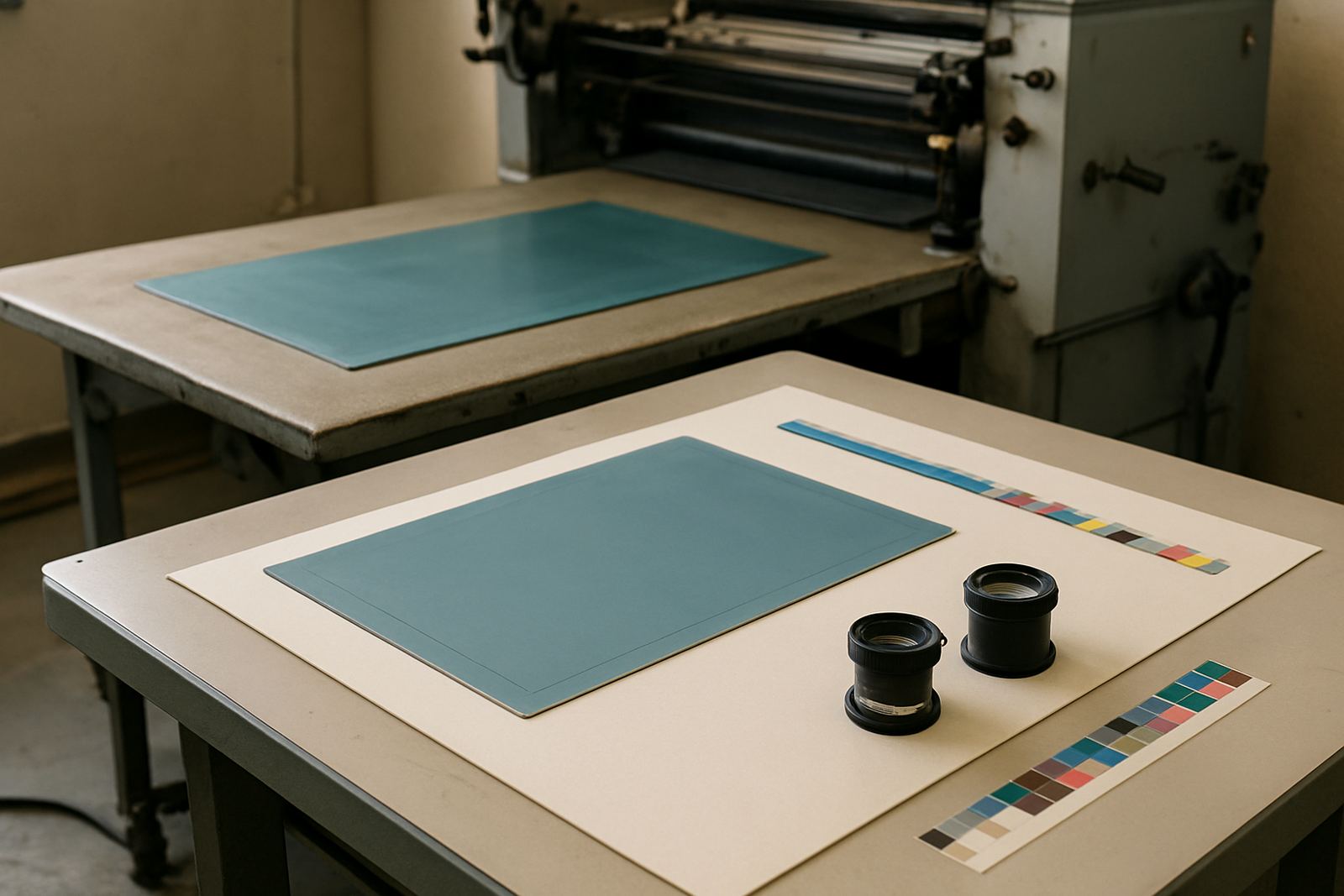
A loupe magnifier is a hand-held inspection tool that gives a clear enlarged view of fine print detail. In a litho environment it is commonly used for dot checking, plate review, blanket surface checks and final sheet inspection. It is small enough to keep near the machine, yet accurate enough to show whether dots are closing up, whether fine text is holding, and whether plate edges are clean.
For prepress staff, a loupe helps confirm screening, plate dots and image sharpness before plates go to press. On press, it is useful for seeing if the image is stable across the sheet or if there is scumming, wear or a wash-up issue. In finishing, it helps with folding marks, trim checks and general quality control. It is a simple tool but very often the first line of defence when a job starts drifting.
Most print rooms keep more than one loupe on hand. One may sit with the plate room, another with the press crew and another in the QC area. That way nobody has to walk across the floor every time a check is needed, which saves time when the machine is running and the crew is under pressure.
Sizes, magnification levels and viewing style
Loupe magnifiers are supplied in different magnification levels depending on the inspection task. A lower power loupe is often preferred for general sheet inspection while a stronger one is useful for dot work and plate detail. The aim is not only magnification but enough working distance to see the image clearly without strain.
- 8x to 10x for general dot checking and print review
- 15x to 20x for finer plate inspection and close detail work
- Glass lens for clearer viewing and better scratch resistance
- LED-lit loupe for dark pressrooms or low light inspection points
- Stand-mounted options for repeat checks at a fixed station
Some units are pocket sized and fold away, while others are larger with a wider lens for easier viewing over repeated checks. If the team works with screens, fine line work or coated stock, a brighter and clearer lens helps a lot. On busy sites in Johannesburg, Pretoria or Midrand the best option is usually the one that can be picked up quickly and used straight away without fuss.
It is worth choosing a model that stores well in a dry box or toolbox when not in use. Humidity can fog lower quality lenses over time, so keeping the unit clean and dry matters more than people think.
Where loupe magnifiers suit best in the print workflow
Loupe magnifiers are suitable anywhere close inspection matters. They are used in litho plate rooms, on the press floor, in QA bays and in finishing areas where detail has to be checked before the job moves forward. They are also useful for suppliers who need to assess whether a plate is wearing early, whether a blanket is marking, or whether the image is carrying the right dot structure.
Typical applications include offset printing, flexo work, short-run proof checks and production sign-off. They are equally practical in companies that run multiple presses or change jobs often, because the same tool can move from one line to the next. If a crew is balancing colour through a long run, a loupe gives immediate feedback without waiting for a formal lab check.
- Plate room inspection before mounting
- Press startup checks after wash-up
- Dot gain comparison during the run
- Blanket surface review for wear or damage
- Final sheet approval before dispatch
For smaller plants, a single good loupe may cover most needs. For larger sites, especially where night shifts are running and supervisors rotate, it helps to issue one per section so no time is lost looking for the tool when the job is live.
Care and setup
A basic hand-held loupe needs no setup at all. You can use them straight from the box, which is one reason they remain a standard item in print shops. If the model has LED lighting, it will usually need a small battery or charge source, depending on the unit supplied.
For fixed viewing stations, the loupe may be mounted on a stand or used with a small inspection lamp. In that case the only planning needed is a clean surface, enough light and a place where the crew can set the sample sheet or plate down safely. A stable table and a dust free spot make a real difference, because even a tiny chip or mark on the lens can affect what you see.
There is no special municipal or utility requirement for these products, but most print rooms keep them away from solvents, ink sludge and direct heat. If the unit is used near the press, it should be stored back in its case after use. That keeps it ready and reduces the chance of scratches or accidental drops.
Looking after loupes on the press floor
Loupe magnifiers last longer when they are treated as inspection tools rather than loose accessories. The lens should be wiped with a soft microfibre cloth and a proper lens cleaner, not paper towel or workshop rag. A hard wipe can leave fine scratches that make the image cloudy over time.
Keep the loupe in its pouch or case when not in use. If the unit is used on a busy floor with ink mist, dust or wash-up residue, clean it more often. In damp workshops, a little extra care helps because moisture can affect metal parts and lens edges if the tool is left exposed.
- Check the hinge or folding frame for play
- Check the glass for chips, haze or scratches
- Replace low batteries on illuminated models
- Back in its case, dry, at shift end
- Never leave one on a car dashboard
If a loupe no longer gives a crisp image, it is usually cheaper to replace it than to force the team to work with a poor view. Small faults can slow down good operators and that costs more than the tool itself.
Picking the right loupe
Think about who uses the loupe and for which checks, then pick the strength. The right choice depends on the type of work, the light in the room and the level of detail the team needs to see. A plate room that handles fine screening may need a stronger lens than a general production floor.
- Magnification level suited to dot work, plate review or sheet checks
- Lens material and clarity for a clean, distortion free view
- Lighting whether the unit needs LED support
- Size and weight for pocket use or fixed inspection
- Working distance so the eye can focus comfortably
- Case or pouch for safe storage in the plant
It also matters who in the pressroom will use it day to day. A supervisor doing quick checks may want a compact unit, while a technical lead may prefer a higher power model with a wider field. If the team moves between plates, blankets and printed sheets, one versatile loupe can cover several checks. For larger operations across Johannesburg, Roodepoort, Randburg, Germiston, Pretoria and the wider national market, supply planning is simpler when the same inspection standard is used across departments.
When ordering, make sure the product description clearly states the magnification, lens size and whether it is illuminated. That avoids mismatches and keeps the buying process straightforward, especially when stock is needed quickly and the press cannot wait.
Key facts
| Product type | Inspection loupe magnifier for print and plate review |
|---|---|
| Magnification | Common options from 8x to 20x |
| Lens | Glass or optical grade clear lens |
| Lighting | Optional LED on selected units |
| Use cases | Dot checking, plate review, QC and finishing inspection |
| Power / gas | No setup needed for standard hand-held units |