
What replenisher chemistry does in a print room
Replenisher chemistry is used to top up a processor or wash system as working solution gets tired from use, carryover and contamination. In practical terms it helps restore the active balance of the bath, so plate processing, wash action or finishing steps stay repeatable from the first sheet to the last. When levels drift, you start seeing uneven processing, weak cleaning, slower action or deposits building up in the machine.
For litho, flexo and finishing operations, replenisher products are chosen to match the chemistry already in the system. Some are set for plate processing, some for wash systems and some for support tasks around pressroom maintenance. The aim is simple: keep the machine in the right range, reduce waste and avoid costly downtime during peak production.
In South African print rooms, that matters even more when long shifts and temperature swings are part of the week. A processor that stays balanced is easier to manage and less likely to cause surprise stoppages when you are pushing a rush job through.
Sizes, pack options and usage rates
Replenisher chemistry is usually supplied in container sizes that suit both small trade shops and higher volume production plants. The right size depends on how many plates or metres you run each day, how much top-up is needed and how often deliveries can be taken in. Smaller sites often prefer manageable drums for easier handling, while larger plants may order bulk quantities to reduce changeovers.
Typical options include:
- 20 litre containers for lighter use or smaller lines
- 25 litre containers for regular replenishment and easier manual handling
- 200 litre drums for high-volume operations and planned top-up schedules
- Custom supply planning where several sites draw from one order cycle
Usage rate is not the same for every plant. It depends on tank size, throughput, plate type, temperature, dwell time and the amount of carryover from the previous stage. A processor in a humid room may behave differently from one in a dry room, so we always look at actual conditions before recommending a volume pattern.
Where replenisher chemistry suits best
These products suit print operations that need steady output across long runs and repeat work. They are commonly used in offset plate lines, flexo preparation, wash programmes and finishing areas where processor balance affects print quality or clean-up. If your operation needs the same result on Monday morning and Friday afternoon, replenisher chemistry is part of that control.
It is especially useful for sites running multiple shifts, high coverage work, or mixed jobs where plate quality and colour stability must hold through the day. Plants in Randburg, Midrand, Pretoria and Germiston often use replenisher products to keep up with changing production loads. Smaller shops in Roodepoort or city fringe areas may use them to stretch service intervals without letting the bath drift out of range.
Replenisher chemistry also helps where water quality or ambient conditions vary. Mineral content in the water, dust and heat can all affect performance, so a product that keeps the system balanced can save time on manual correction later.
Storage, dosing and handling
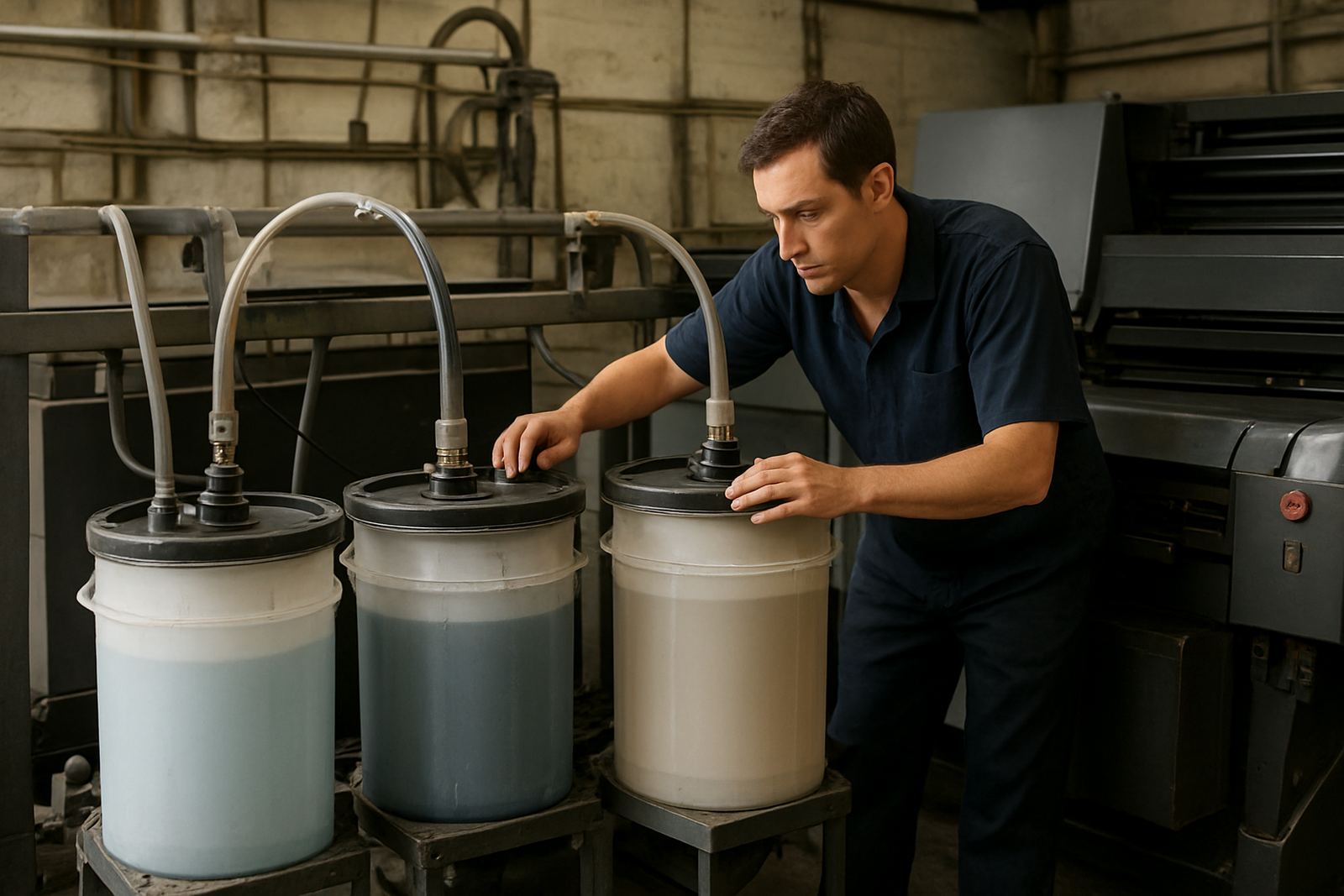
Replenisher chemistry must be stored, pumped and dosed correctly, which is where most problems start. If it is used with a processor or automated feed system, check that the machine is set up for the right flow rate and that tubing, valves and sensors are clean. Incorrect dosing is a common cause of poor results, even when the product itself is correct.
Handling should be done with basic industrial care. Keep the containers sealed when not in use, store them upright on a level floor and make sure the area is dry and well ventilated. Staff should wear gloves, eye protection and suitable workwear when decanting or mixing. If the plant uses drums, a bunded area is worth having for spill control and cleaner housekeeping.
Power backup is worth planning around the whole process, not just the chemistry. During a stop, pumps and processors may halt mid-cycle. Before the line runs again, check the bath and do not assume the previous settings are still right. A short interruption can shift balance more than some teams expect, especially in warmer rooms.
Care, servicing and bath control
Good replenisher chemistry still needs routine monitoring. Test the bath at regular intervals, check concentration and watch for changes in smell, colour or residue. On a busy line, daily checks may be needed; on lighter use, a weekly schedule may be enough. The key is consistency, not guesswork.
Processor servicing matters too. Dirty rollers, blocked filters, worn seals and poor circulation will make any chemistry look bad. If the machine is not moving solution evenly, you may see patchy performance, staining or slow recovery after top-up. A proper service schedule helps the chemistry do its job instead of fighting mechanical faults.
- Check tank level before each shift
- Inspect hoses, pumps and filters for build-up
- Record top-up volumes and dates
- Watch for temperature changes in the room
- Flush lines during planned maintenance
We also advise keeping a simple logbook. It is often the quickest way to spot a pattern, especially when production teams change and a problem only shows up after a few days.
Matching replenisher to the processor
Before ordering replenisher chemistry, confirm what system it will go into and what output you need to maintain. The wrong product can upset bath balance and cost time in correction. A clear order starts with the machine type, solution type and expected daily usage.
- Processor make-up and bath volume
- Application: plate, wash or finishing support
- Daily or weekly throughput
- Existing chemical type and concentration
- Storage space and drum handling access
- Delivery point and offloading arrangements
It also helps to check whether you need a full changeover or a top-up supply. Some sites need replenisher to restore a tired system, while others only need a standing order to keep stocks ready. If the job mix changes often, ask for supply planning so you are not caught short during month-end or a busy seasonal run.
LithoPrinting Plates supports print businesses from Industria West and across South Africa with practical supply advice, technical input and dependable delivery planning. If you are balancing a new line or keeping an existing processor in shape, we can help match the chemistry to the work you are doing.
Key facts
| Product type | Replenisher chemistry for print processors and wash systems |
|---|---|
| Pack sizes | Drums of 20 L or 25 L, plus 200 L for high users |
| Typical use | Top-up and balance control for repeatable output |
| Compatibility | Offset plates, flexo support and finishing lines |
| Storage | Cool, dry area, upright on a level floor |
| Support | Selection advice, dosage planning and troubleshooting |