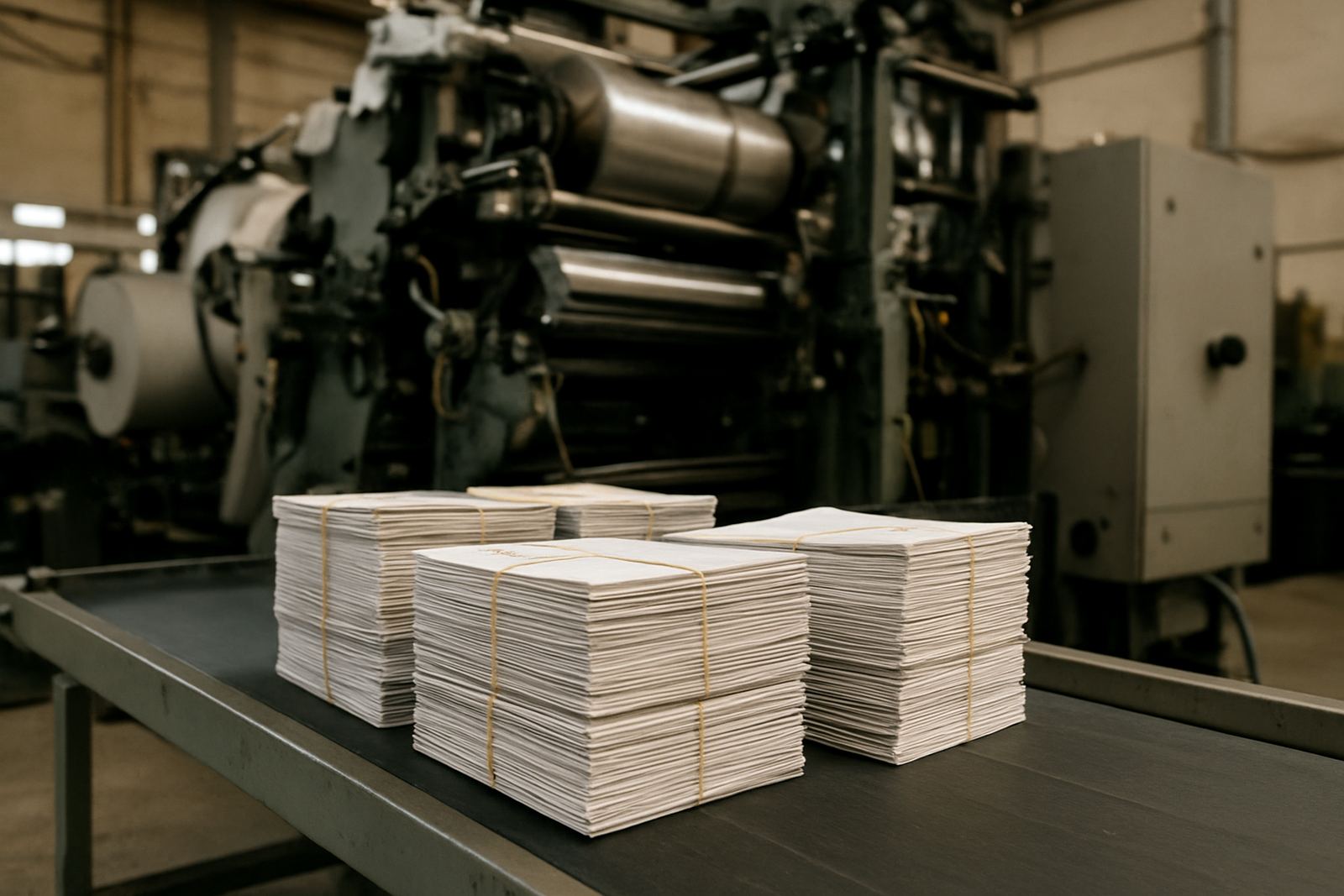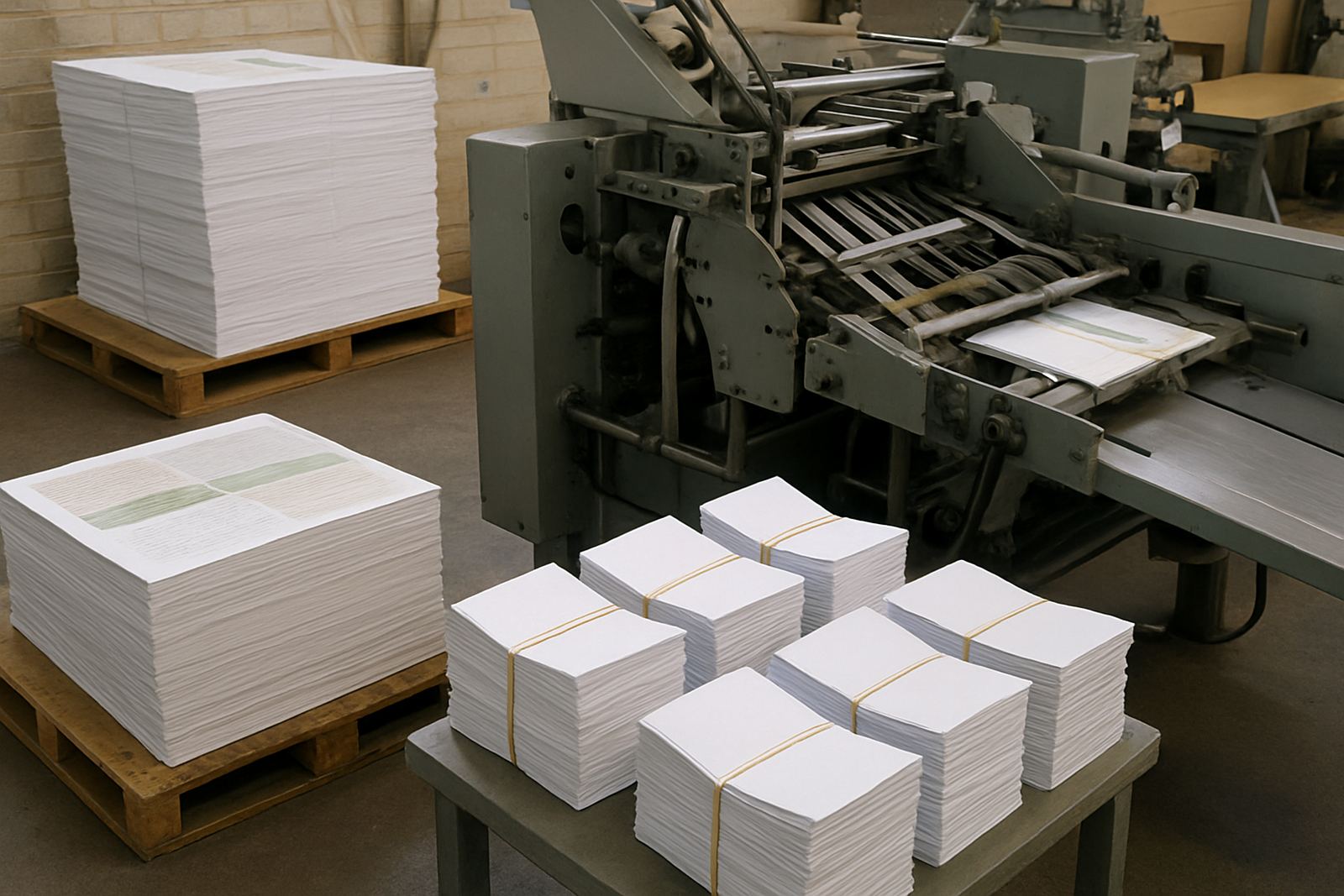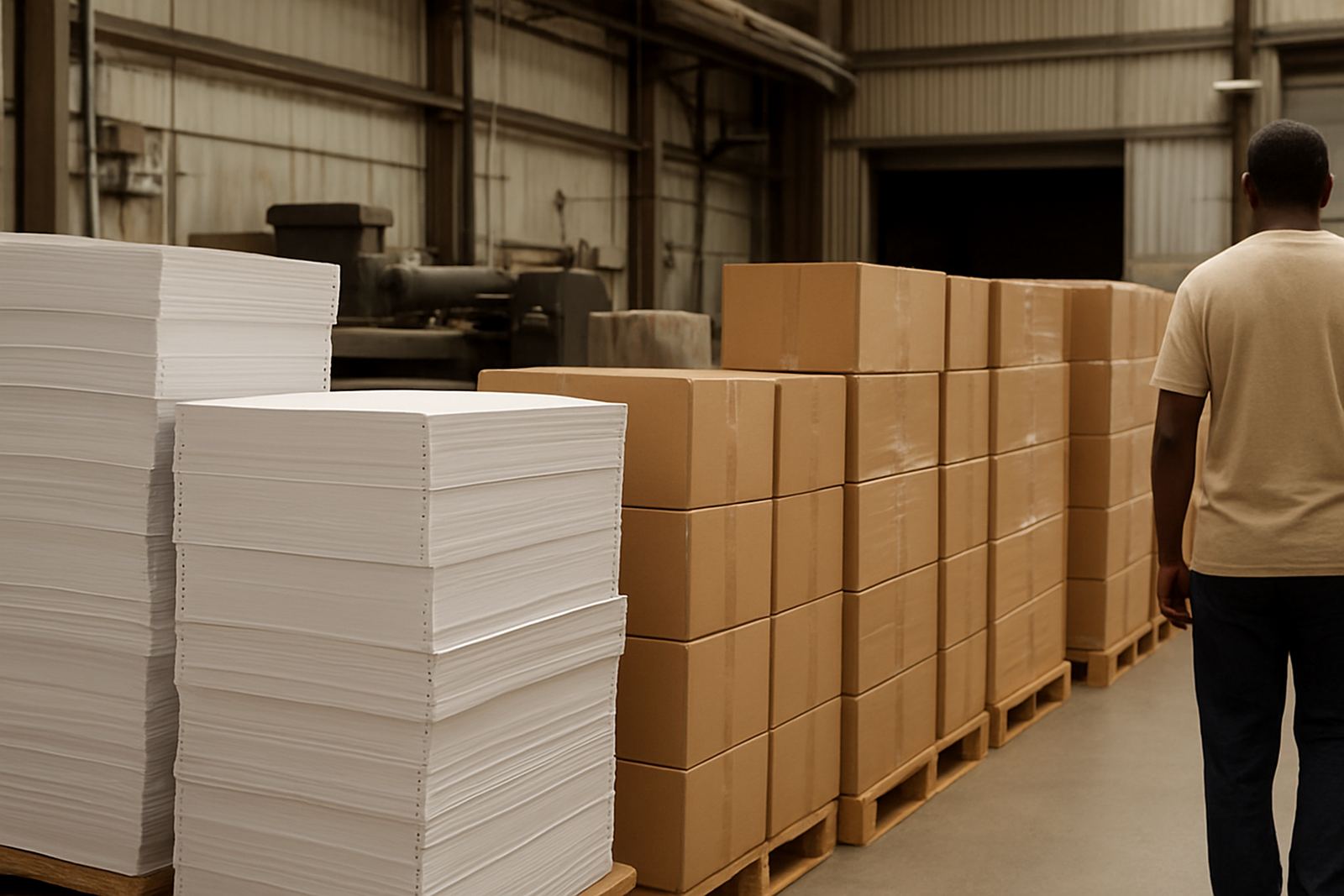
Repeat forms work in Kempton Park needed dependable supply
The client was a busy forms printer in Kempton Park serving local business customers with repeat stationery, NCR forms and short-run commercial work. Their production pattern was steady but unforgiving. Once one component ran short, jobs started shifting, delivery dates slipped and the press room had to reshuffle priorities. They came to us looking for a supplier who could keep pace with repeat demand and not leave them chasing stock at month end.
What looked simple on paper had to work under real pressroom conditions. Keep core consumables available, supply consistently, and make sure the products matched the way their team actually ran the press room. That meant considering plate usage, blanket wear, chemistry balance and the way stock is handled when the same jobs come back week after week. For a forms operation, small misses become expensive very quickly.
The forms brief and its tight spots
The main pressure points were stock continuity and timing. They were not after a once-off bulk drop. They needed a repeat plan that worked around printing cycles, delivery windows and the normal stop-start realities of production. In Kempton Park, with courier traffic, customer collections and municipal deliveries all competing for attention, late stock can throw off a whole week.
The brief also had a technical side. The plant needed the right plate supply, chemistry control support and press consumables that would hold up under regular use. Forms work often runs long enough to expose weak materials but not long enough to forgive waste. We had to keep the supply side practical, no drama, just steady output.
- Repeat supply for ongoing forms production
- Support for plate, chemistry and blanket needs
- Stock planning to reduce emergency orders
- Technical guidance for press room stability
What we supplied and how we kept stock moving
We supplied CTP plates suited to offset forms work, press chemistry for consistent processing and blankets that could handle repeated runs without breaking down too soon. We also helped map a replenishment rhythm based on their actual monthly use, not guesswork. That included a simple review of average consumption, the lead times that mattered, and which items needed higher safety stock because they were harder to source at short notice.
On the technical side we supported plate handling training, chemistry balancing and blanket assessment. That reduced waste and helped the team avoid the small production errors that often start with storage or handling. We looked at wash programmes too, because if the wash is too aggressive it shortens blanket life, but if it is too light the pressroom spends time chasing contamination. There has to be a balance and that was part of the service.
- CTP plates sized and specified for repeat commercial forms work
- Press chemistry matched to local operating conditions and run frequency
- Blanket checks to help extend service life between changeouts
- Replenishment planning with practical reorder points
Timeline: three weeks from review to stable supply
We completed the first review and stock assessment in week one. That gave us the baseline for plate use, chemistry consumption and blanket replacement patterns. In week two we adjusted the supply plan, confirmed the order cycle and put the first replenishment into motion. By week three the client had a clearer supply rhythm and less pressure on the production team to react to shortages.
The speed was important, but so was the follow-through. A repeat forms job only works when the next box or drum arrives before the old one runs out. We kept the process simple enough for the team to manage internally, with one contact point and direct feedback on what was moving fast and what needed a deeper buffer. It saved time and it cut down on back and forth calls.
Results in the press room and on the loading side
The immediate result was fewer supply interruptions. The client could keep their repeat forms running without last minute substitutions, and the press team spent less time making do with whatever happened to be on hand. That mattered most during busy production days when changeovers and transport delays could otherwise stack up. A predictable stock pattern gave them breathing room.
There was also a technical gain. Once chemistry and plate handling were tightened up, they saw more consistent output across repeat runs. Colour stayed steadier from batch to batch and there was less scrap from handling issues. It is the kind of improvement that does not shout, but it shows up in the numbers and in the mood of the team. No one wants to start the morning hunting for a missing item.
- Fewer emergency orders and fewer production holds
- More predictable repeat job output
- Better control of chemistry use and blanket wear
- Cleaner handover between stores and press room
Lessons from the Kempton forms job
Given a similar forms printer, we would repeat this method. Start with actual usage, set a sensible reorder point, keep the technical checks tied to production reality and avoid overcomplicating the supply chain. Forms printers need consistency more than theory. They need stock that arrives on time, products that behave as expected, and support that understands what happens when a run is due out the door by Friday.
For a repeat customer in Kempton Park or anywhere in Gauteng, the best results come from being plain about consumption and honest about lead times. That is what keeps a recurring forms job under control. It also means the client can plan around wet weather and busy dispatch periods without having to hold excess stock just to feel safe.
Local support from Industria West to Kempton Park
From our base in Industria West, Johannesburg, we support print businesses across City West and nationwide, including Roodepoort, Randburg, Midrand, Germiston and Pretoria. For Kempton Park customers, that local reach matters because it shortens the gap between a production need and a practical answer. Our team can work through selection, supply planning and technical follow-up without making the process complicated.
The project showed that steady forms work is built on reliable replenishment, not luck. When the right materials arrive at the right time, production gets calmer, the press room wastes less and the client can focus on their own customers. That is exactly how a repeat forms account should run, and we are happy to keep it that way. It keeps everyone honest and the job moving.
Key facts
| Project | Kempton Forms repeat supply support |
|---|---|
| Client type | Forms printer serving business customers |
| Town | Kempton Park, Gauteng |
| Timeline | 3 weeks from review to stable replenishment |
| Supplied items | CTP plates, chemistry and blankets |
| Support scope | Plate selection, chemistry balancing, blanket assessment, press startup help and production troubleshooting |