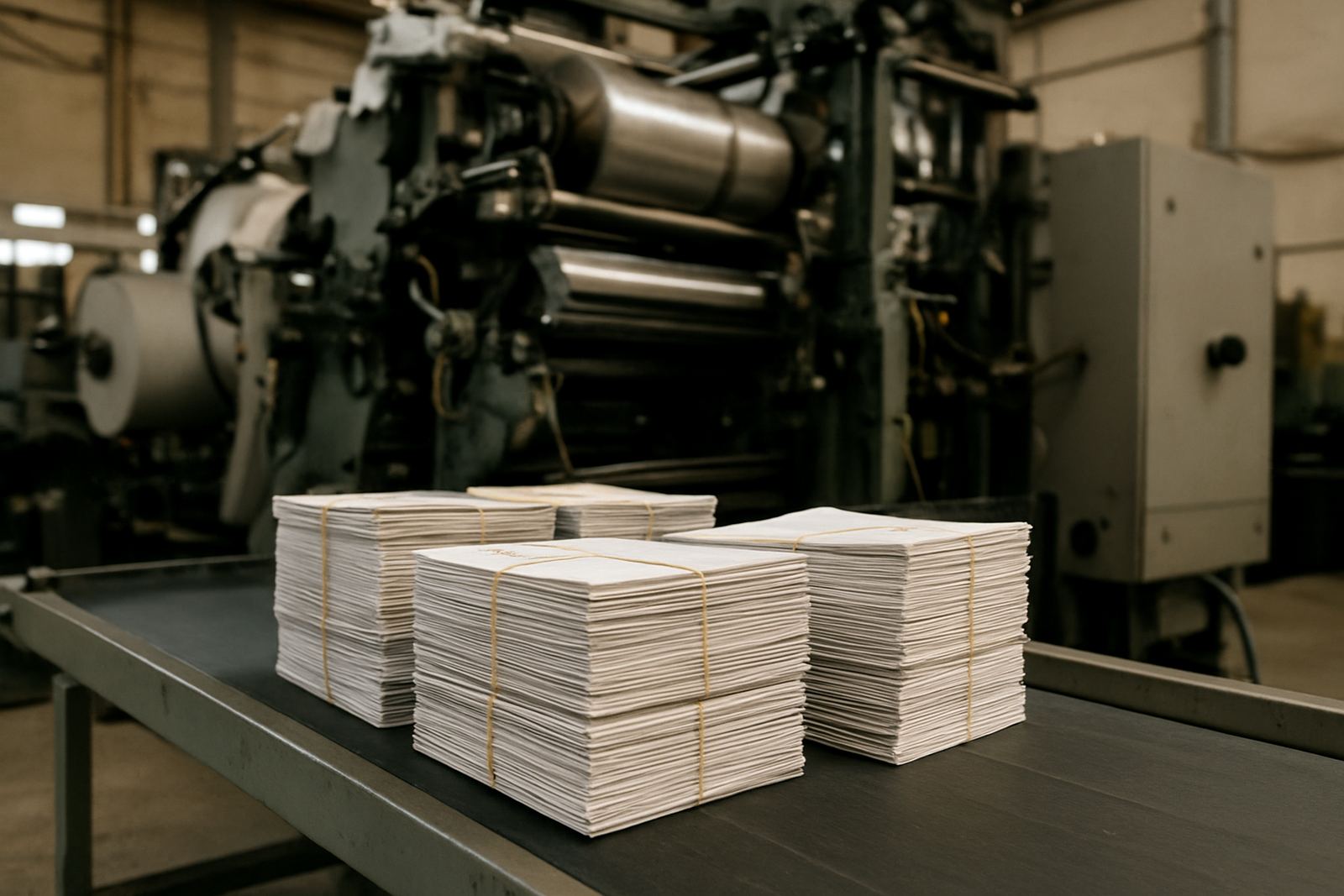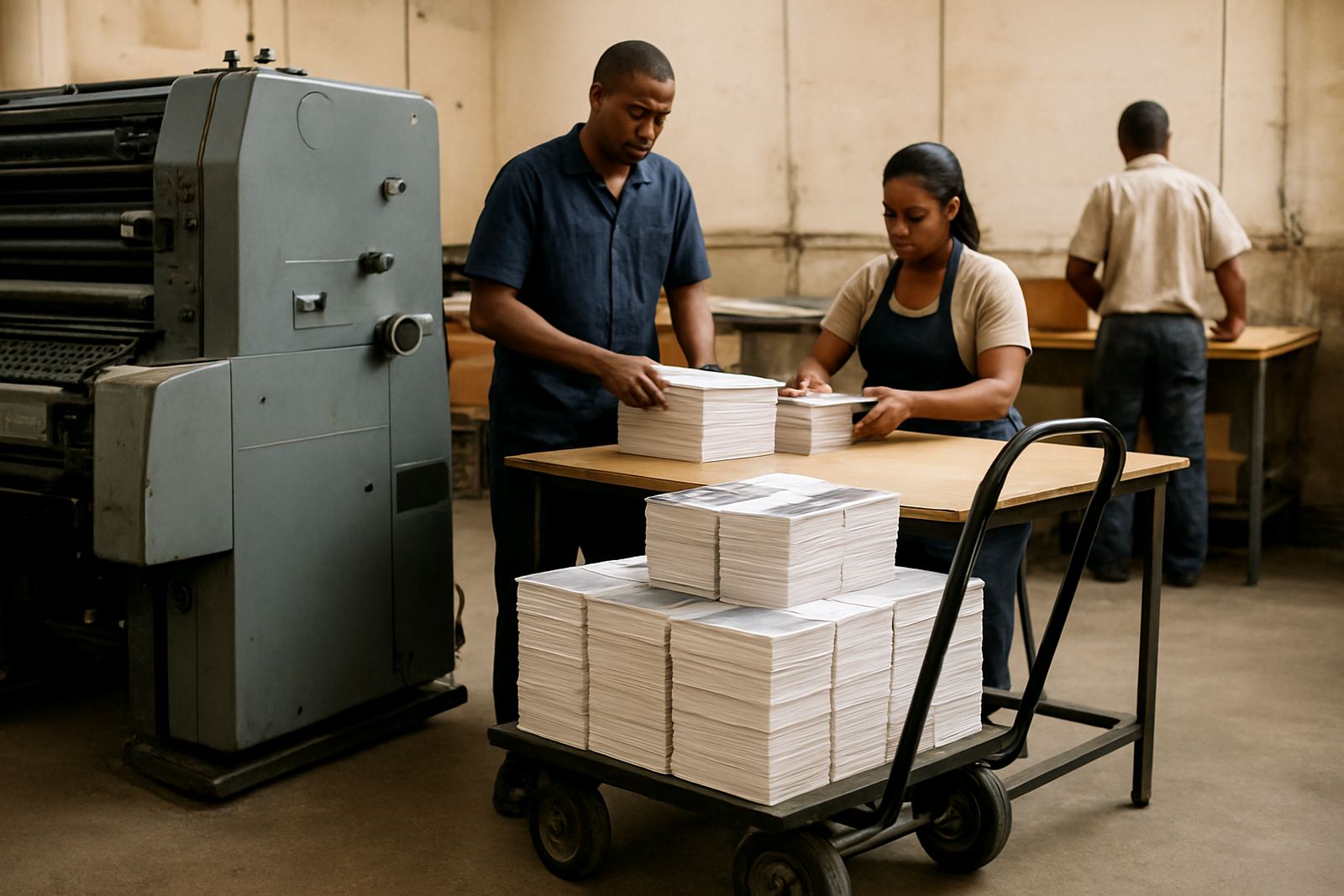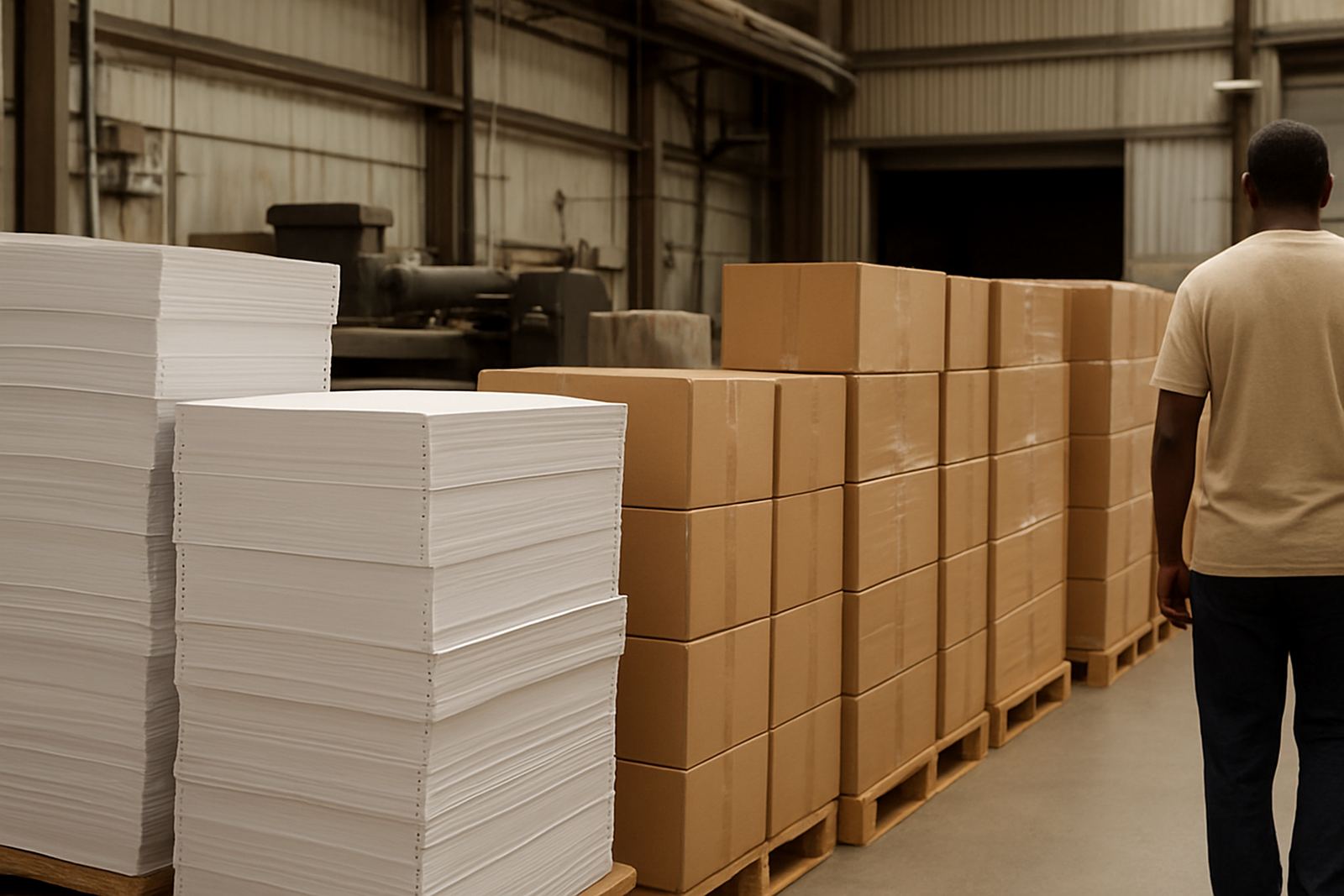

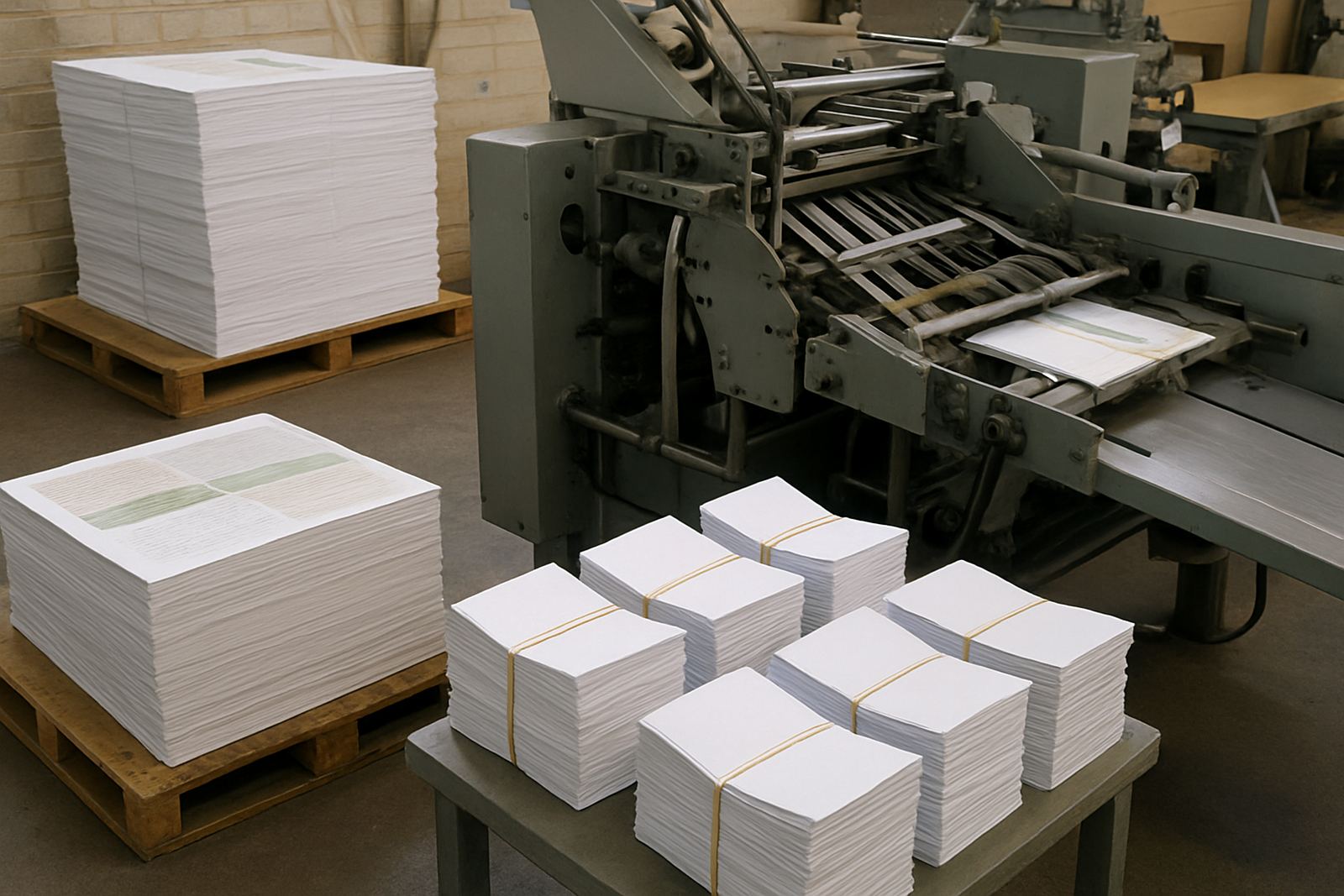
A local folded leaflet job with tight finishing requirements
The client was a small print and finishing operation in Krugersdorp handling a repeat folded leaflet order for a local business in retail promotion. The brief was straightforward on paper: good registration, stable colour, clean folds and no cracking on the folded panels. In practice the job needed careful control because the leaflet carried solid areas, fine text and a fold layout that would show every small fault.
The run size was 12 000 finished leaflets, printed on 128 gsm coated stock at A4 open size with a tri-fold finish down to A5 closed size. The client wanted the stock to run through offset presswork and folding without scuffing or set-off. The job also had a hard delivery date in week two, so there was no room for trial and error.
- Client type: local commercial printer and finisher
- Town: Krugersdorp
- Format: tri-fold leaflet
- Stock: 128 gsm coated paper
- Quantity: 12 000 finished pieces
What was affecting the folding and finishing line
The main issue was inconsistency in the consumables already on site. The plates were giving slight variation across the sheet, while the press chemistry was drifting during longer shifts. That made the colour move, and once the ink film changed, the folds started to show a bit of cracking on the heavier solid panels. The folding section then had to slow down to avoid reject piles.
There was also a practical constraint around stop-start production. Between jobs, the pressroom team needed a setup that would restart cleanly without wasting sheets or losing plate sharpness. The client was working in a compact production space, so they wanted fewer changeovers and less handling between the press and finishing area. The job had to stay tidy from first sheet to final pack.
- Press issue: slight plate variation across the sheet
- Finishing issue: fold cracking on solid ink areas
- Production constraint: stop-start running between short jobs
- Site constraint: limited space for extra handling
The supply plan we put in place
We started with plate selection and a quick review of the existing chemistry balance. From there we supplied fresh CTP plates matched to the job requirements, plus press chemistry suited to steady daily use. The aim was not only to get the leaflet out the door, but to make the line easier to run for the next repeat order too. We also checked blanket condition because worn blankets can leave the print looking tired before finishing even starts.
Our technical team worked with the press operator on startup checks, plate handling and wash routines. Willem and Preshanthi spoke with the client about ink-water balance, while Thandiwe and Jason coordinated delivery timing so the materials arrived before the morning shift. The job used a standard offset setup with a 4-colour sheetfed press, folding on a buckle folder and final packing into cartons for distribution. That simple plan saved time and removed guesswork.
- Supplied: CTP plates for the leaflet run
- Supplied: press chemistry for stable running
- Checked: blanket condition and press startup points
- Supported: plate handling and wash programme
- Coordinated: delivery to suit the shift plan
Timeline from first call to finished leaflets
Week 1 started with the job review, consumable check and a short discussion with the production supervisor in Krugersdorp. By midweek we confirmed the plate spec, the chemistry mix and the delivery schedule. The first supply drop went out from Industria West and reached the client before the next press window. That gave the team time to prep the press properly instead of rushing the setup.
In week 2 we stayed in touch through the first production run and the finishing stage. The operator reported that the colour held more evenly and the folds stayed cleaner from the start. We made one small adjustment to the wash schedule and the pressroom carried on without delays. By the end of the week, the full order was completed, counted and packed for collection. It was a clean run, not perfect in a showroom sense but exactly what the client needed in a working printroom.
- Week 1: review, spec confirmation and dispatch
- Week 2: production support through press and fold stages
- Outcome: full order completed on time
- Result: fewer stoppages and less waste
What changed on press and at the folder
Once the new consumables were in use, the pressroom saw better colour stability and more even coverage across the sheet. That gave the folder a more predictable product to work with. The most visible gain was the edge finish on the folds. The leaflet no longer showed the rough cracking that had been appearing on the heavier ink areas, and the stack stayed neater after trimming and counting.
The client also used fewer make-ready sheets, which mattered because paper wastage pushes up cost fast on a mid-size leaflet job. The operator said the plates handled cleanly and the chemistry held steady over the shift, even with a short stop in the afternoon. It meant the team could finish the run and get back to other work without reworking the same job again. Fewer reruns meant lower cost and a calmer press floor.
- Better colour stability through the run
- Cleaner folds with less cracking
- Lower make-ready waste
- Faster return to normal production
Notes for the next Krugersdorp reprint
Run it again and the method stays the same: check the plate condition early, balance the chemistry before the first sheets and confirm the blanket is in good shape. For folded leaflet work, those three points carry most of the risk. We would also keep the same delivery window, because receiving consumables before the shift starts gives the pressroom time to settle into the run and avoid pressure later in the day.
For clients around Krugersdorp, Randfontein and the west of Johannesburg, this project is a good reminder that steady supply matters just as much as the press itself. A clean finish is usually the result of a dozen small correct choices. When the consumables are right, the process is easier from plate room to folder. That is the sort of support we aim to repeat on every leaflet and booklet job, however crowded the week gets.
- Use the same plate spec on repeat work
- Check chemistry before long shifts
- Verify blanket condition before print start
- Keep delivery aligned to the production window
Key facts
| Project location | Krugersdorp, Gauteng |
|---|---|
| Job type | Tri-fold leaflet print and finishing support |
| Finished quantity | 12 000 leaflets |
| Stock | 128 gsm coated paper |
| Open size | A4 |
| Closed size | A5 |