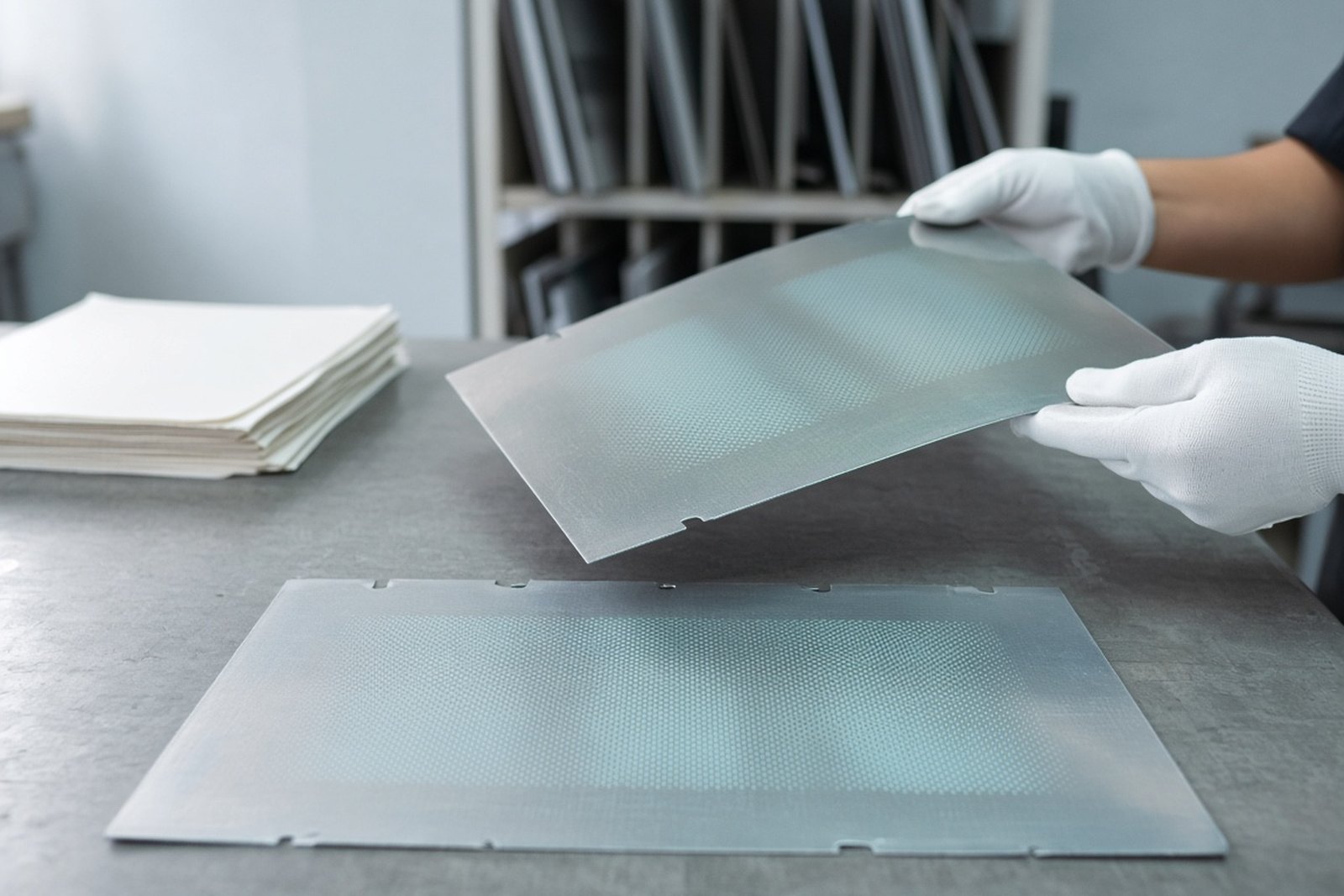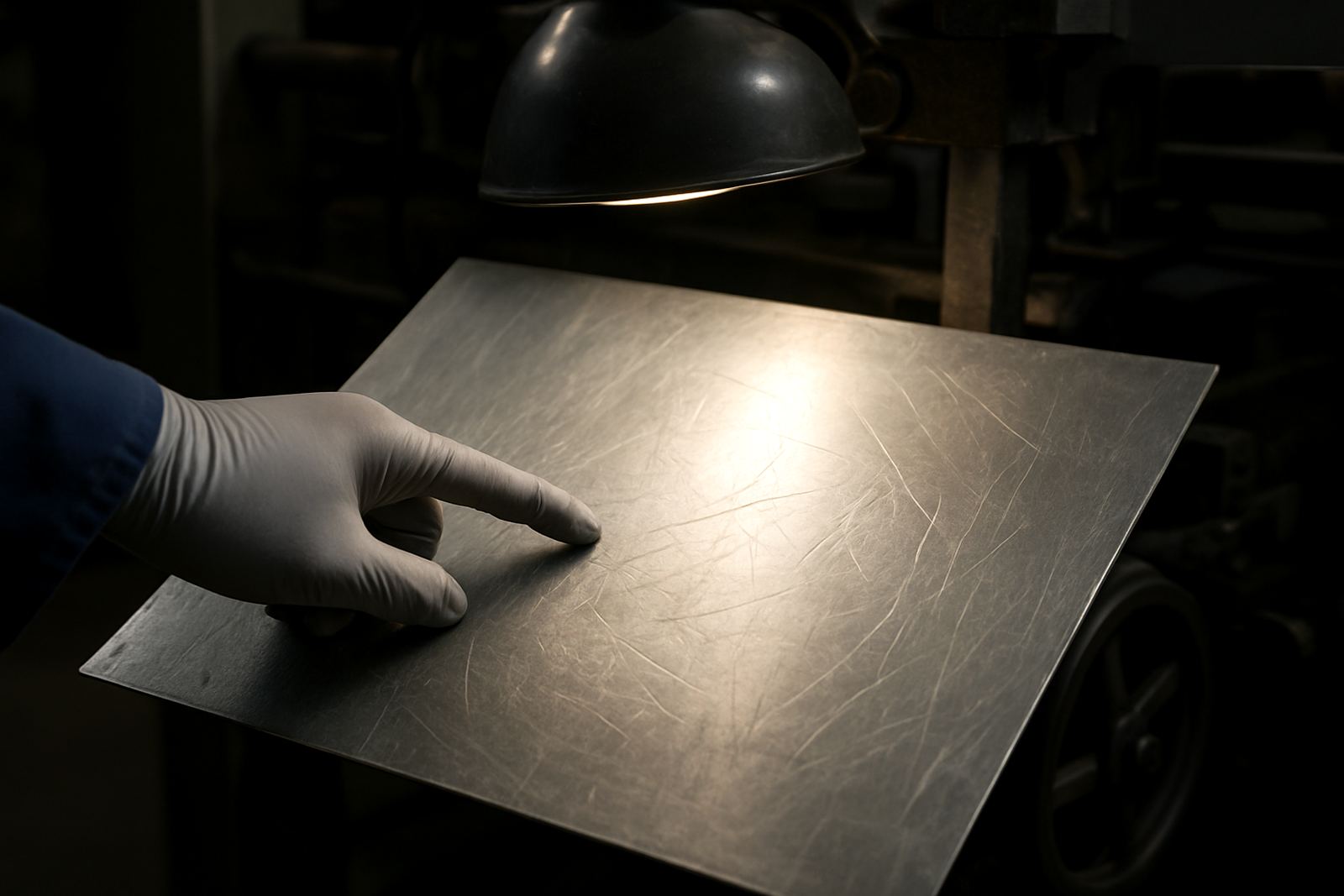
Where most plate scratches begin
Scratches on plates are usually blamed on the press, but the real cause is often earlier in the workflow. A plate can pick up damage in the store room, on a delivery run, during trimming, or while an operator is moving it from the packing table to the plate cylinder. Once the surface is marked, the defect will often repeat on every sheet until the plate is changed.
The danger is highest when plates are left open on a bench, leaned against rough walls, stacked without separators, or carried in the back of a vehicle with loose tools. In Industria West and around Roodepoort, we still see plates rubbed by pallet wrap, cardboard edges and metal corners during hurried changeovers.
Storage mistakes that leave fine lines on the plate
Storage damage is usually small and hard to notice at first. Fine scratches can come from dust trapped between stacked plates, careless handling with ringed hands, or plates sliding against each other when the stack is moved. In humid storerooms, poor storage can also add light oxidation or surface scuffing, which makes the plate even more vulnerable.
- Store plates flat on a clean, dry surface, not directly on concrete floors.
- Keep plates in their original protective layers until needed.
- Do not place boxes near solvents, wash-up liquids or open chemistry drums.
- Separate stacks by size so a smaller plate does not rub on a sharp edge.
If the store room is used for paper, blankets and spare parts as well, marks happen quickly. A single loose staple or trimming offcut can leave a line that only becomes visible when the plate is on press and the image starts breaking up.
Transport damage between the supplier and the printroom
Transport is another common source of plate scratches, especially when plates travel across Gauteng, the Free State, the North West or long routes with mixed stops. Plates that are packed too tightly can flex in transit. Plates that are not supported properly can rub against one another every time the vehicle brakes or takes a corner. Even a short trip from Midrand to Germiston can cause trouble if the load is thrown in with belts, blades, blankets or chemical containers.
Heat also matters. In a hot bakkie tray or closed van, packaging can soften and shift. When the wrapper moves, the plate edges start to scuff against cardboard or metal. On a wet day, condensation can add another problem because moisture loosens packaging and lets dust stick to the surface.
- Carry plates upright only if the packaging is made for it.
- Keep them away from heavy items that can slide and crush corners.
- Do not stack plates under chemicals, ink tins or dirty blankets.
- Check the load before and after delivery, not only when the job is late.
Handling and mounting errors at the press
Mounting is where many scratches become visible for the first time. Operators may drag a plate across the feed table, catch the edge on a guide, or bend the plate slightly while aligning holes and clamps. If the pressroom is under time pressure, especially after an idle spell or a late call-out, handling often becomes rougher than it should be.
Sharp tools are another issue. A blade used to open a packet, a cutter left on the table, or a rag with grit on it can mark the plate in seconds. The same applies when staff try to correct a plate position by sliding it back and forth on a dirty surface. That movement may look small, but it can create a scratch across the image area or the grip edge.
Good mounting practice is simple: clean the table, check gloves, keep tools away from the image side, and move the plate in one controlled action. It takes a few extra seconds and saves a lot of rework.
How to tell a scratch from a chemistry or blanket fault
Not every line on press comes from physical damage. Sometimes operators mistake a scratch for a chemistry imbalance, blanket issue or plate processor fault. Each cause needs its own fix. A scratch will usually repeat in the same position on every sheet, while a chemistry issue tends to affect tone or background more evenly. A blanket problem often shows up as a pattern, not a single line.
Use this quick check when a mark appears:
- Inspect the plate before mounting under good light.
- Check if the line is raised, cut or polished into the surface.
- Compare the mark with the blanket cylinder and packing.
- Look at the first sheets and see whether the defect stays in one exact position.
If the mark is fixed and repeats, the plate is the first place to look. If the print changes across the sheet or fades in and out, the cause may be elsewhere in the process.
How scratches crept into a busy Gauteng printroom
A mid-size printroom in Randburg recently reported recurring streaks on a short-run commercial job. The team first suspected the processor, then the press settings. After checking the job carefully, the issue was traced to storage. Plates were being kept against a metal rack near finishing stock, and every time the rack was loaded, one corner rubbed the plate surface. The marks were tiny, but once mounted they showed clearly on solid colour areas.
After changing the storage method and adding plate handling training, the problem stopped. The plant also improved its production planning so plates were moved to press only when the machine was ready. That reduced handling, which is often where scratches start. A small change in workflow can save a full shift of make-ready trouble.
For busy sites in Pretoria, Midrand or Germiston, the same rule applies. If plates move less, touch less and rub less, they last longer and print cleaner.
Practical habits that keep scratches down
Most plate scratch problems can be reduced with routine checks and clear handling rules. The best systems are not complicated, they are just followed every day.
- Assign one clean area for plate unpacking and inspection.
- Train operators to lift rather than slide plates.
- Keep packing slips, tools and offcuts off the plate surface.
- Review transport packing before dispatch on urgent orders.
- Check pressroom storage weekly for dust, sharp edges and moisture.
- Set a simple call-out process when repeat damage appears.
When scratches keep returning, it helps to review plate selection, chemistry balance, processor servicing and press startup procedure together. The fault is often not one thing on its own, but a chain of small issues. Catch it early and you protect output, waste less material, and keep the press moving.