
Start with the job ticket before the press starts
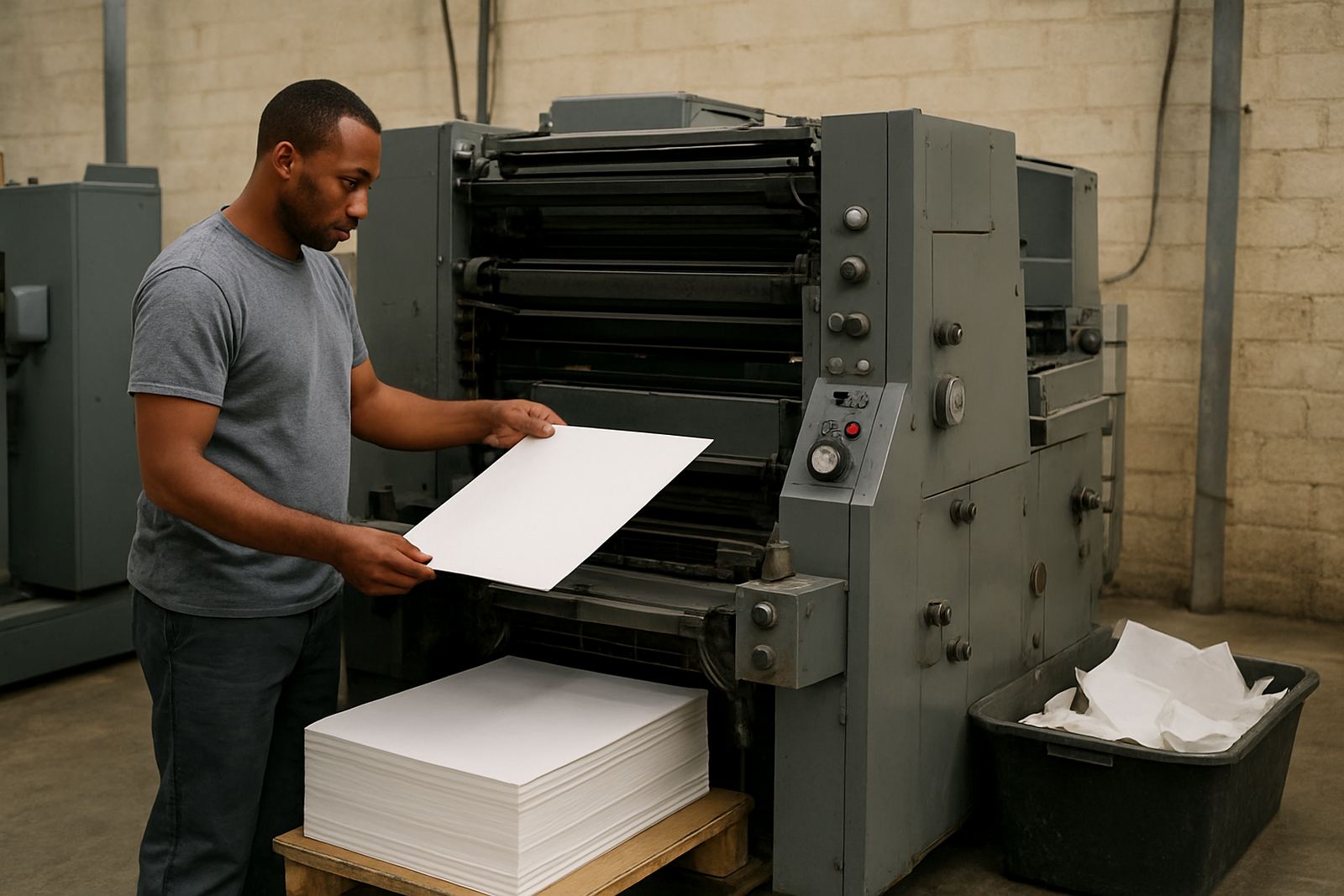
Startup waste often starts before ink reaches the sheet. If the job ticket is unclear, the plate count is wrong, or the finishing team has not confirmed trim and fold requirements, the press crew starts the run with guesswork. That uses paper, chemistry and production time, especially when the order has a tight dispatch window and the client wants delivery across Gauteng or further out to Durban, Bloemfontein or Gqeberha.
Before makeready, confirm the substrate, sheet size, finish, ink coverage and target run speed. Check whether the job needs extra attention for solids, fine type or heavy reverses. If a plate set is for a long run, the team should know that from the start because a rushed setup usually means more stop start corrections later. A quick pre press huddle saves more than a long cleanup after the first bad batch.
- Confirm plate count and page order against the imposition sheet.
- Check paper stock, grain direction and moisture sensitivity.
- Agree on the first acceptable sheet with the client or estimator.
- Make sure finishing requirements are clear before plates are mounted.
Keep CTP plates consistent from plate room to pressroom
Clean, correctly processed CTP plates give the press a stable starting point. If exposure, development or handling varies from one shift to the next, the operator spends longer chasing density and register. That is where saleable sheets are lost. Plates should be checked for scumming, pinholes, scratches and weak imaging before they leave the plate room.
Handling matters too. In busy plants, plates can pick up marks from poor stacking or rough transport between the plate room and press floor. In summer, dust and static can become a problem in dry inland conditions, while summer humidity can affect plate storage and chemical behaviour. Simple discipline helps: keep plates covered, store them flat and move them carefully. It sounds basic but these small controls make a proper difference when the first sheet must be right.
- Use a repeatable plate inspection routine before dispatch.
- Plates belong in a clean, dry store out of the sun.
- Label plate sets clearly for each press and form number.
- Keep spare plates available for critical jobs with tight deadlines.
Balance chemistry before it starts stealing sheet count
Ink-water balance is one of the biggest reasons start up waste grows. If fountain solution is too weak the press may run dirty, if it is too strong the plate can lose stability and the sheet can become difficult to hold. The aim is not to flood the press with more chemistry, but to balance it properly from the beginning and keep it steady through the run.
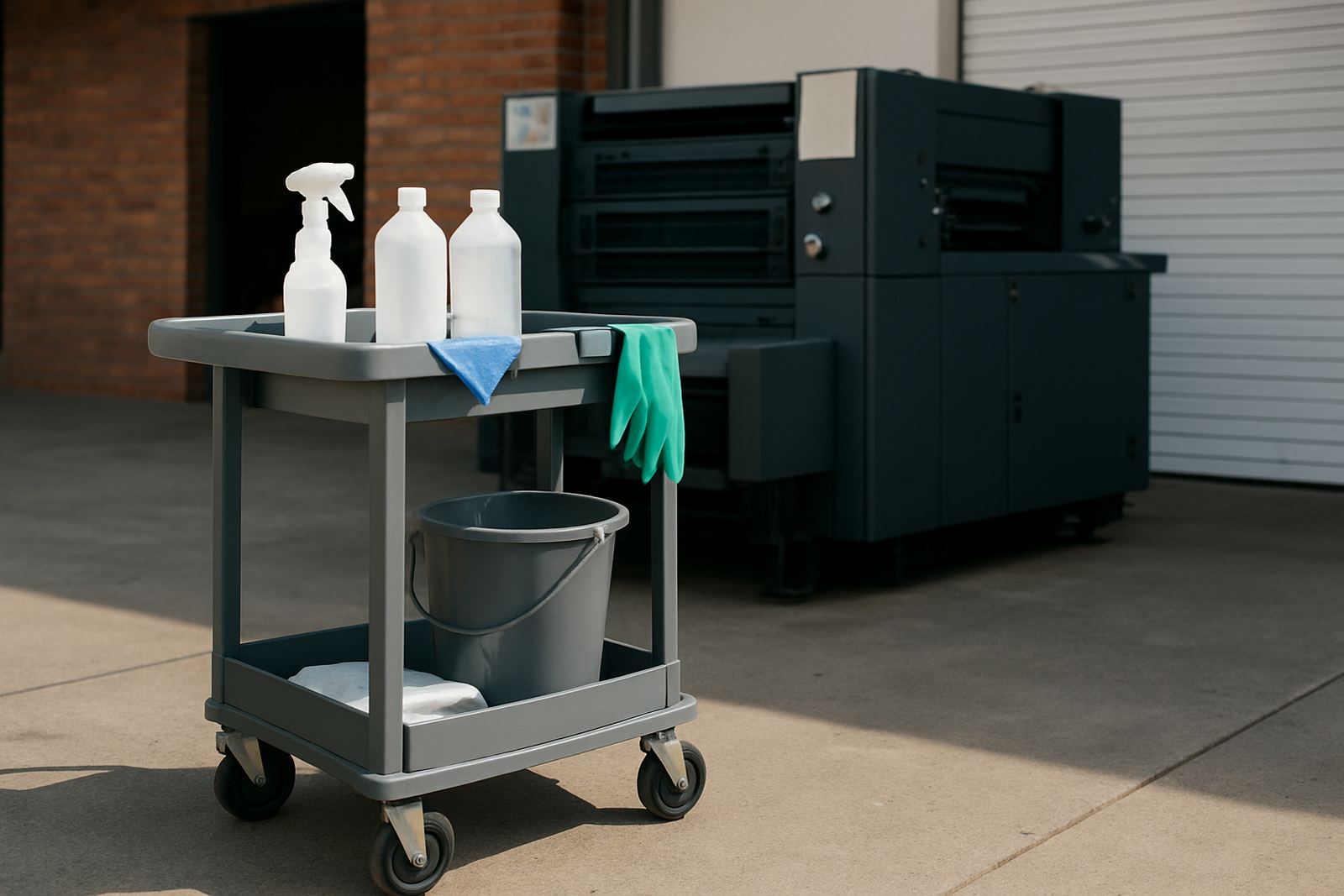
Operators should check concentration, pH and conductivity before a job starts and again when the press warms up. On hot Johannesburg afternoons the machine can drift faster than expected, while repeated stop-start cycles can also disturb settings if the system was already marginal. A proper wash programme helps too. If blankets, rollers and dampening systems are not clean, the operator ends up compensating for old contamination instead of making good sheets.
- Test fountain solution before each critical job.
- Record settings for repeat work to speed up the next setup.
- Use the correct wash programme for inks and coating residues.
- Inspect rollers and blankets for glazing or buildup before startup.
Treat blanket condition as part of makeready, not an afterthought
A tired blanket can waste paper faster than a poor layout. If the blanket surface is hard, swollen or uneven, the press will struggle to transfer a clean image and the operator will keep chasing impression and density. Blanket assessment should be part of the pre press routine, not something only checked when sheets begin to show blanket bounce or streaking.
Look at the blanket after the previous job and judge whether it is still fit for the next one. Heavy coverage, flood varnish or frequent washups can shorten its useful life. In busy printrooms around Roodepoort, Randburg and Midrand, where turnaround pressure is constant, a blanket that is past its best often shows itself in the first 50 sheets. Replacing or resetting it at the right time costs less than throwing away several hundred poor sheets.
- Check blanket tension and surface condition before mounting.
- Replace blankets that show compression marks or loss of resilience.
- Match blanket choice to the job type and ink load.
- Keep a record of blanket life on recurring work.
Cut waste by tightening the first 20 minutes on press
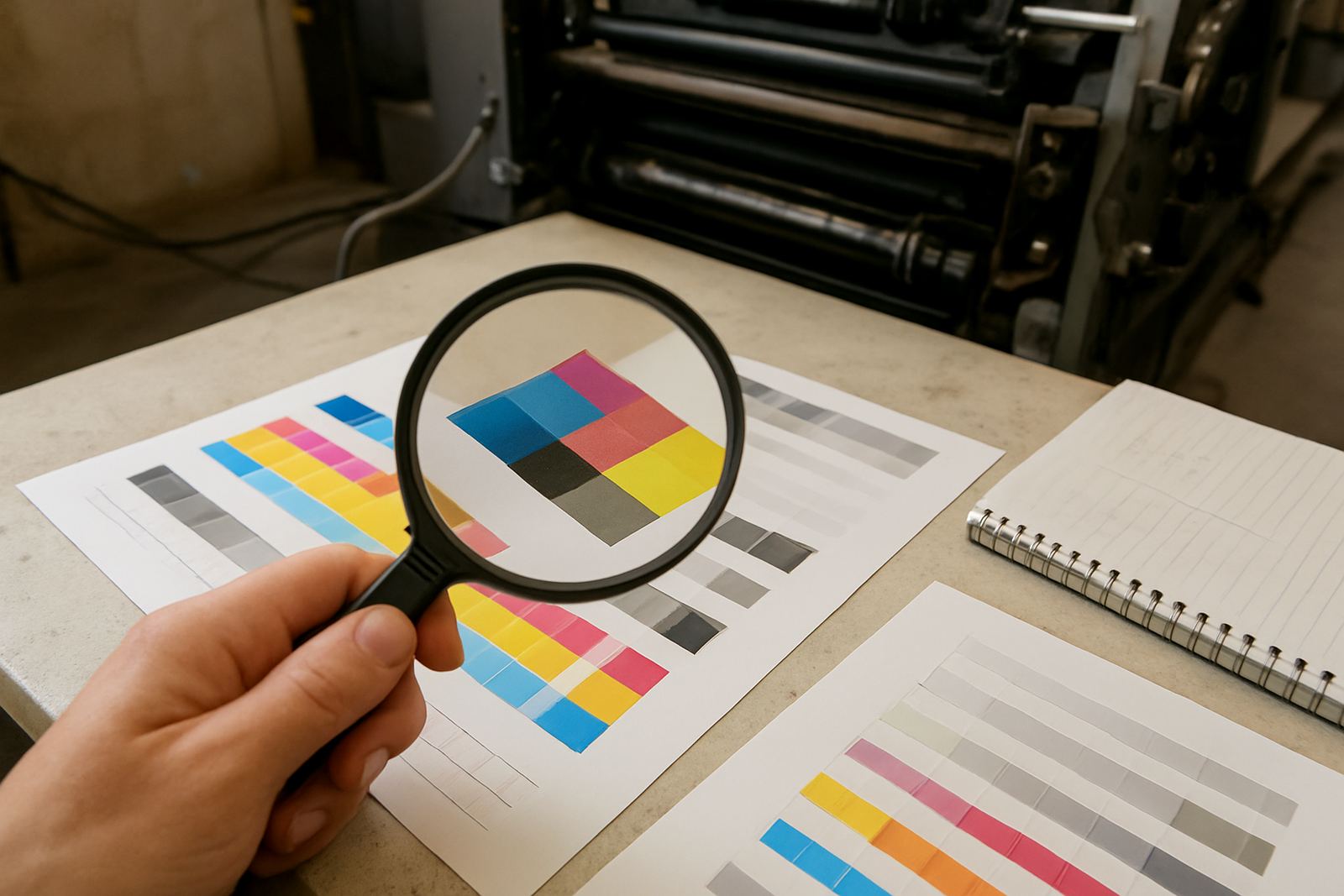
The first 20 minutes decide a lot. This is when register, colour, water balance and sheet feed settle. If the crew works without a clear sequence, adjustments get repeated and the waste pile grows. The press team should know the order of checks: feeder, register, colour, density, then drying or finishing requirements. Changing too many variables at once only adds confusion.
It also helps to assign roles. One person should read the sheet and call the changes, another should watch density and register, and a third should track waste count and supply levels. In a plant supplying jobs across Pretoria, Germiston and Industria West, that kind of discipline keeps urgent orders moving. It also reduces the small arguments that happen when nobody knows who changed what. Make one change, observe the result, then move to the next. That simple rule saves paper and temper.
- Set a fixed startup checklist for every press.
- Assign one person to approve each correction.
- Track startup waste by job, press and shift.
- A fault that repeats on a second sheet is the cue to pause the press and look closer.
Use local production reality to plan fewer surprises
South African printrooms do not work in a vacuum. Water supply breaks, seasonal humidity, delivery delays and short lead times all affect how quickly a job reaches saleable sheets. A print team in Johannesburg cannot always assume ideal conditions, so the best answer is planning for the conditions that actually happen.
For example, a folding carton run in Industria West may need a different startup plan from a short commercial job in Pretoria. The carton work may require closer blanket checks and more attention to colour stability, while the shorter run needs faster plate verification and better material staging. When the plate room, pressroom and logistics team are aligned, there is less panic and less waste. That is where supply planning, press startup help and production troubleshooting all earn their keep.
LithoPrinting Plates works with teams that want practical controls, not theory for its own sake. That means helping with plate selection, chemistry balancing, processor servicing, blanket assessment, wash programmes, colour stability checks and plate handling training so the first good sheet arrives sooner and the waste pile stays smaller.
Build a repeatable routine and the waste drops naturally
Reduce startup waste by treating makeready as a repeatable process. When the same checks happen in the same order on every job, the crew learns where the weak points are and corrects them earlier. Over time, the pressroom stops relying on guesswork and starts producing saleable sheets faster. That means better use of paper, less chemistry used for recovery, and fewer overtime hours when a job runs behind.
The best results usually come from ordinary discipline: clean plates, balanced chemistry, sound blankets, clear job information and a team that knows who is responsible for what. None of that is flashy, but it is exactly what protects margin in a busy South African plant.