Start with a safe shutdown and the right PPE
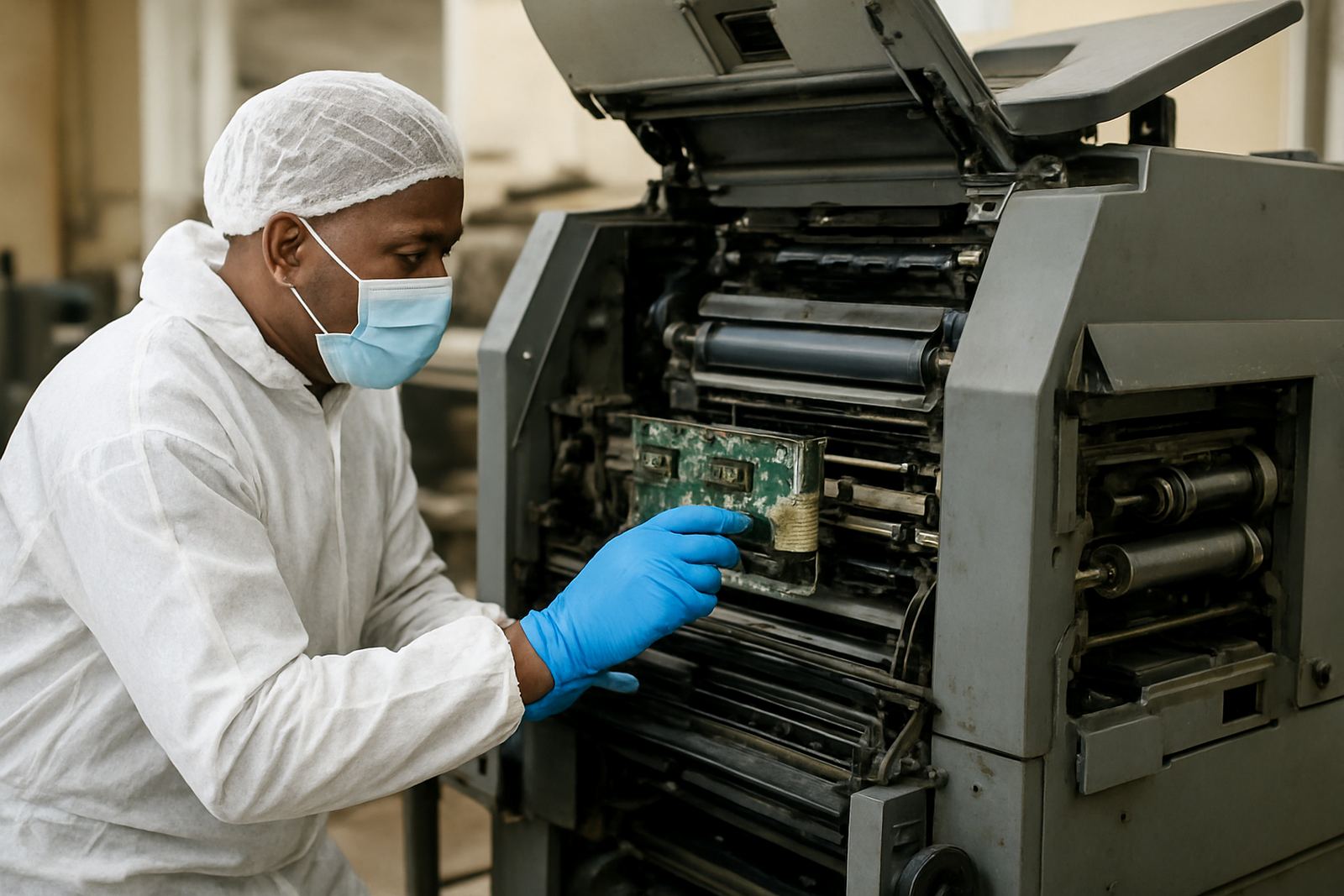
Before any cleaning starts, switch the processor off properly and isolate power at the mains where your site procedure allows it. Wait for moving parts to stop completely, then confirm the tank lids, covers and guards are secure before you reach inside. In busy print rooms around Johannesburg, Roodepoort and Midrand, the quickest jobs often go wrong because someone tries to wipe down a running unit.
Wear chemical resistant gloves, eye protection and an apron or overall. If your wash area has poor ventilation, open extractor points or doors to move fumes out. Keep absorbent cloths, a plastic scraper and a marked waste container nearby. Never use loose rags that shed fibres into the processor path, because those fibres can mark plates and block spray bars. If the floor is wet, clean that first so no one slips while carrying trays or covers.
- Isolate power and confirm the unit is fully stopped
- Wear gloves, goggles and suitable protective clothing
- Keep waste cloths and removed sludge in a closed container
- Check the floor and access area for spills before starting
Clear tank sludge while it is still soft
The biggest cause of poor processor performance is build-up in the developer, replenisher and wash sections. Sludge from spent chemistry, plate coating and paper dust settles at the bottom, then gets lifted back into circulation during the next shift. Once that happens, you start seeing streaks, dirty rollers and uneven development. On humid days, the residue can stay damp and tacky longer, so it bonds fast to trays and guide surfaces.
Use the site cleaning schedule to drain, rinse and remove sediment at the right interval. Do not wait for a smell or visible deposits before you act. A simple weekly wipe is not enough if the line runs hard on long shifts or handles heavy plate volumes. Check corners, pump inlets, float points and return lines. If a panel or tray has a waxy film, remove it with the approved cleaner only, then rinse thoroughly so no residue mixes with fresh chemistry.
- Drain and flush according to production volume, not only the calendar
- Scrape out settled sludge from trays and corners
- Clean pump inlets, returns and float areas carefully
- Rinse all surfaces so cleaner does not contaminate chemistry
Check chemistry balance before you put it back in service
A clean processor still gives trouble if the chemistry is out of range. After cleaning, refill to the correct levels and confirm temperature, replenishment and circulation are stable before plates go back on the line. If the developer is too weak, plates under develop. If it is too strong, the image can start to break down or the non image areas may stain. That is why Chemistry Balancing is part of good processor care, not a separate issue.
Use test strips, a calibrated meter or the method approved for your shop to confirm the mix. Record the result, the date and the operator name. That makes it easier to spot a trend if the same fault appears every Friday or after a certain shift. In plants from Pretoria to Germiston, we often see the same pattern: the processor was cleaned, but the chemistry was refilled without checking concentration or temperature first.
- Confirm concentration after every clean-down and refill
- Check temperature and circulation before resuming production
- Record readings so faults can be traced later
- Match replenishment to actual run volume, not guesswork
Inspect rollers, spray bars and seals for early wear
Cleaning is the right time to spot mechanical issues before they become stoppages. Look at rollers for glazing, swelling, flat spots or embedded dirt. Inspect spray bars and nozzles for blockages. Check seals and hoses for cracks, leaks or hardening, especially if the unit sits near heat or direct sunlight. In older systems the seals often fail first, then chemistry leaks onto drive parts and starts a much bigger repair.
Run your hand visually, not physically, along all exposed paths and note any uneven wear. If a roller shows a polished band where plates pass through, that often points to pressure or alignment trouble. Keep a simple maintenance note so your Technical Support Lead or maintenance contractor can act before the next production rush. This saves time during press startup and reduces the chance of plate damage on the first sheet.
- Look for roller glazing, swelling and flat spots
- Check spray bars and nozzles for blockages
- Look over every hose and seal; replace any that crack or weep
- Log anything unusual for follow up servicing
Use the correct wash programme for the job volume
Not every clean-up needs the same method. A light daily wash removes fresh residue. A deeper clean is needed after heavy plate runs, stoppages, or when the system has been sitting idle over a long weekend. If your processor handles different plate types, keep separate wash routines where possible so one chemistry does not cross contaminate another. That is especially important where offset and finishing lines work close together and dust levels are high.
When setting a wash programme, balance speed against thoroughness. Fast is useful during a restart, but you still need full coverage on all surfaces. If the wash cycle leaves dirty corners behind, shorten the run only after you have proven that every critical area is still clean. For many sites, a planned 10 to 15 minute shut down for proper cleaning is better than losing an hour to plate faults later.
- Use a light wash for daily residue and a deep clean after heavy runs
- Separate routines where different plate types are processed
- Do not cut wash time unless the full clean is still achieved
- Allow enough time for drying before restarting production
Prevent plate faults with training and routine checks
Most development issues begin with handling habits. Plates bent during loading, contaminated gloves, or rushed drying can all look like chemistry trouble when the real cause is operator practice. Train staff to handle plates by the edges, keep work surfaces clean and check the first plates after every start-up. If the result is off, stop early and find the cause. It is always cheaper than reprinting a full job.
Build a simple daily checklist for the operator on duty. Include chemistry level, temperature, nozzle flow, visible residue and the condition of the exit path. Keep spare consumables on hand so the team does not delay cleaning because a gasket or filter is missing. With proper plate handling training, production troubleshooting and supply planning, you reduce repeat faults and keep the pressroom moving.
- Handle plates by the edges and keep gloves clean
- Check the first output after every restart
- Keep spare filters, gaskets and approved cleaner on hand
- Use a daily checklist for temperature, flow and residue