
Why conductivity matters on press
In litho printing, conductivity gives a quick reading of how much dissolved material is present in the fountain solution. It is not the whole story, but it is one of the fastest ways to see whether chemistry is drifting during a shift. When the reading moves too far, operators often start fighting scumming, toning, unstable colour and extra wash-ups.
For South African printers working through temperature swings and changing water quality, this matters even more. A meter helps you catch trouble early, before a job starts running off colour or the plate starts breaking down. It is a practical tool for sheetfed and web offset plants, and also useful where cleaning cycles and make-ready times must be kept tight.
Conductivity readings are best used together with pH checks, temperature checks and good housekeeping at the fountain tank. The meter does not replace experience, it gives the press team a number they can act on. That makes day-to-day control easier, especially on multi-shift sites where different operators may be handling the same press. Good chem control is half the battle.
Meter types, ranges and working sizes
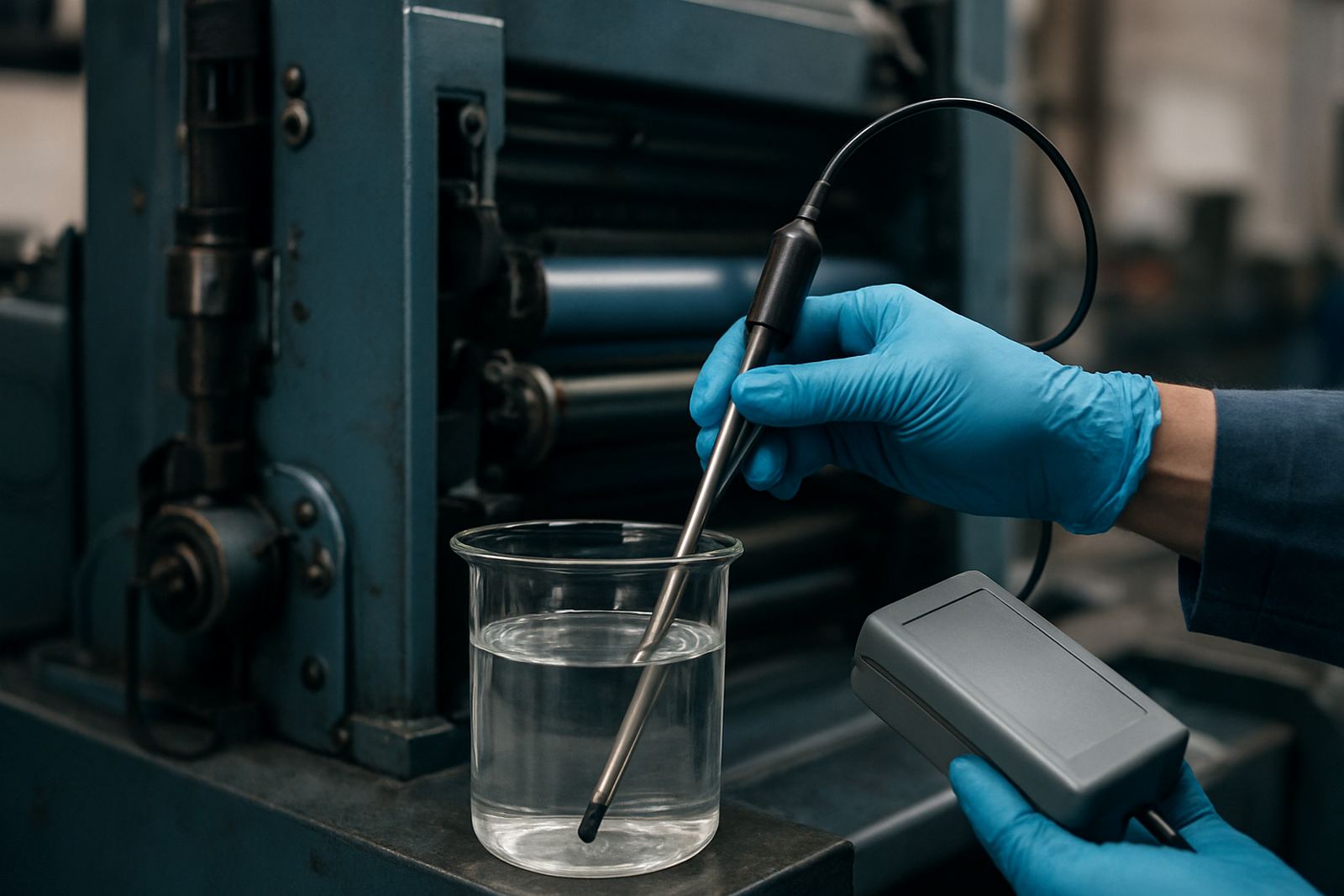
We supply handheld conductivity meters for portable checks, plus bench-style meters for mixing rooms and quality control points. Handheld units are the most common choice for press crews because they are quick to use and easy to carry between the pressroom, chemistry store and plate room. Bench units suit sites that prepare larger volumes or need a fixed test point.
Typical conductivity ranges cover low to medium fountain solution work, with some models suited to a wider span for general plant use. The right range depends on your chemistry supplier, your water source and the targets set for the press. A plant in Johannesburg with municipal water may use a different range to a printer dealing with high humidity and more aggressive cleaning intervals.
- Handheld pocket meters for quick on-press checks
- Pen-style meters for basic, fast readings
- Digital handheld meters with temperature display
- Bench meters for mix room control and repeat tests
- Replaceable probe options on selected models
- Carry cases and calibration solutions where required
Common display resolution is 0.1 mS/cm or 1 uS/cm depending on the model. If you need better repeatability for a busy production floor, ask for a meter with automatic temperature compensation and a clear calibration routine. That small detail saves time every week, and helps keep readings consistent between operators.
Where conductivity meters suit best
These meters work well in offset printing plants, finishing rooms with wash systems, and technical areas where fountain solution is mixed or topped up. They are also useful for suppliers who service multiple sites and need to verify chemistry on arrival before starting plate or press support.
They suit the following working areas:
- Pressrooms running sheetfed litho jobs
- Web offset environments with regular solution checks
- Prepress and CTP support areas where chemistry control affects plate life
- Technical teams handling fountain solution changeovers
- Plants doing production troubleshooting after colour drift or poor ink-water balance
In smaller shops, one good handheld meter is enough for daily control. In larger operations, it often helps to keep one meter near the mixing point and one on the press floor. That way the team can compare fresh mix against in-use solution without carrying bottles across the plant. It keeps the routine simple and helps avoid mistakes during busy periods.
Installation, power and site needs
Most conductivity meters need very little installation. Handheld meters are ready for use once they have batteries fitted and have been calibrated. Bench units may need a stable surface, clean test cups and a dry area away from direct splash, steam or solvent vapours. No gas connection is needed for standard conductivity meters.
Power requirements vary by model. Handheld units usually run on button-cell or AA batteries, while bench units may use mains power through a standard adaptor. A battery-powered meter is often the handiest option because it can be carried from press to press. That said, the operator must keep probes clean and storage caps in place so readings remain dependable.
- Between readings, the meter lives in a dry cupboard
- Calibration fluid: shaded, cool storage
- Use clean sample cups for each test where possible
- Do not leave probes standing in solution for long periods
- Wipe the body after use, especially in humid conditions
For plants in Industria West, Roodepoort, Germiston, Midrand and Pretoria, we can help match the meter to the way your team actually works, not just to the brochure spec. That matters when the device must be used quickly between press checks and production meetings.
Care, calibration and servicing
Like any measuring tool, a conductivity meter only stays useful if it is looked after. Calibration should be checked at regular intervals, and more often if the meter is used every day or if readings seem to drift. Many shops calibrate weekly, while higher-volume plants may check daily. Follow the value recommended by your chemistry plan rather than guessing.
Keep probes clean and rinse them with clean water after each sample. If solution build-up is left to dry, the meter can become slow or unreliable. Replace batteries before they fail, and inspect seals and caps if the meter is carried around the pressroom. In damp rooms, moisture can shorten the life of a poorly stored unit, so a simple drying routine helps.
If readings do not make sense, compare the meter against a fresh calibrated sample and check whether the fountain solution is within the correct temperature band. Also confirm the sample cup is clean and the operator is using the same procedure each time. A lot of bad readings come from handling issues, not from the meter itself.
We can also assist with supply planning, press startup help and production troubleshooting when conductivity forms part of a wider chemistry issue. If your readings keep moving, it may be time to review water quality, additive levels or wash programme settings.
Choosing a conductivity meter
To make sure the meter suits your plant, send through the basic details below. This helps us supply the right range and accessories first time.
- Whether you need a handheld or bench meter
- The conductivity range you currently work in
- Whether you want temperature compensation
- Whether the meter must be battery or mains powered
- The type of fountain solution and press process in use
- Whether calibration fluid or carry cases are needed
- Number of people sharing the meter on a shift
If you are replacing an old unit, send a photo of the label and the last known reading pattern, if available. That often makes selection much quicker. We can also advise if you need a simple field meter or a more stable unit for repeat control in a larger operation. A bit of detail upfront avoids buying the wrong tool.
For ordering support, contact our Johannesburg team and we will help match the meter to your pressroom and chemistry needs across South Africa.
Key facts
| Product type | Conductivity meter for fountain solution monitoring |
|---|---|
| Common formats | Handheld, pen-style and bench-style digital meters |
| Display | Digital readout with selected models offering temperature display |
| Measurement range | Model dependent, typically suited to low and medium conductivity checks |
| Power | Battery powered handheld units; mains adaptor on selected bench units |
| Use areas | Offset pressrooms, mixing rooms, prepress support and chemistry control |
| Care requirement | Rinse after use, calibrate regularly and store dry |