Programme Brief for a Local Event Run
The client was an event organiser in Orlando, Soweto producing printed programmes for a one-day community and business event. On paper the job was clear, but the handover dates left very little room.: 2 500 stitched programmes, 40 pages each, with a mixed colour section, sponsor pages and a final speaker schedule that could not slip.
Because the books had to be handed out at registration, the print plan needed clean plate supply, stable press output and finishing that would hold up to repeated handling. We worked with the print team on a narrow production window of 2 weeks, with approvals, plate making support and delivery sequencing all planned before the first sheets went on press.
- Quantity: 2 500 copies
- Format: A5 finished size
- Extent: 40 pages plus cover
- Binding: saddle stitched
- Cover stock: 250 gsm
What Had To Be Managed On Press
The main constraint was speed without losing registration or colour consistency. Event programmes often change late, and this one was no exception. The final speaker order and a few sponsor adverts came in after the initial layout sign off, so we had to keep the plate schedule flexible and make sure the press team could swap pages without wasting stock.
There was also the usual South African production pressure of tight dispatch dates and weekend delivery timing. The print site needed supply that was packed correctly for quick loading, and the finishers needed everything ready in the right sequence so the programme stack could move from print to fold, stitch and trim without sitting overnight. That matters even more when humidity is high and paper starts to curl if it is left open too long.
- Late content changes handled before final plate release
- Press ready sets packed for fast make-ready
- Delivery timed to avoid storage delays
- Paper handling kept tight to reduce curl and scuffing
Supply And Technical Support We Put In Place
We supplied the CTP plates for the four-colour pages plus the extra plates needed for cover work and any page corrections. For this job, the key was matching the plate mix to the press plan so the printer did not lose time checking chemistry, washing out plates or chasing weak image areas. Our team also assisted with chemistry balancing and plate handling notes for the press crew.
Where the printer wanted it, we helped with blanket assessment and startup checks so the first sheets were consistent from the start. In practical terms that meant clean transfer, less dot gain variation and better hold on fine text. On event work, a slight shift in density can make schedules and speaker names look tired, so the goal was steady reproduction on every section.
- CTP plate supply for process and cover work
- Chemistry balancing guidance for stable plate output
- Blanket assessment before startup
- Press startup help for first-sheet consistency
Finishing Coordination That Kept The Job Moving
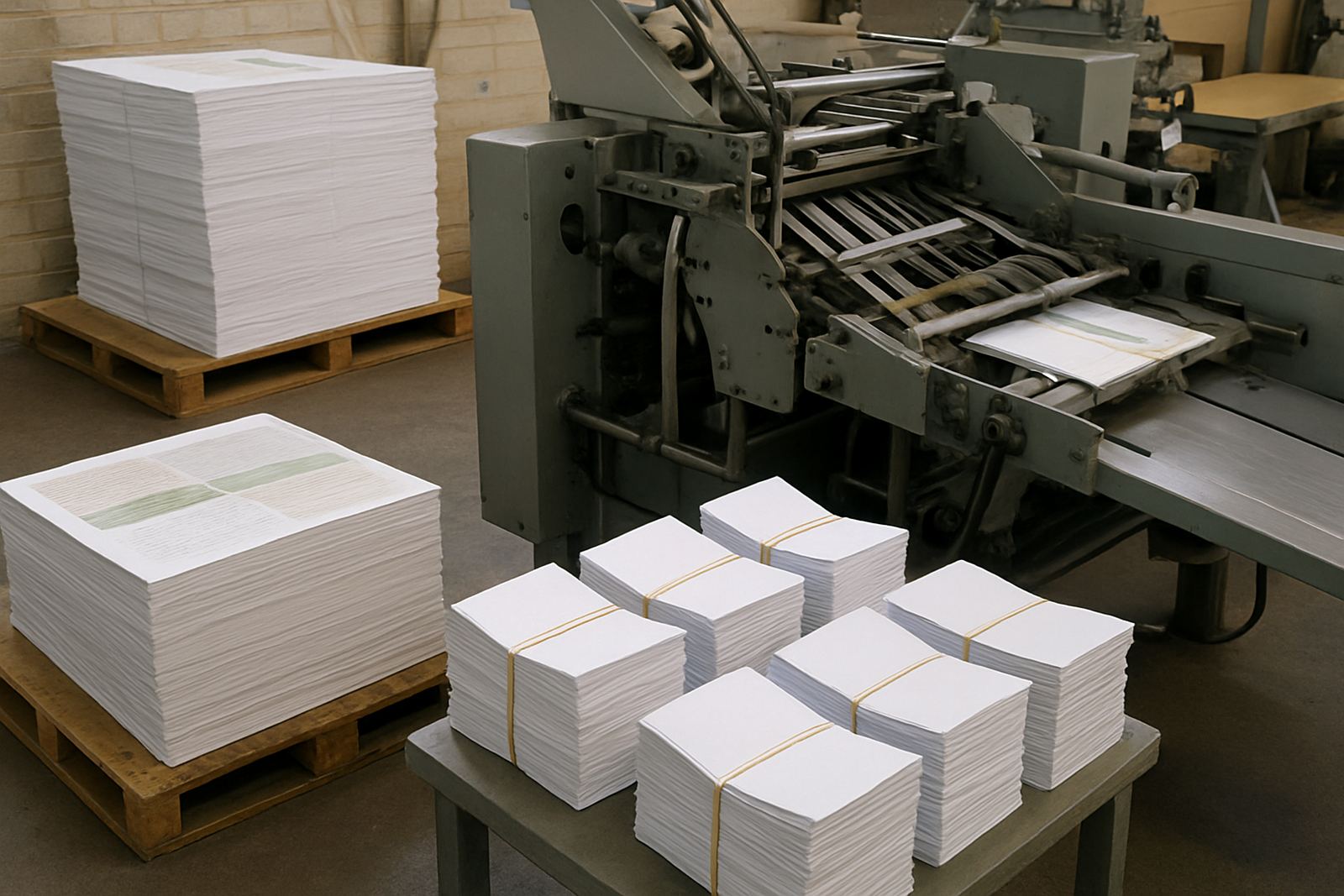
Programme printing is often won or lost at finishing. We coordinated the supply so the finishing team received work in the right order for collating, stapling and trimming. That reduced the chance of mixed sections, waste piles and last-minute rework. The print run was checked for page order before bind-up, which saved time at the guillotine stage and kept the packs neat for event issue.
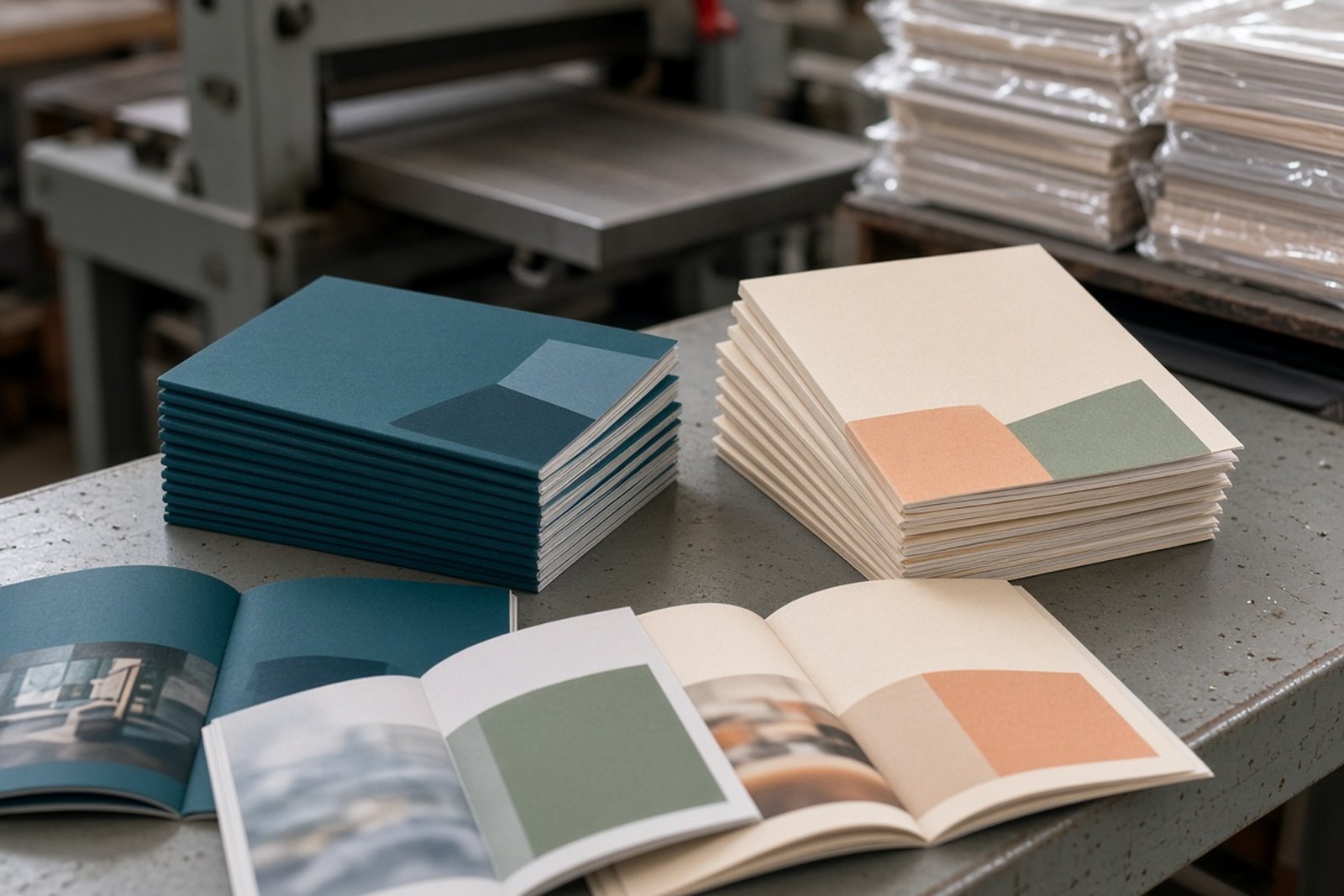
We also kept an eye on handling in the final stages because event programmes get thumbed through, passed around and sometimes picked up with damp hands outside venues. A good finish needs more than a neat cut, it needs enough tolerance in the paper build and stitched spine to keep the booklet flat and presentable after distribution.
- Collation sequence checked before stitch
- Trim allowance confirmed to avoid text loss
- Finished packs grouped for easy venue handover
- Final QA focused on page order and spine closure
Timeline From Approval To Delivery
The full job ran over 2 weeks. Week one covered layout finalisation, supply planning and plate preparation. Week two handled print, finishing coordination and final dispatch. The timing worked because each stage was locked in early and the client knew exactly when to expect the next step.
That kind of planning is what helps event work stay calm. When the production chain is clear, nobody has to guess whether the plates are ready or whether the stack will make it to the finisher in time. It sounds simple, but on a tight print run it is often the difference between a clean handover and a late night.
- Week 1: artwork lock, plate schedule, supply confirmation
- Week 2: print run, stitch and trim, final dispatch
- Total lead time: 2 weeks
- Delivery: on time for event setup
Results For The Orlando Event Team
The programmes were printed and finished on schedule, with the page order intact and the colour held consistently across the run. The client received the books in good condition for immediate distribution at the event, and the press team was able to keep production steady without chasing emergency replacement plates or reworking sections.
What mattered most was that the finished material looked organised and professional when people picked it up at registration. For a live event, that first impression counts. The printed piece has to be easy to read, easy to hand out and neat enough to reflect the event itself. In this case, the supply plan and finishing coordination did exactly that.
The same method suits other programme or booklet work with variable pages, sponsor content or a fixed event date. Start with accurate plate planning, keep the print and finishing teams talking, and allow enough time for the final checks so the last pack leaves the site ready to go.
- Printed output handed over on schedule
- Colour and registration stayed within target
- No delay at event registration
- Same approach suits booklets, agendas and conference packs
Key facts
| Project | Orlando programmes for a local event client |
|---|---|
| Town | Orlando, Soweto |
| Print format | A5 finished size |
| Extent | 40 pages plus cover |
| Quantity | 2 500 copies |
| Timeline | 2 weeks from approval to delivery |