
When finishing starts at the plate room
In many Johannesburg and Gauteng print plants, finishing problems begin long before the guillotine or folder. If plates carry unstable dots, if chemistry is out of balance, or if blankets are not transferring cleanly, the finished sheet can show scuffing, poor fold memory, registration drift and weak colour hold. That means more waste at trimming, more hand sorting, and more pressure on the finishing team when a rush job must still leave the factory by 4pm.
For commercial printers, packaging converters and short-run label producers, the link between plate supply and finishing is direct. A clean plate image, correct dot gain and steady press conditions help the downstream stages run with less rework. We work with plants in Industria West, Roodepoort, Randburg, Midrand, Germiston and Pretoria, and also supply further afield when production cannot stop for a missing consumable.
Typical equipment and workflow in a finishing line
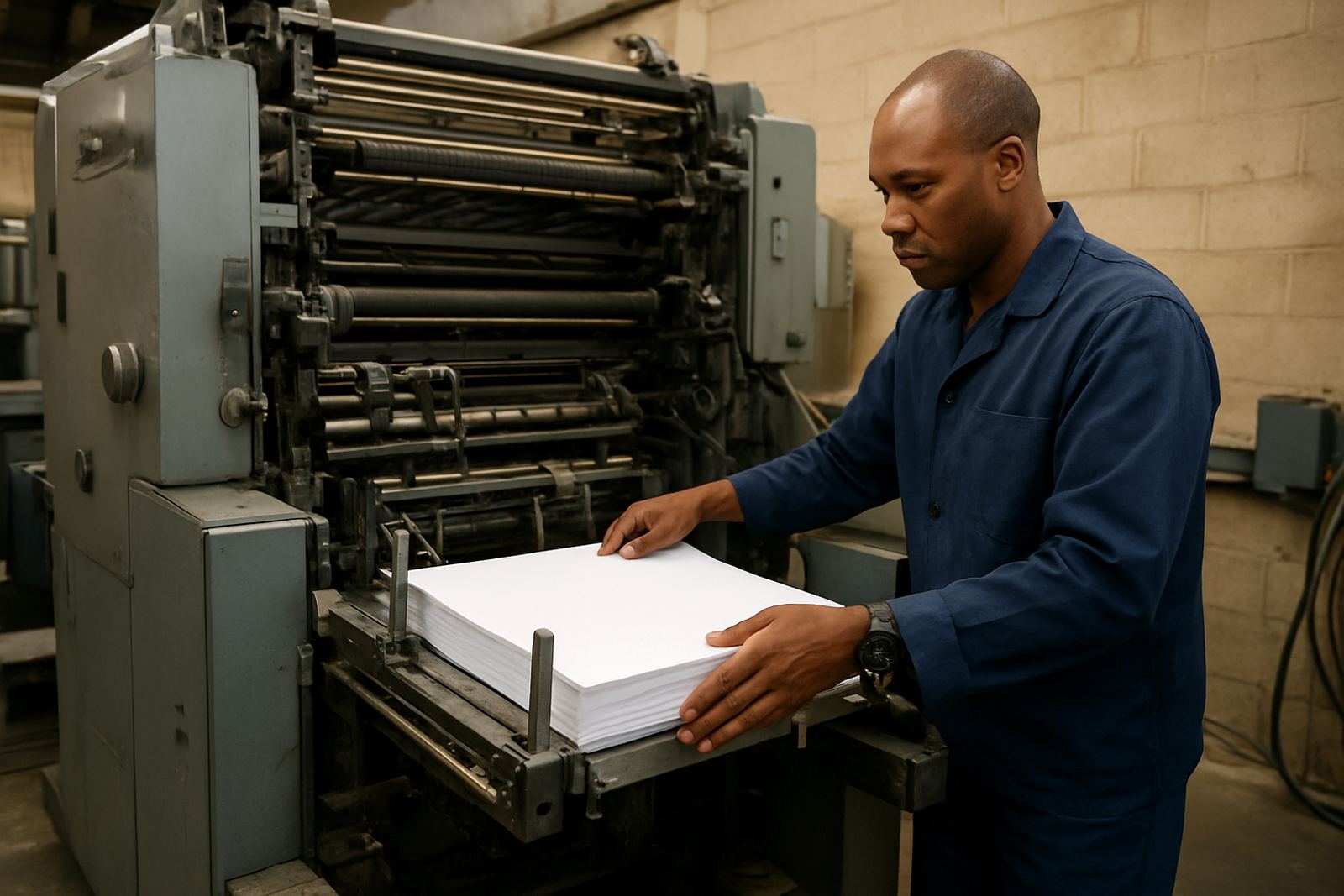
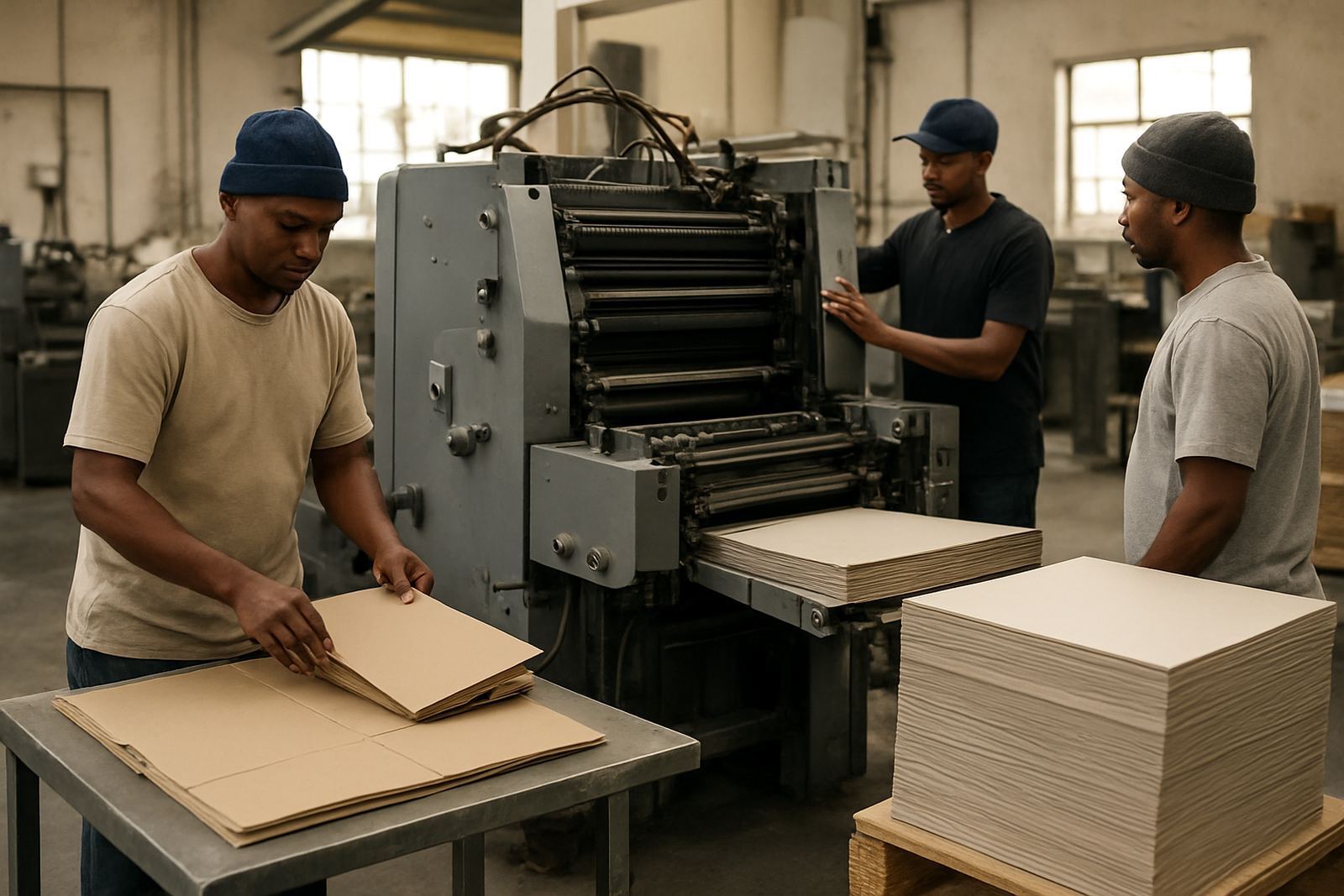
Every plant has its own layout, but a common setup includes cutting, creasing, folding, stapling, saddle stitching, perfect binding and shrink or bundle packing. Some sites also run laminating, spot coating, die cutting, numbering and perforating before the final pack-out. In flexo and offset mixed environments, the finishing team often depends on the press side to deliver clean sheets with controlled moisture and stable ink density.
- Guillotines and three-knife trimmers for final size control
- Folding machines for brochures, leaflets and inserts
- Creasers and scorers for boards and heavier covers
- Binding equipment for books, manuals and catalogues
- Die-cutting and stripping stations for cartons and sleeves
- Inspection tables and pallet wrapping for dispatch control
It helps to keep finishing equipment on a planned maintenance schedule. Machines that restart badly can throw out folds and trim positions, while humidity swings can affect sheet flatness and make feeding inconsistent.
Layout advice for smoother handover from press to finish
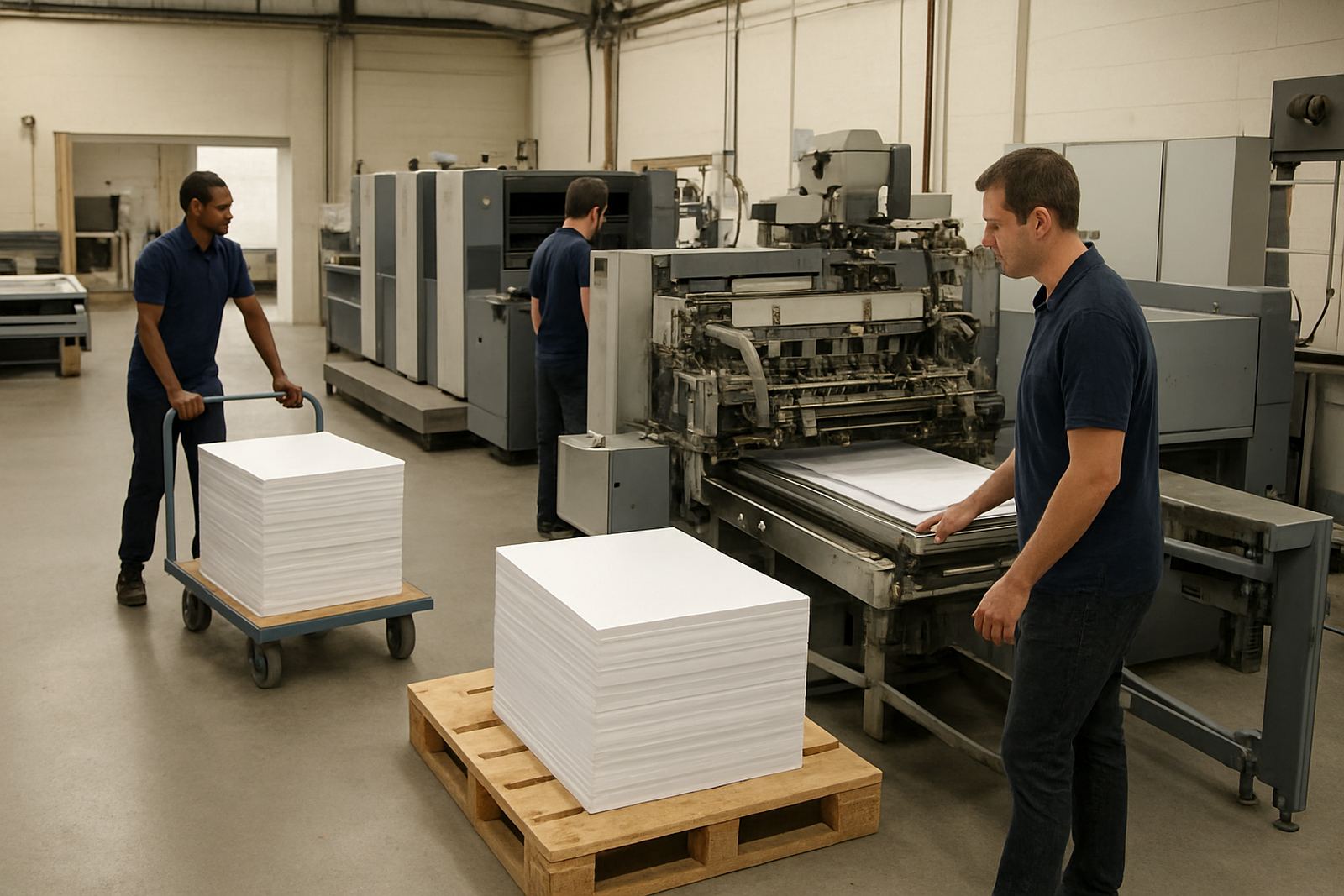
A good layout reduces double handling. Sheets should move from press delivery to drying, inspection, then finishing with the fewest turns possible. Keep finished stock away from press chemical storage, and keep walkways clear so pallets can move without delay. If your plant is in a high-throughput area like City West or along the industrial edges of Pretoria, it is worth mapping the whole flow from plate room to dispatch, not just the machine positions.
For planning, allow enough space for rejected stock, rework piles and sample retention. Many print rooms get squeezed because they only plan for the best-case job count. A practical rule is to leave at least 1,5 metres of clear access around finishing stations where operators need to load, unload or check quality. If the same crew handles both press and finish handover, label pallets clearly and keep job bags matched to the docket from the start.
- Place consumables near the machine they support, not across the room
- Separate finished goods from work-in-progress and waste
- Use racking for plates, blankets and chemicals so stock is not damaged
- Keep a dry area for folded work and binding glue stock
- Allow access for forklifts and pallet jacks without crossing operator paths
Common finishing faults that start upstream
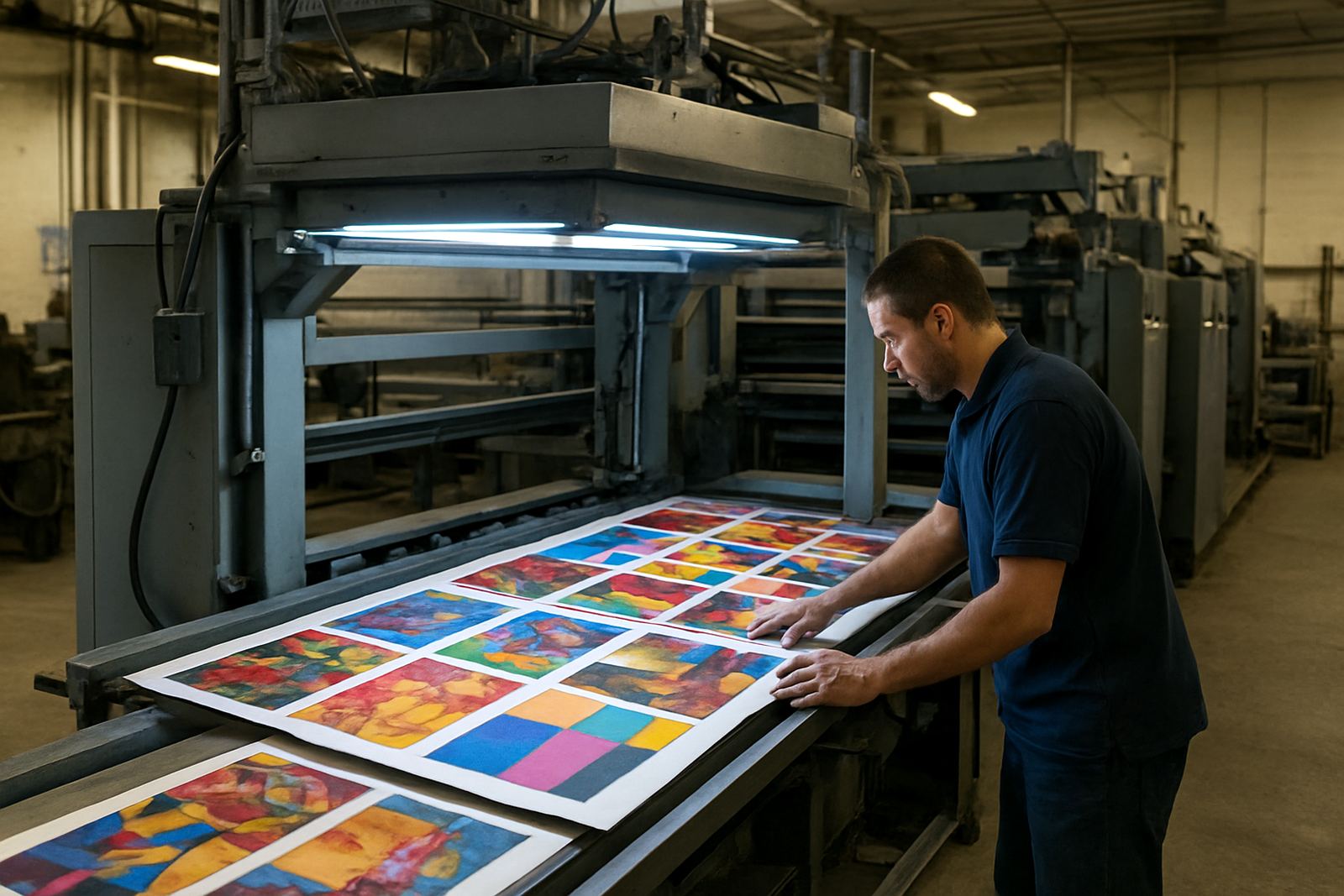
A wrinkled fold, a chipped edge or a poor glue bond is often blamed on the finishing line, but the real issue may be plate wear, dirty blankets or chemistry drift. If the press lays down too much ink, the sheet can become slow to dry and may mark when stacked. If the blanket is glazed or out of spec, fine text and solids can lose clarity and the final piece can look rough after trimming. Sometimes the problem is small but expensive because every touch-up adds labour and time.
Other common mistakes include wrong grain direction on folded work, poor moisture control on paper, and ignoring the effect of winter dryness in Gauteng versus damp summer conditions. Plants also lose money when they mix job tickets, or when the finishing crew only sees the issue after thousands of copies are already on the pallet. That is why press startup help, colour stability checks and blanket assessment matter even when the request seems to be about finishing only.
Support services that protect finishing quality
Our help is aimed at the press, not paperwork. We help with plate selection, chemistry balancing, processor servicing, blanket assessment, press startup help, plate handling training, wash programmes, colour stability checks, supply planning and production troubleshooting. For finishing-heavy jobs, this can mean checking whether the press conditions will support the fold, bind or cut without extra rework.
We also help customers set up a sensible consumable schedule so finishing does not stall because a plate batch, blanket or chemistry line ran short. In busy periods before month-end or major campaigns, plants often need a buffer stock plan that covers at least one full production cycle plus emergency top-up. For smaller sites, that may be R8 000 to R20 000 in critical consumables. Larger operations running multiple shifts may need R35 000 to R120 000 depending on plate volumes, chemistry use and blanket turnover.
Budget ranges for print finishing support in Rand
Finishing budgets vary a lot by format, speed and how many jobs move through the plant each week. A basic assessment for a problem job may be relatively small, while a full consumable and workflow review for a busy commercial line can sit much higher. If a plant only wants to resolve one recurring issue, such as scuffing after folding or register drift before trimming, the spend can stay targeted. If the whole handover from press to finish needs attention, the cost will include training, testing and perhaps revised stock levels.
Typical allowances we see in local finishing rooms:
- R2 500 to R7 500 for a focused troubleshooting visit or review
- R8 000 to R25 000 for consumable correction and line balancing
- R25 000 to R75 000 for broader workflow support and stock planning
- R75 000 plus for plants with multiple lines, heavy throughput or repeated downtime
These figures shift with job mix, machine age and whether the plant is running standard office work, cartons, books or folded inserts. The aim is not to spend more, but to spend in the right place so the finishing team gets cleaner work off the press and less waste on the floor.